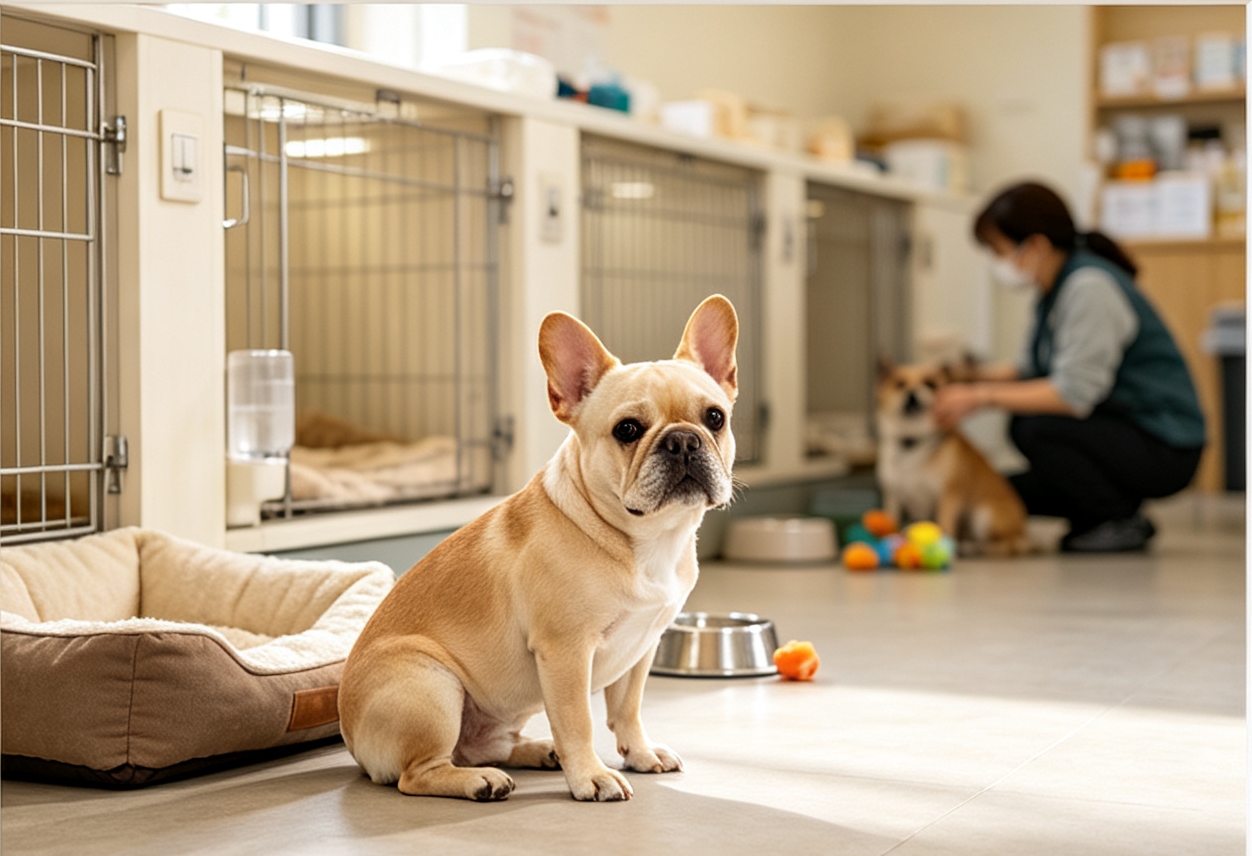
I’ve seen countless pet owners overcome with anxiety before their trip, repeating endless instructions to staff; only to return home and find their pup underweight, suffering from skin disorders, or even displaying dramatic personality shifts. I fully understand that heartache and guilt. Today, drawing from over a decade of hands-on experience in the pet industry, I’ll share candid, practical advice on how to protect your French Bulldog from boarding mishaps, so they can spend the holiday safe, calm and comfortable.
Why French Bulldogs Require Extra Caution for Boarding
First, we must recognize that French Bulldogs are not a “one-size-fits-all” breed—they come with special, unique care needs. Their flat brachycephalic faces, large protruding eyes, compact bodies and sensitive skin expose them to far higher health risks in unfamiliar boarding environments than most other dog breeds.
Core Risk 1: Severe Respiratory Vulnerabilities This is the most critical hazard. As brachycephalic dogs, French Bulldogs are born with narrowed airways and prone to breathing difficulties, clinically termed Brachycephalic Obstructive Airway Syndrome (BOAS). New surroundings easily trigger stress, overexcitement or overheating, drastically amplifying respiratory strain. Poor ventilation, indoor temperatures above 25°C, or excessive energetic play can rapidly induce heatstroke or life-threatening respiratory distress.
Core Risk 2: High Risk of Skin Infections French Bulldogs carry numerous skin folds that trap dirt, moisture, bacteria and yeast. If boarding facilities lack rigorous daily sanitization, or neglect frequent bedding and towel changes, dogs commonly develop fold dermatitis, eczema or mite infestations. I’ve treated dozens of French Bulldogs brought home from boarding with severe, painful skin conditions that require lengthy, costly treatment.
Core Risk 3: Severe Stress & Social Anxiety French Bulldogs have wildly varying temperaments—some are timid and sensitive, others stubborn and headstrong. Sudden environmental shifts and constant exposure to unfamiliar people and dogs create overwhelming mental pressure. Improper group housing or mismanaged socialization may lead to loss of appetite, stress-induced gastroenteritis, excessive barking, fear-based aggression or chronic depression.
Core Risk 4: Neglected Diet & Specialized Grooming Needs Abrupt kibble switches trigger severe gastrointestinal upset. Their unique flat facial structure creates messy eating and drinking habits that demand extra gentle daily cleaning. Eye care is also non-negotiable; their large exposed eyeballs are highly prone to scratches, irritation and inflammation.
5 Practical Step-by-Step Solutions for Worry-Free Boarding Arrangements
Now that we’ve outlined all potential hazards, we can take proactive steps to mitigate them. Below is a actionable checklist refined from years of real-world cases and professional experience—complete every item thoroughly before dropping your dog off.
Solution 1: Inspect Boarding Facilities In-Person Like a Investigator
Never book solely based on online photos or marketing pitches. Schedule an in-person visit and rely on your sight and smell to judge quality.
My Industry Case Experience: I once helped a client evaluate a seemingly luxury pet hotel with polished online imagery. Upon arriving, despite fancy decor, a faint mix of hidden urine odor and heavy disinfectant hung in the air masked by synthetic air fresheners. Visible uncleaned soiled patches lingered on kennel flooring. Most alarming: their loud ventilation system delivered minimal actual airflow, leaving the space stiflingly warm. For a French Bulldog, this facility checked every critical safety red flag. I strongly advised the client to look elsewhere.
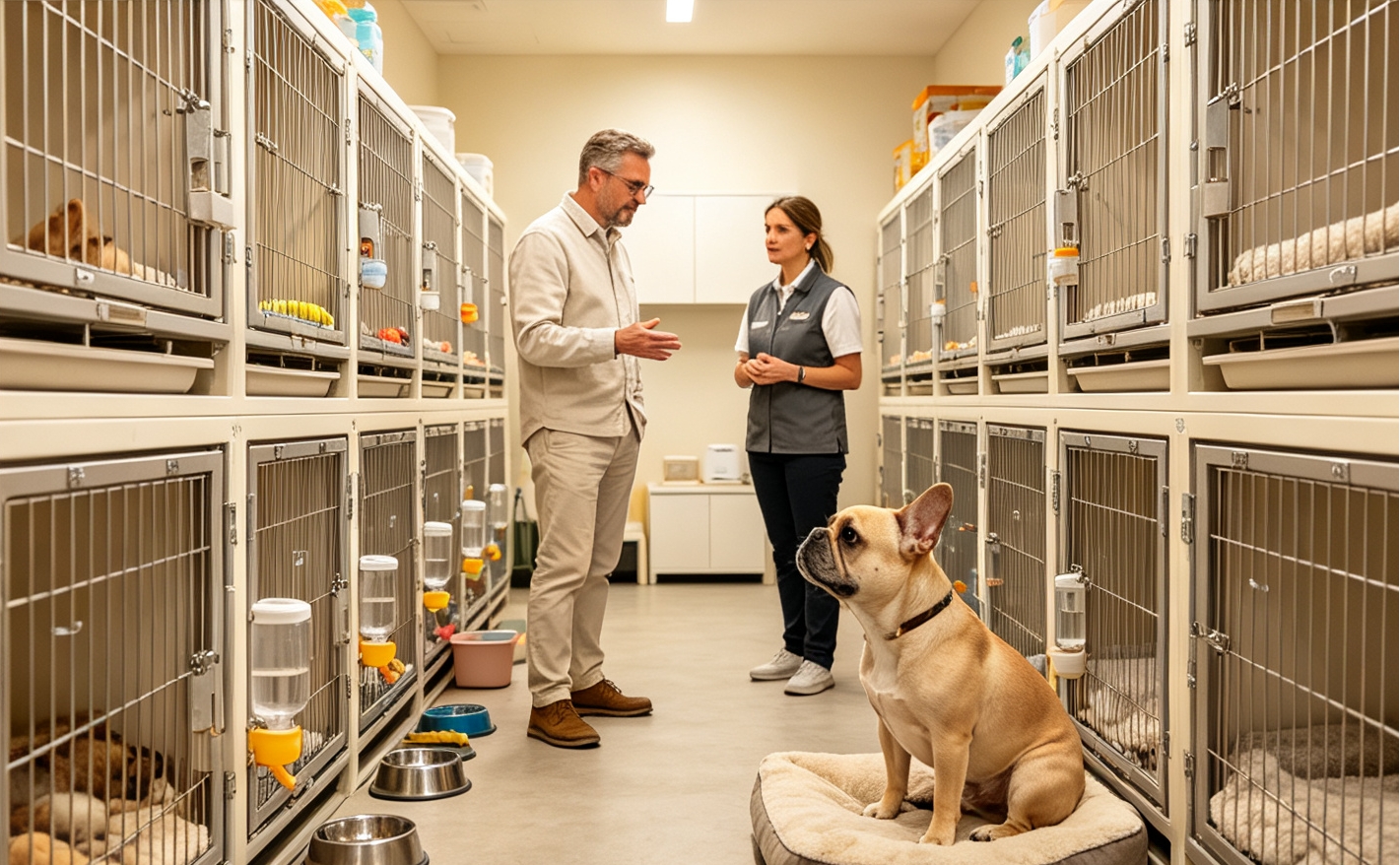
Mandatory Inspection Checklist:
- Smell the Air: A well-maintained facility carries only a faint natural cleaning scent. Sharp ammonia urine odors, strong fecal stench or overpowering artificial fragrances are immediate red flags.
- Check Sanitation Standards: Closely examine play zones, private kennels, food and water bowls for cleanliness and dryness. Watch staff to confirm they remove waste immediately after elimination.
- Test Climate Control: Place your hand to gauge indoor temperature—ideal range is 22–24°C. Verify fully functional air conditioning/ventilation that circulates air without blowing cold drafts directly onto dogs. Ask for their summer and winter temperature regulation protocols.
- Review Operational Policies: Confirm they offer 24/7 live security camera access for owners to view anytime, plus overnight on-site caretaker staffing. Request full daily schedules, and ensure quiet rest periods are strictly enforced for French Bulldogs to avoid overstimulation from nonstop play.
Solution 2: Pack a Custom French Bulldog Supply Kit
Treat your dog like a young child and bring familiar personal belongings to drastically reduce stress hormones and separation anxiety.
My Industry Case Experience: A client’s French Bulldog Niu Niu was an extremely picky, anxiety-prone pup. The owner only brought kibble for boarding, and Niu Niu refused all meals in the strange space. Well-meaning staff offered their house treats, instantly triggering acute gastroenteritis with nonstop vomiting and diarrhea. Since this incident, I require all owners to pre-port their regular kibble in sealed daily containers, plus send a worn unwashed t-shirt or blanket carrying their owner’s scent.
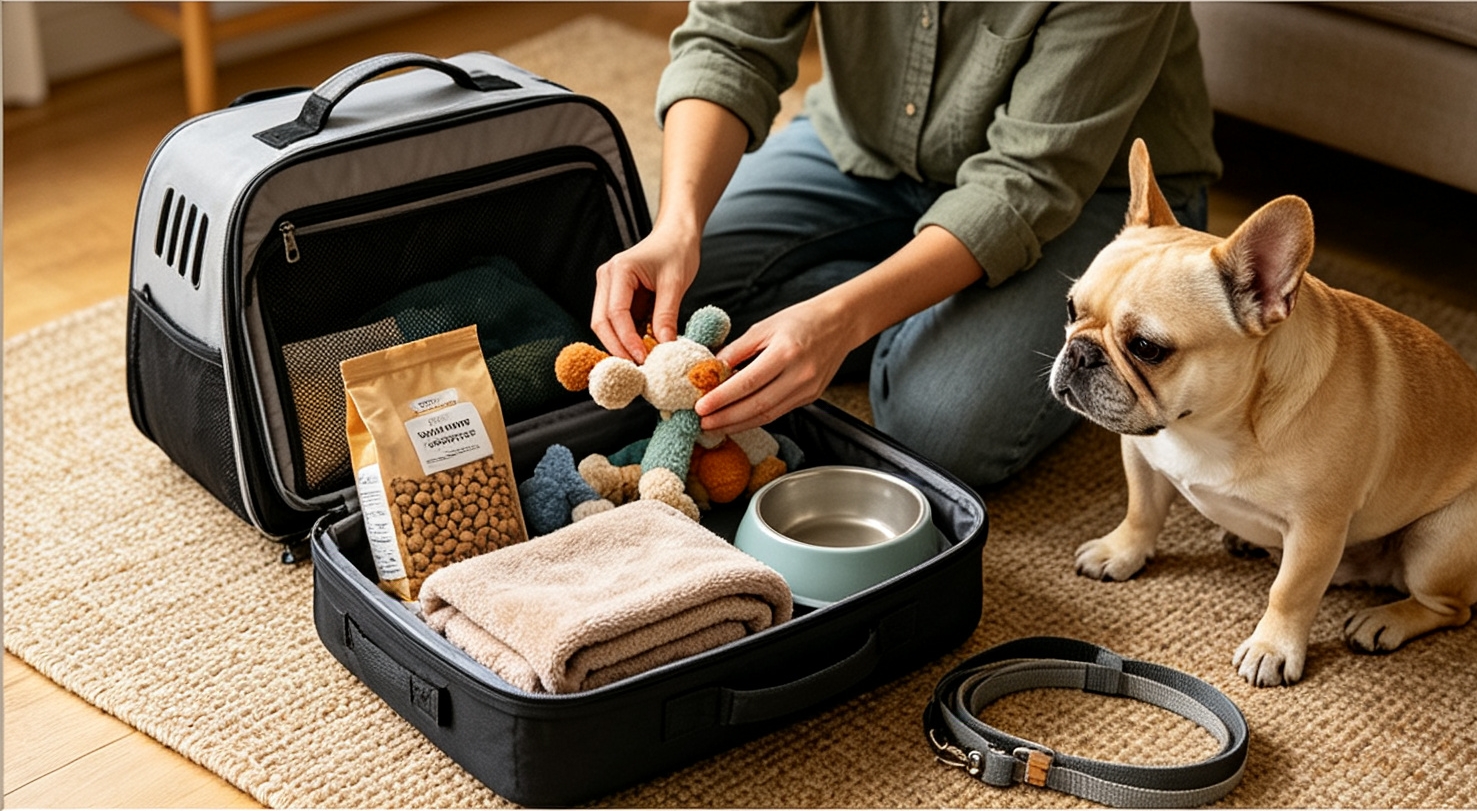
Complete Supply Kit Checklist:
- Sufficient Regular Kibble: Portion food into labeled daily bags, pack an extra 2–3 days’ supply as backup, and attach detailed feeding portions and scheduled mealtimes.
- Personal Food & Water Bowls: Familiar dishware encourages consistent eating and drinking amid unfamiliar surroundings.
- Prescribed Medication & Supplements: Deliver all daily supplements (joint support, probiotics, etc.) with printed dosage instructions for caretaker reference.
- Specialized Skin Care Pack (Mandatory for French Bulldogs): Hypoallergenic pet grooming wipes (instruct staff to clean facial folds, limb creases and hindquarters daily), regular dog shampoo (for emergency baths), and vet-prescribed fold dermatitis ointment previously proven safe for your pup.
- Calming Comfort Items: Favorite chew toys and a worn blanket or unlaundered clothing with your natural scent.
- Lightweight Warm Outerwear: French Bulldogs struggle with cold temperatures; pack a dog sweater if the boarding space may turn chilly overnight.
Solution 3: Conduct Comprehensive Written & Verbal Health Handover
Communication with boarding staff cannot end with a quick line like “he’s very well-behaved.” Complete a full dual-format handover, both written paperwork and in-person verbal walkthrough.
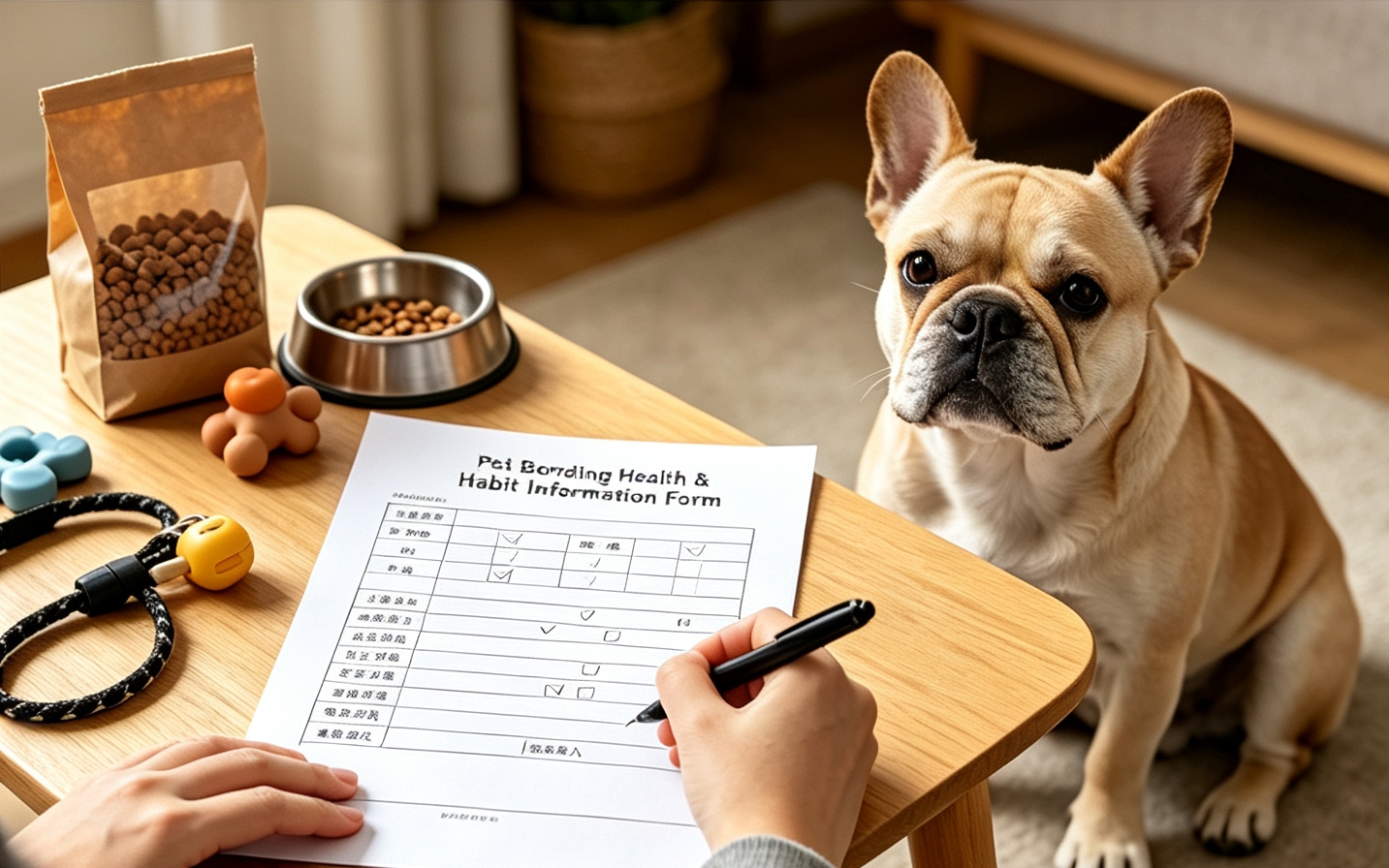
My Industry Standard Practice: I created a formal Pet Boarding Health & Behavior Information Form for all clients to fill out. Beyond vaccine and parasite prevention records, it includes critical details: physical signs of respiratory distress (blue gums, loud snoring), maximum walking duration before heavy panting onset, food/substance allergies, fear triggers (vacuum cleaners, large dog breeds), and preferred calming routines. This document empowers staff to instantly identify emergencies and respond appropriately.
Key Talking Points to Emphasize In-Person:
- Formal Written Records: Submit copies of up-to-date core vaccines (distemper, parvovirus, rabies) and recent parasite treatment logs, alongside the full health questionnaire.
- Stress Critical BOAS Restrictions: Clearly state: “He must rest after 10 minutes of active play, and outdoor activity is completely forbidden in hot summer weather.” Add emergency heatstroke protocol: “If you notice loud snoring breathing, excessive thick saliva or purple discoloration on gums/tongue, contact me immediately and cool him down by dousing paws and groin with cool water while running AC.”
- Lock Down Emergency Protocol: Provide two separate 24-hour emergency contact phone numbers. Pre-authorize a trusted 24-hour veterinary clinic, and inform staff to transport your dog there without delay for any health concern—all medical expenses will be covered by you. This is your most vital safety safeguard.
Solution 4: Explore In-Home Pet Sitting & House Visits as Alternatives
Traditional commercial kennels create overwhelming stress for extremely sensitive French Bulldogs, seniors, or dogs with chronic respiratory disease history.
My Industry Case Experience: I assisted an aging French Bulldog diagnosed with mild cardiomegaly, who suffered extreme panic in unfamiliar boarding facilities. We matched him with an experienced private in-home sitter who only cares for a small number of dogs at a time, and owns French Bulldogs herself. The quiet low-stress environment delivered one-on-one constant supervision, and the dog adjusted seamlessly. A second viable alternative is professional daily house visits, allowing your dog to remain inside their fully familiar home space.
Evaluation Criteria for Alternate Care Options:
- Private In-Home Sitters: Inspect their living space for safety and quietness, confirm resident household dogs are calm and friendly, and verify hands-on experience caring for brachycephalic flat-faced breeds.
- Daily House Visit Care: Book providers through verified reputable platforms or trusted personal referrals. Install temporary indoor security cameras for remote monitoring. Secure key handover protocols, and set fixed daily update times for photo/video check-ins.
Solution 5: Maintain Moderate Communication During Boarding & Full Inspection Upon Pickup
Boarding does not mean cutting off all contact. Regular gentle updates ease your worry and hold staff accountable for consistent attentive care.
Professional Recommendation: Agree on a fixed daily window (afternoon hours ideal) for staff to send short video clips or photos with brief notes on appetite, energy and bowel movements. Avoid unplanned frequent video calls—constant human voices over the camera can spike your French Bulldog’s separation anxiety and distract caretakers attending to other dogs.
Full Post-Boarding Inspection Checklist When Collecting Your Dog:
- Immediate Full Body Check: In bright lighting, thoroughly examine all skin folds for rashes, open lesions or foul odors; confirm eyes are clear with minimal discharge, nose remains slightly moist, and paw pads have no cuts or abrasions.
- Monitor Baseline Vital Signs At Home: Track energy levels, appetite and stool consistency for 48 hours post pickup. Most dogs sleep excessively for 1–2 days decompressing from boarding stress, which is normal. Seek vet care immediately if lethargy, refusal to eat/drink, vomiting or diarrhea persists beyond 24 hours.
- Slow Gentle Reintroduction to Home Life: Skip overexcited rough play right after arriving home. Offer a quiet rest area, unlimited fresh water and familiar food to let them readjust at their own pace.
Quick Reference Pitfall Avoidance Checklist
- Pitfall 1: Prioritize low pricing over facility quality. The cheapest options almost always cut corners on staffing, climate control and emergency medical preparedness.
- Pitfall 2: Rely solely on verbal agreements with no formal contract. Always sign a legally binding boarding contract defining liability, service scope, pricing and emergency medical response procedures.
- Pitfall 3: Omit disclosure of pre-existing health or behavioral quirks. Full transparency is the greatest safeguard for your dog, preventing avoidable accidents stemming from uninformed staff care.
- Pitfall 4: Select facilities that house French Bulldogs alongside large, hyperactive dog breeds for group play. Rough play risks injury or life-threatening overheating/excitement for flat-faced dogs.
- Pitfall 5: Ignore location proximity to emergency care. Prioritize boarding spots close to your residence or pre-selected 24-hour vet clinic for rapid emergency transport.
Summary
Arranging holiday boarding for a French Bulldog is fundamentally a structured risk management process. It does not depend on your budget, but your attention to detail and forward planning. By conducting rigorous facility inspections, packing comprehensive specialized supplies, sharing full transparent health history, evaluating low-stress alternative care models, and maintaining consistent gentle oversight throughout the stay, you can minimize boarding hazards to nearly zero. Remember: your French Bulldog’s entire world revolves around you. When travel separates you temporarily, choosing a secure, calm temporary home for them is the purest extension of your love and responsibility.
Friendly Medical Disclaimer
All guidance shared in this article consists of general preventative care tips and cannot replace formal veterinary diagnosis and treatment. French Bulldogs require heightened ongoing health monitoring. If your dog develops any of the following symptoms during boarding or immediately after pickup, rush them to a licensed animal hospital without delay—do not rely on self-observation or online consultation, as delays can turn minor issues life-threatening:
- Critical Respiratory Distress: Open-mouthed constant panting, fully extended neck, violent abdominal heaving, purple/blue discoloration on gums or tongue.
- Heatstroke Warning Signs: Excessive drooling, listlessness, unsteady gait, vomiting, core body temperature exceeding 39.5°C, heavy nonstop panting.
- Persistent Gastrointestinal Crisis: Refusal of all food/water for over 24 hours, repeated vomiting or bloody diarrhea.
- Extreme Mood Shifts: Unresponsive lethargy, constant hiding, or uncontrollable frantic pacing and cage slamming.
- Any open wounds, suspected fractures, or sudden pain-induced yelping when touched.