Hi everyone, I’m Ajie. I’ve spent a decade specializing in canine behavior modification and early puppy education. Over these years, I’ve worked with hundreds of dog breeds, and French Bulldogs are a breed I both adore and find challenging. I love their silly, affectionate personalities, yet I often struggle with the wide range of behavioral problems caused by insufficient early socialization — such as trembling with anxiety outdoors, excessive barking or aggression toward unfamiliar dogs, and extreme fear triggered by minor noises. Many owners come to me confused: “Trainer, my French Bulldog puppy was so gentle when little, why has he become harder to handle as he grows?” Today I’ll break down how to use a systematic, science-backed puppy socialization checklist to cultivate a steady, confident and happy French Bulldog from an early age.

Why Does Your French Bulldog’s Temperament Seem to Shift Dramatically as It Grows Up?
First, we must understand that a dog’s temperament is not fully predetermined by genetics. Heredity is only one factor; the far more vital stage is the critical socialization window spanning 3 to 16 weeks after birth. During this period, a puppy’s brain absorbs every surrounding experience like a sponge, and all impressions will permanently shape its lifelong behavioral patterns.
French Bulldogs are companion breeds by nature, wired to crave human closeness. However, their unique physical traits (brachycephalic flat faces, large heavy heads) and historical breeding purposes can make them naturally stubborn and alert. If they are overprotected in a confined, quiet home bubble during this key window, every outside stimulus — loud car engines, running children, unfamiliar dog breeds, or people wearing unusual outfits — will be labeled “strange, suspicious and threatening” by their brains. When these triggers reappear in adulthood, their innate fear and defense reflexes activate immediately, resulting in barking, cowering, or even aggressive lunging.
I still clearly remember a French Bulldog named Tank. His owner kept him entirely indoors until all vaccinations were complete, worried he would contract illnesses. When Tank stepped outside for the first time at five months old, he showed crippling terror toward cars, falling leaves and distant human silhouettes. He froze flat on the ground and refused to move, shaking violently when picked up. This is a textbook example of inadequate socialization. Later, we spent exponentially more time and energy on desensitization and counterconditioning training, a process far more grueling than preventative socialization in puppyhood.
Core Puppy Socialization Training Checklist (Step-by-Step Implementation Plan)
Socialization is not simply taking your dog outside to see new things; it requires structured, controlled exposure to build abundant positive, neutral experiences for your puppy. Follow this checklist refined from my decade of hands-on experience: before full vaccination, carry the puppy, use a secure pet stroller or observe from quiet corners; gradually allow independent exploration once all vaccine rounds are finished.
Solution 1: Diverse Environmental Exposure — Make the Outside World Less Intimidating
Goal: Acquaint your French Bulldog with all ground surfaces, locations and atmospheres it will encounter throughout its life.
In my own breeding program, I use an “environmental exposure log” for all litters of French Bulldog puppies I train.
- Varied flooring textures: Beyond indoor hardwood floors, let them cautiously explore tile, concrete, asphalt lawns, sand, slippery wet surfaces and metal grating (watch their paws to avoid snags). One puppy panicked the first time it stepped on dry rustling fallen leaves. I knelt down, spoke in a cheerful tone and scattered kibble nearby, and it quickly grew curious enough to sniff around freely.
- Distant observation of public spaces: Carry your puppy and sit on residential park benches, outside quiet street cafes, at the entrance of pet-friendly shopping malls (off-peak hours), outside school fences to watch children play, and far from bus stops. The priority is letting them observe while remaining relaxed. If they grow tense, increase the distance and offer treats only after they calm down.
- Sound desensitization (Extremely Important!): Play pre-recorded sound playlists at home, starting at low volume and gradually increasing loudness. Include vacuum cleaners, doorbells, fireworks, thunderstorms, crying toddlers and car horns. Play the audio during mealtime or play sessions to link loud noises with pleasant rewards. I regularly recommend this method to clients, and it delivers remarkable results.
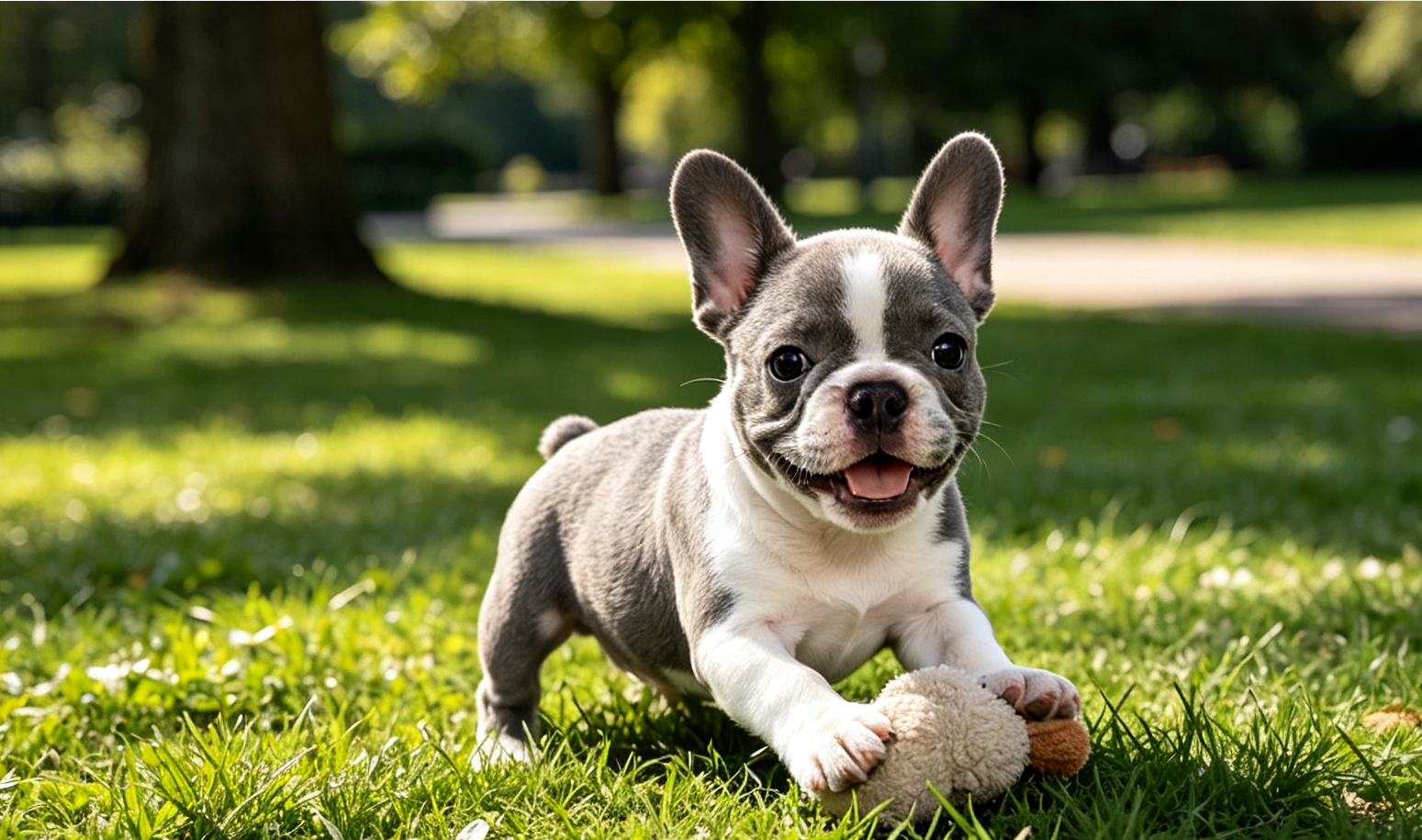
Solution 2: Build Positive Associations With All Types of Humans
Goal: Teach your French Bulldog that humans of all ages and appearances bring safety and delicious rewards.
French Bulldogs often develop sensitivities to specific groups. One client’s French Bulldog was terrified of men wearing hats. Upon tracing the root cause, we found his only traumatic puppy encounter was with a rushing hat-wearing delivery worker.
- Invite diverse guests to your home: Welcome friends of different genders, heights, body builds and clothing styles — those in puffy winter coats, hats, walking canes, or holding umbrellas. Ask guests to ignore the puppy completely and let the dog approach voluntarily. After the puppy sniffs them, the guest may calmly offer high-value treats (no sudden head pats).
- Interact with strangers outdoors: At a safe distance, ask cooperative passersby such as neighbors to follow the same “ignore-treat” routine. Never allow strangers to suddenly bend forward, maintain direct intense eye contact, or force physical contact — these actions create extreme stress for dogs.
- Controlled exposure to children: Supervise every interaction strictly with calm, respectful older kids only. Teach children to stand motionless “like a tree” and let the puppy initiate contact. Screaming, sprinting toddlers create traumatic negative experiences for young puppies.

Solution 3: Friendly Interactions With Other Dogs & Small Animals
Goal: Help puppies learn proper canine social etiquette and prevent inter-dog reactivity later in life.
Due to their compact build and unique temperament, French Bulldogs are often misread by other dogs, or fail to recognize subtle canine body language signals. Careful selection of playmates is critical.
- Select well-balanced mentor dogs: Find 1–2 neutered adult dogs with stable, gentle temperaments and solid social experience as consistent play partners. Well-mannered adult dogs naturally teach puppies appropriate play boundaries such as warning growls and bite inhibition. I often use my own calm Labrador Retriever as a dedicated “playgroup mentor” for all puppy sessions.
- Regulate play session length: Puppies have boundless energy and often overexcite older dogs. Pause play after 5–15 minutes to rest and avoid overstimulation. Separate the pair calmly immediately if either dog growls, snarls, mounts persistently, or gets pinned and bullied to let both cool off.
- Controlled exposure to other species: Under fully secure conditions (behind glass panels or cage barriers), let the puppy observe cats, rabbits and other small animals from afar. This builds awareness of other creatures and eliminates obsessive chasing instincts in adulthood.
Solution 4: Desensitization to Grooming, Handling & Restraint
Goal: Turn daily grooming and necessary veterinary exams into stress-free routines instead of stressful battles.
French Bulldogs have abundant skin folds requiring frequent gentle cleaning, and these sensitive areas easily trigger discomfort during handling.
- Daily touch desensitization drills: Spend several minutes each day touching every part of your puppy’s body while it stays relaxed: ears, muzzle, teeth, paw pads, toe webbing, tail, hindquarters and skin folds. Reward with treats after touching each area. Practice gently holding its paws to mimic nail trimming repeatedly.
- Veterinary exam simulation: Recreate routine checkup motions: light pressure near the anus for temperature checks, lifting ear flaps for inspection, and touching the lip corners to simulate medication administration. I teach owners to spread flavorful meat paste on a toothbrush for daily gentle tooth brushing, so the puppy associates mouth handling with tasty rewards.
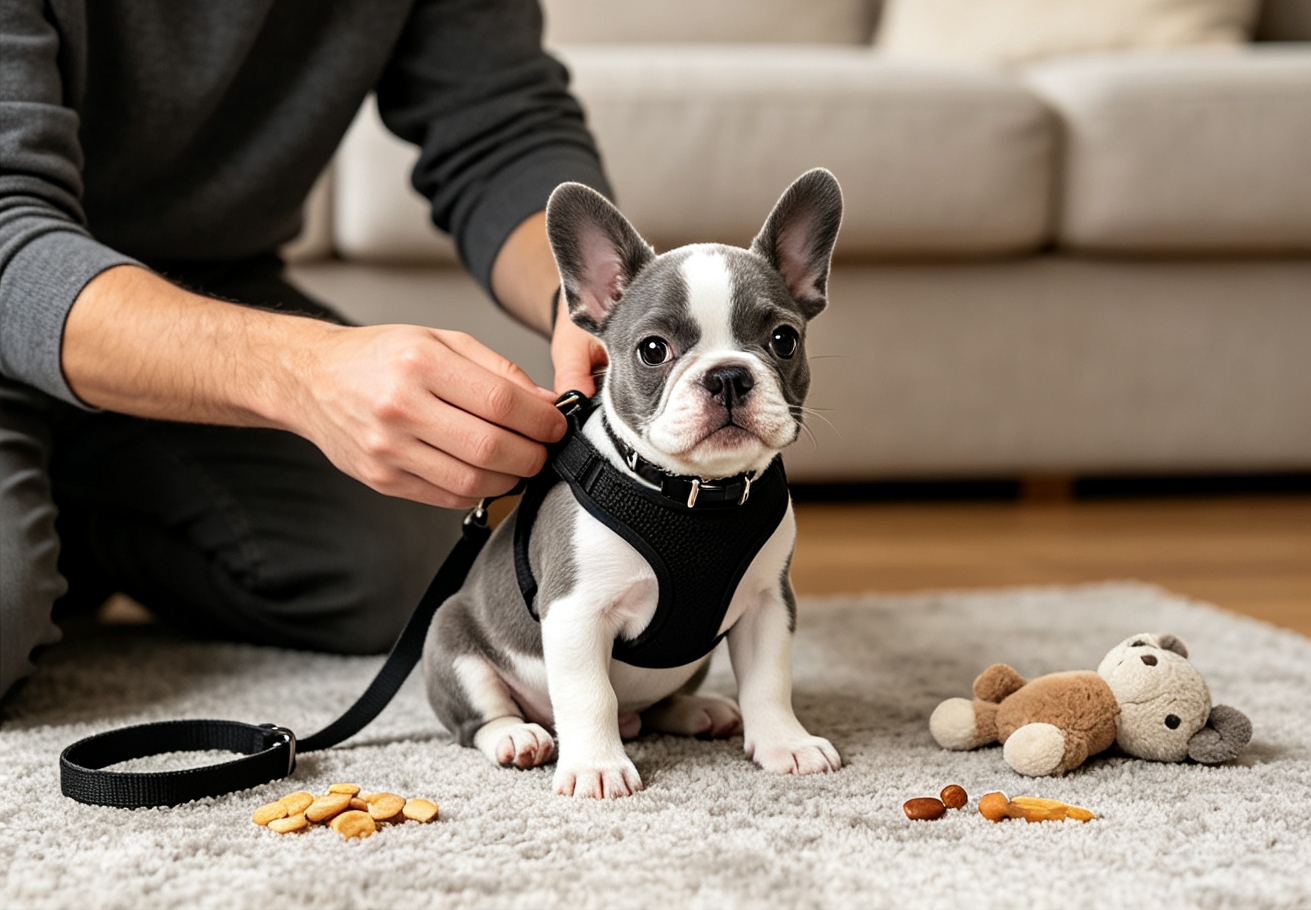
- Harness & collar desensitization: Wearing walking gear should be a fun game paired with treats. Gradually extend wear time, and let the puppy drag a lightweight leash indoors to grow accustomed to the sensation of attachments on its body.
Common Pitfalls to Avoid During Socialization Training
While diving into socialization enthusiastically, steer clear of these frequent training mistakes:
- Pitfall 1: Rushing progress via flooding therapy: Do not force your puppy into overwhelming chaotic environments such as crowded night markets to speed up training. This flooding method almost always causes permanent psychological trauma. All exposure must be gradual and incremental, stopping the moment your dog cannot remain relaxed.
- Pitfall 2: Ignoring canine stress signals: Excessive yawning, nose licking, head turning away, rigid body posture, tucked low tail, flattened backward ears, and attempts to hide all translate to “I am overwhelmed.” Upon spotting these cues, pause all exposure or move further away to reduce stress — never push the puppy to continue interacting.
- Pitfall 3: Incorrect comfort responses: When your puppy shows fear, over-coddling or speaking in a panicked, soothing tone reinforces its anxiety. The dog will interpret your tension as confirmation that the trigger is genuinely dangerous. The correct response is to remain calm and confident, speak in a cheerful neutral voice, redirect its attention, and reward calm behavior after moving to a safe distance.
- Pitfall 4: Poor selection of playmates: Avoid pairing your puppy with overly hyper, rough, or under-socialized dogs. One traumatic fight or bullying incident can set socialization progress back months.
Summary: Invest in Socialization for a Lifetime of Companionship
Implementing structured, scientific socialization training for your French Bulldog puppy is the highest-return investment you can make for its decade-long quality of life. The checklist tasks may seem tedious at first, yet every step deepens trust and bonding between you and your dog. This training is not only about obedience; it equips your French Bulldog with a core life skill — the confidence to navigate the complex human world calmly and securely. Well-socialized French Bulldogs develop far fewer behavioral disorders, stay healthier and happier, and can join you on countless outings to build shared lifelong memories.
Friendly Professional Reminder
The guidance shared in this article covers general preventative foundational training for average puppies. If you have adopted an adult French Bulldog, or your puppy displays uncontrollable extreme fear (prolonged trembling, heavy drooling, house soiling from panic) or clear aggressive behaviors (snarling, growling, lunging and biting) during training, these symptoms likely exceed basic socialization scope and indicate deep-rooted anxiety or behavioral disorders. I strongly recommend seeking immediate support from a certified professional canine behavior trainer or veterinary behaviorist. They will complete a full behavioral assessment and design a customized modification plan, coordinate with vets to rule out underlying medical conditions, and discuss pharmaceutical auxiliary therapy when necessary. Early professional intervention drastically improves recovery outcomes.