Hello everyone, I’m Leo, a professional dog trainer with over a decade of hands-on experience working with companion animals. Throughout my career, I’ve supported countless pet families overwhelmed by constant “cat-and-dog battles.” This friction is especially common when energetic, curious French Bulldogs share a home with territorial, agile cats, creating endless cycles of chasing and hiding around the house. Owners feel heartbroken watching their cats dart frantically to escape pursuit, yet helpless to fix their French Bulldog’s seemingly mischievous behavior. Today we’ll break down systematic, science-backed training methods to turn your feuding pets into calm housemates who can comfortably share one living space.

1. Why Do French Bulldogs Constantly Chase Cats? Unpack the Root Behavioral Motives
Before starting any training, we first need to understand the underlying drives behind cat-chasing — this behavior is far more complex than simple naughtiness or hostility.
1. Strong Prey Drive Instinct: Though French Bulldogs are companion breeds, the urge to dart after fast-moving small creatures (such as a sprinting cat) is hardwired into most canines’ genetics. A sudden dash from a cat instantly triggers their innate chasing reflex.
2. Innate Curiosity & Social Exploration: French Bulldogs typically have friendly, inquisitive personalities. They may view chasing as a playful interaction or a way to greet a new animal, yet this approach reads as deeply threatening to cats.
3. Competition Over Territory & Resources: Introducing a new pet (whether cat or dog) disrupts the existing household balance. Both animals may perceive each other as intruders competing for living space and their owner’s attention, sparking persistent tension.
4. Lack of Positive Early Socialization: French Bulldogs who never encountered cats as puppies, or who had traumatic negative run-ins with felines, never learn calm, gentle manners to interact with cats peacefully.
With these root causes clear, we recognize the core training goal is not to punish or suppress your French Bulldog, but to redirect their impulses while building lasting feelings of safety for your cat.
2. 3-Stage Progressive Training Framework: From Strangers to Harmonious Housemates
Below is a proven, gradual training workflow refined through real client cases. Patience is the single most critical ingredient — this full process can take weeks or even multiple months to complete.
Stage 1: Environmental Management & Full Physical Separation (Foundation Phase, 1–2 Weeks)
This is the mandatory starting point for all introductions. Its purpose is to eliminate all direct risky contact and let both pets grow accustomed to each other’s presence in a completely low-stress environment.
Real Client Case Experience: I assisted a household that adopted an adult French Bulldog named Niu Niu while already owning a skittish tabby cat named Mo Mo. On their first face-to-face meeting, Niu Niu excitedly lunged toward Mo Mo, who instantly puffed up, hissed, and retreated under the bed, refusing to emerge for days afterward. My first intervention was implementing strict total physical separation.
Step-by-Step Implementation:
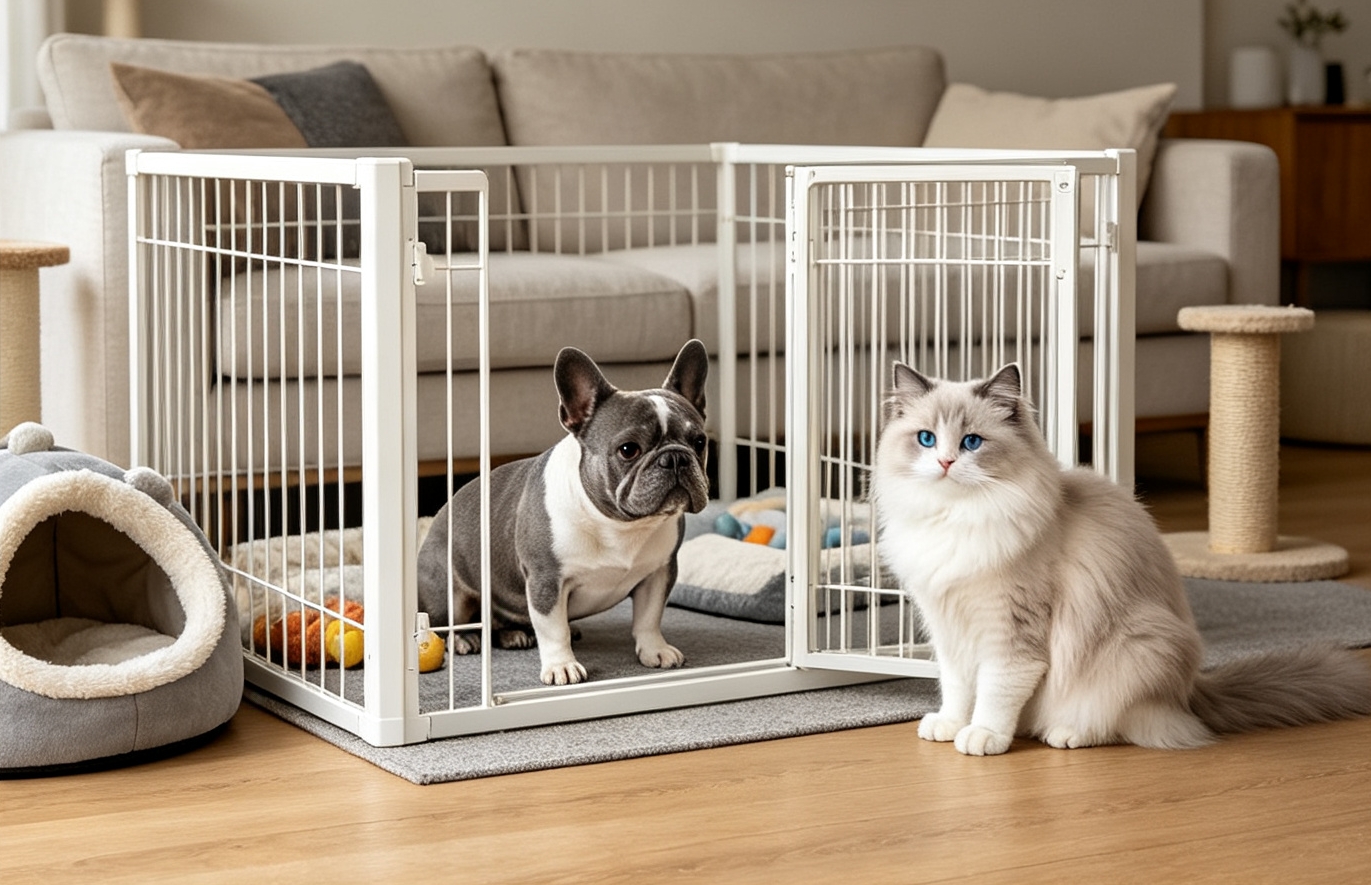
1. Designate a Cat-Exclusive Safe Room: Prepare a dedicated closed room (such as a study or spare bedroom) fully equipped with a litter box, fresh water, cat food, cat tree, and multiple hidden hiding spots. This space acts as the cat’s permanent stress-free retreat, completely off-limits to the French Bulldog at all times.
2. Install a Baby Safety Gate: Mount a sturdy pet gate in the doorway of the cat’s private room. The gate lets both pets see, smell, and hear one another through the slats without any physical touch. The cat retains full control to approach the gate for observation or back away to a safe distance voluntarily.
3. Daily Scent Swapping Routine: Each day, swap soft blankets or toys used by each animal. Let the French Bulldog sniff items carrying the cat’s scent, and place the dog’s bed mat inside the cat’s safe room for the cat to investigate. This scent exchange process lets them grow familiar with one another’s unique odor without confrontation, a vital foundational step.
Major progress is achieved when both animals stay relatively calm on opposite sides of the gate, with no barking, growling, or hissing.
Stage 2: Build Positive Associations & Controlled Short Interactions (Advancement Phase, 2–4 Weeks)
Once both pets remain calm viewing each other through the gate, we begin creating rewarding positive links and introduce brief supervised close-range exposure.
Real Client Case Experience: After one full week of separated scent training for Niu Niu and Mo Mo, I guided their owners through paired feeding conditioning. On opposite sides of the gate, the dog and cat received their favorite high-value treats simultaneously — chicken jerky for Niu Niu, creamy cat treats for Mo Mo. This teaches both animals: the sight and scent of the other means delicious rewards are coming.
Step-by-Step Implementation:
1. Dual Reward Synchronized Feeding Method: Schedule 1–2 fixed daily sessions where both pets are fed meals or premium treats at the same time, separated by the safety gate. If either animal shows stress signals (dog growling, cat hissing), pause the session immediately and revert back to full separated scent training.
2. Leashed Supervised Short Visits: Secure the French Bulldog in a properly fitted harness and sturdy leash to maintain full owner control, then open the baby gate slightly to let the cat roam freely within its safe room. Give the dog “Sit” or “Down” cues, and continuously reward calm behavior with high-value treats whenever they focus their attention on you instead of the cat. Keep initial face-to-face sessions under 30 seconds, then separate them and offer abundant verbal praise for good behavior.
3. Master Redirection & Focus Training (Core Skill): Practice focus commands like “Look at me” and “Sit” daily during regular routines. When the French Bulldog fixates on the cat, call their name in a bright cheerful tone; reward instantly the moment they shift eye contact back to you. This trains them that ignoring the cat and paying attention to their human earns far better rewards than chasing.
Stage 3: Establish Household Coexistence Rules & Long-Term Harmony (Consolidation Phase)
Once your leashed French Bulldog stays consistently calm while the cat moves freely throughout the shared room, gradually extend unsupervised interaction windows and implement permanent household boundaries.
Real Client Case Experience: In later training sessions, Niu Niu could peacefully share a room with Mo Mo for 10 minutes on leash without overexcitement. One day, Mo Mo suddenly jumped down off the sofa, triggering an instinctive twitch from Niu Niu. The owner tensed up and pulled the leash sharply, which only amplified the dog’s excitement. This incident highlighted that the owner’s own emotional regulation is equally critical to successful coexistence.
Step-by-Step Implementation:
1. Gradual Off-Leash Supervised Time: In a fully calm, low-distraction household environment, you may remove the leash while maintaining constant full supervision. Keep the leash and treats within arm’s reach at all times. If the French Bulldog rises with intent to chase, deliver a calm firm verbal cue such as “No” or “Leave it,” then redirect them to alternative calm activities immediately.
2. Build Elevated Escape Zones for the Cat: Install cat trees, wall shelves, and cabinet top perches to create elevated “sky walkways” the cat can use to completely avoid floor-level contact with the dog. These vertical retreat spaces drastically boost the cat’s sense of safety and confidence in shared living areas.
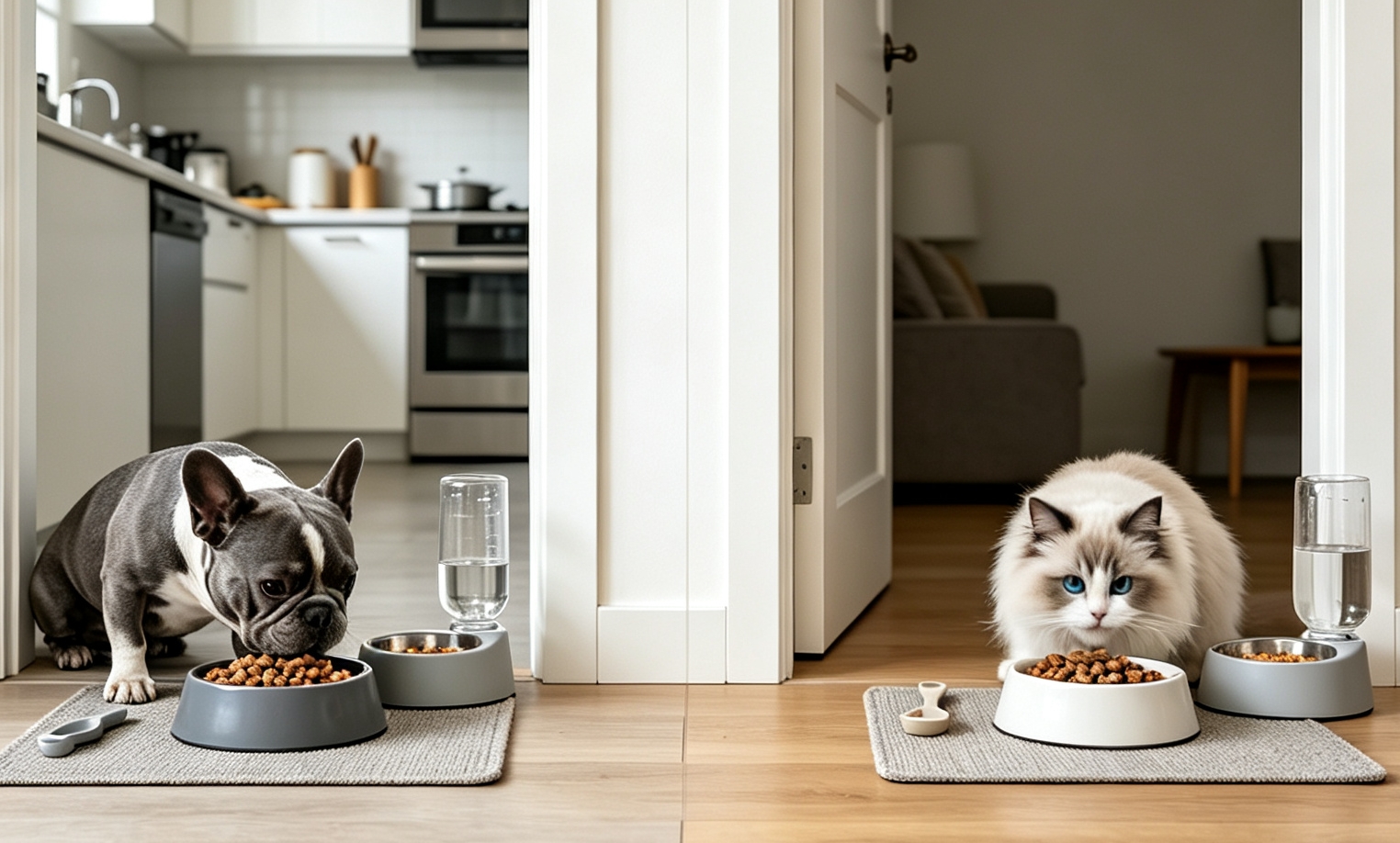
3. Strict Resource Separation: Always place separate food bowls, water dishes, and sleeping beds for the dog and cat, ideally located in entirely different rooms. Avoid obvious favoritism toward one pet in front of the other, which can trigger jealous tension.
4. Maintain Consistent Daily Training: Even after they live together peacefully, regularly refresh focus and redirection commands to reinforce good habits. Provide your French Bulldog with sufficient daily physical exercise (leash walks, scent foraging games) to burn excess pent-up energy, which fundamentally reduces their urge to chase the cat for stimulation.
3. Critical Mistake Avoidance Guide: Never Use These Counterproductive Methods
Certain seemingly logical actions during training will backfire and worsen tension between your dog and cat.
1. Forcing Unwilling Interactions: Never physically carry the cat over to the dog, or pin the dog down to let the cat sniff them. This inflicts severe stress and traumatic negative associations on both animals, making relationship repair far more difficult.
2. Punishing Chasing Behavior: Yelling loudly or administering physical correction when your French Bulldog chases the cat only amplifies their anxiety. They may even link the cat’s presence to unpleasant punishment. Our priority is proactive prevention and gentle redirection, not punishment.
3. Ignoring Feline Stress Body Language: Hissing, raised hackles, growling, and flattened airplane ears all signal fear and overwhelming stress in cats. Pause all interaction instantly and grant the cat unobstructed space to retreat to their safe room. Chronic unrelieved stress causes severe long-term damage to a cat’s physical and mental health.
4. Rushing the Introduction Timeline: Do not jump straight to long unsupervised cohabitation after only one or two successful calm sessions. Temporary setbacks are completely normal; if tensions resurface, calmly revert to the last training stage where both pets remained relaxed and restart the process slowly.
4. Summary: Patience & Science-Based Training Are the Foundation of Harmony
Building peaceful coexistence between a French Bulldog and cat cannot be accomplished in a single day. It demands consistent patience, careful observation, and steady follow-through from the owner. The core guiding principle throughout all training is: Create a 100% secure stress-free sanctuary for your cat, while teaching your French Bulldog polite, calm manners to share space respectfully with felines. Combining environmental separation management, positive reward associations, focus redirection training, and permanent household boundaries resolves tension for nearly all dog-cat pairs. Remember, our end goal does not require them to become inseparable best friends (that rare bond depends heavily on individual pet personalities). The achievable, healthy target is mutual respect — two pets who share a home without disturbing or threatening one another’s personal space.
Friendly Veterinary Reminder
Closely monitor your pets’ physical and mental wellbeing throughout all introduction training. Immediately pause all at-home training and consult a licensed veterinarian or certified animal behaviorist if you observe any of the following severe red flag conditions:
1. Escalated Aggressive Attacks: Either animal displays sustained hostile intent — including persistent growling, bared teeth, lunging or biting from the French Bulldog; or unprovoked pouncing, scratching and attacking from the cat beyond defensive hissing — resulting in injuries to pets or human family members.
2. Severe Chronic Stress Responses: The cat hides nonstop for extended periods, refuses food, suffers recurring vomiting/diarrhea, or overgrooms fur leading to bald skin patches; the French Bulldog develops crippling anxiety, destructive chewing, or inappropriate indoor urination/defecation with no underlying medical cause.
3. Uncontrollable Extreme Fear & Panic: Either pet exhibits violent trembling, excessive drooling, or loss of bladder/bowel control upon seeing one another, showing overwhelming paralyzing terror.
Complex behavioral issues require professional specialized intervention. Many pet behavioral struggles stem from underlying physical discomfort (such as chronic pain causing irritability). A scientific, safe troubleshooting order is to first rule out all medical illnesses via veterinary examination, then address behavioral modification afterward. Wishing you and your furry companions a peaceful, joyful multi-pet household soon!