Hello everyone, I’m Senior Chen, a veterinarian with over ten years of experience working in clinics. I have seen countless cases where improper parasite treatment led to poor results or even triggered skin issues, especially for breeds with unique skin structures like French Bulldogs. Today, speaking as an old friend, I want to honestly discuss how to apply external parasite treatment to your French Bulldog so every drop of medication works as intended.
1. Why Does Your Parasite Treatment Seem “Ineffective”?
Many owners share the same confusion: “Doc, I apply the drops every month on schedule, yet my dog still scratches, and I can even find fleas.” In the cases I handle, nine out of ten problems stem not from the medication itself, but from application technique. French Bulldogs have compact bodies, numerous skin folds (especially around the neck and face), a distinct groove running along their dorsal midline, plus short, dense fur. If you simply drip the liquid randomly onto the hair, the solution often sits only on the coat surface and fails to penetrate the skin. Trapped folds also cause uneven distribution, creating safe zones where parasites can survive and reproduce.
I recall a French Bulldog called Niuniu whose owner reported persistent itching after deworming. On examination, I found damp, inflamed skin deep within his neck folds with traces of flea dirt. After further questioning, I learned the owner feared getting liquid on their hands and only quickly parted fur on the upper neck to apply the drops. The medication never reached the skin inside the folds, turning this area into a safe haven for parasites.
2. Core Principle: Direct Skin Contact Is Mandatory
Please remember this critical point: All spot-on parasite treatments are designed to be absorbed via sebaceous glands and disperse through the skin’s lipid layer to deliver full-body protection. Therefore, direct contact between the liquid and the skin is the fundamental requirement for the treatment to work. For French Bulldogs, we need not only skin contact but also targeted application that accounts for their widespread skin folds and unique body shape.
3. Step-by-Step Guide: Proper Technique for Full Coverage
Step 1: Preparation — Choose the Right Timing & Gather Supplies
1. Timing: Administer treatment when your dog is calm and relaxed, such as after meals or a walk. Avoid bathing within 3 days before or after application, as excessive washing strips natural skin oils and hinders solution spread and retention.
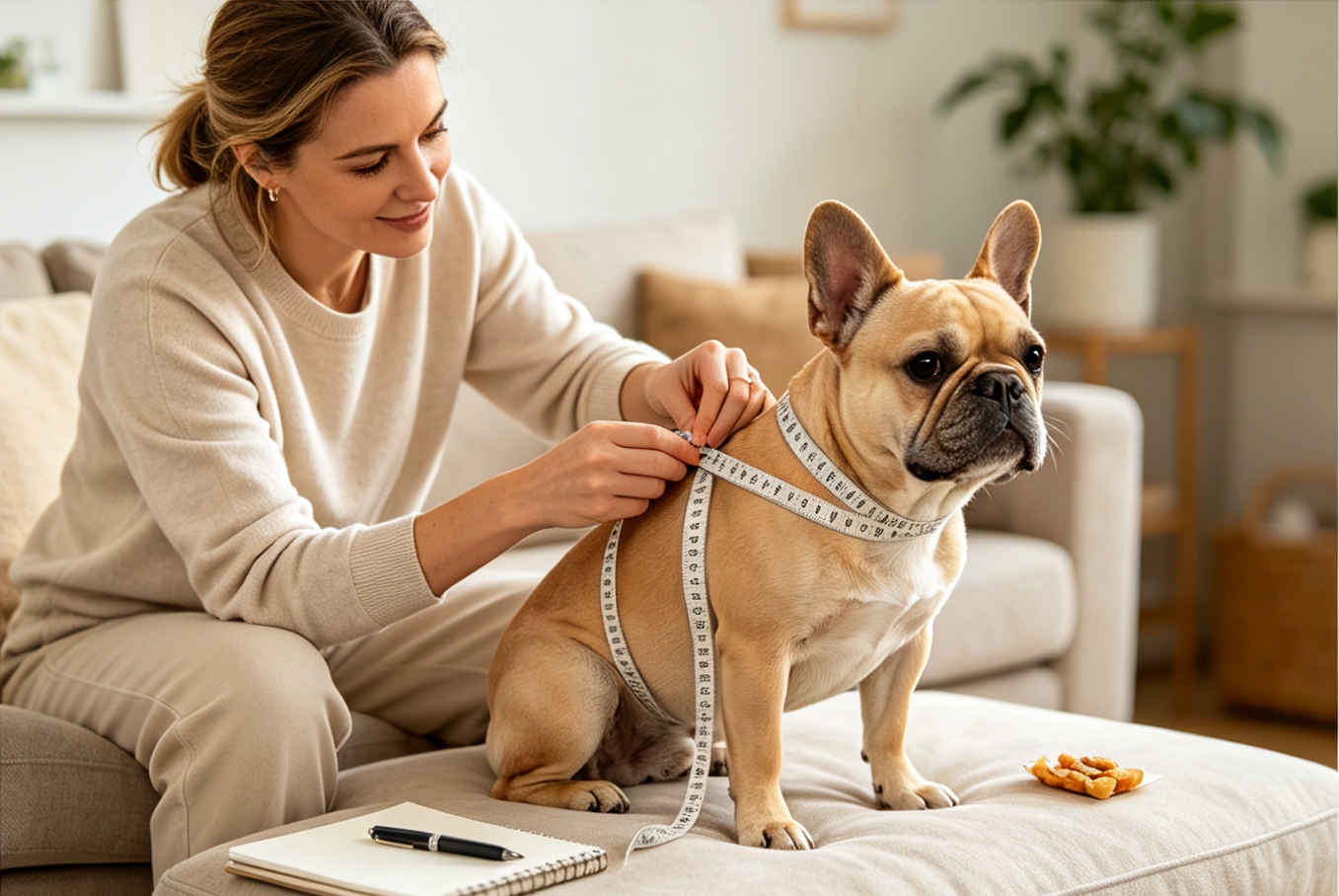
2. Medication Check: Confirm the product is within its expiry date and select the correct dosage size according to your French Bulldog’s exact body weight — never estimate weight roughly.
3. Supplies: A wide-tooth small comb, clean cotton balls or gauze squares, scissors (to snip the applicator tip if required), and disposable gloves (optional but recommended for hygiene).
Step 2: Locate Target Application Points — Not Only the Back of the Neck
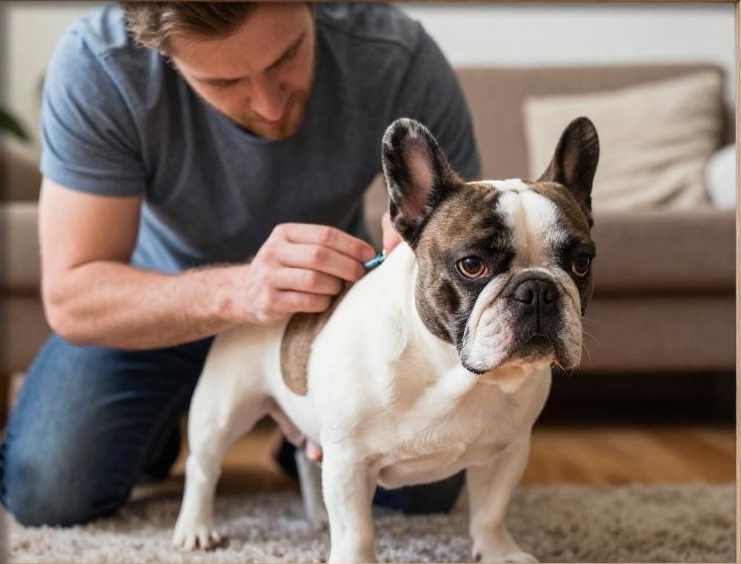
This is the most vital stage and a refined technique developed over my years of practice. Conventional advice suggests applying only between the shoulder blades, but for French Bulldogs, I recommend the 3–4 segmented spot application method to ensure even distribution and dispersion of liquid along the spine.
1. Point 1 (Base of the Neck): Use your thumb and forefinger to gently part fur directly in front of the shoulder blades until bare skin is visible. This is your starting point.
2. Point 2 (Between Shoulder Blades): Move roughly 3–5 cm backward along the spine (adjust based on your dog’s size) to mark the second site.
3. Point 3 & 4 (Lumbar Back): Continue toward the rear; select the third point near the thoracolumbar junction, and a fourth point above the base of the tail. Three points may suffice for smaller French Bulldogs, while four points deliver better coverage for larger or overweight individuals.
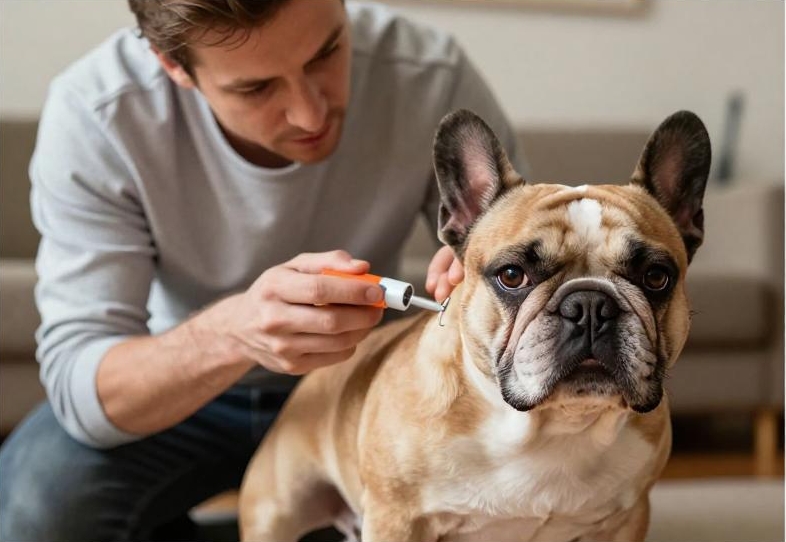
Key Practical Tip: Mentally mark each target spot first. Use the comb to brush fur fully apart to both sides, creating a clear exposed strip of skin instead of just a small opening. When dripping, the liquid will flow along this skin strip and absorb far more easily.
Step 3: Apply the Liquid Correctly
1. Snip the sealed tip of the applicator if necessary.
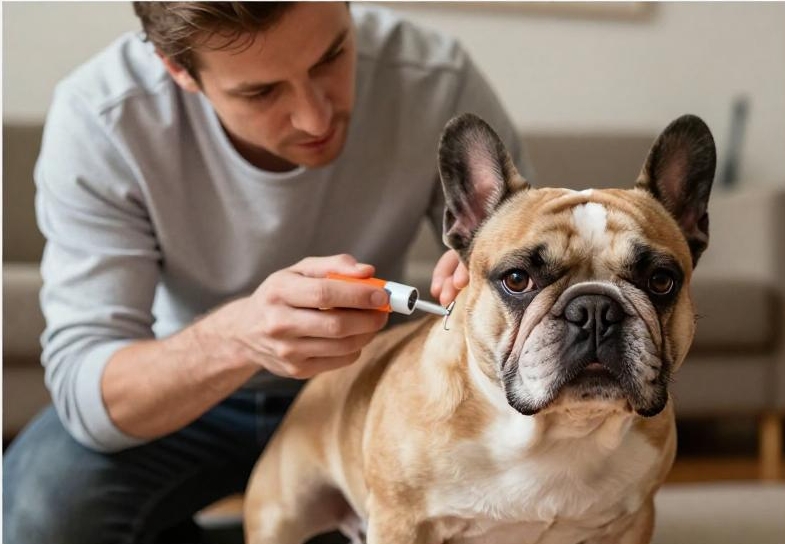
2. Hold the applicator tip vertically above the exposed skin strip, squeeze gently so liquid drips directly onto bare skin, not onto fur. You will see small liquid droplets form on the skin.
3. Do NOT rub vigorously! I emphasize this repeatedly. Many owners rub firmly after application thinking it boosts absorption. In reality, heavy rubbing causes excessive local spreading; much liquid gets trapped and wasted within fur, and friction may irritate sensitive skin. The correct method: after dripping each spot, use a gloved fingertip or the edge of a cotton ball to very lightly pat the liquid to slightly expand its contact area with the skin.
4. Complete application for all marked points sequentially.
Step 4: Care for Specialised Fold Areas (Unique to French Bulldogs)
The neck and facial skin folds of French Bulldogs are prime breeding grounds for parasites and bacteria. While spot-on treatment disperses across the whole body, you can provide gentle auxiliary care for heavily folded regions.
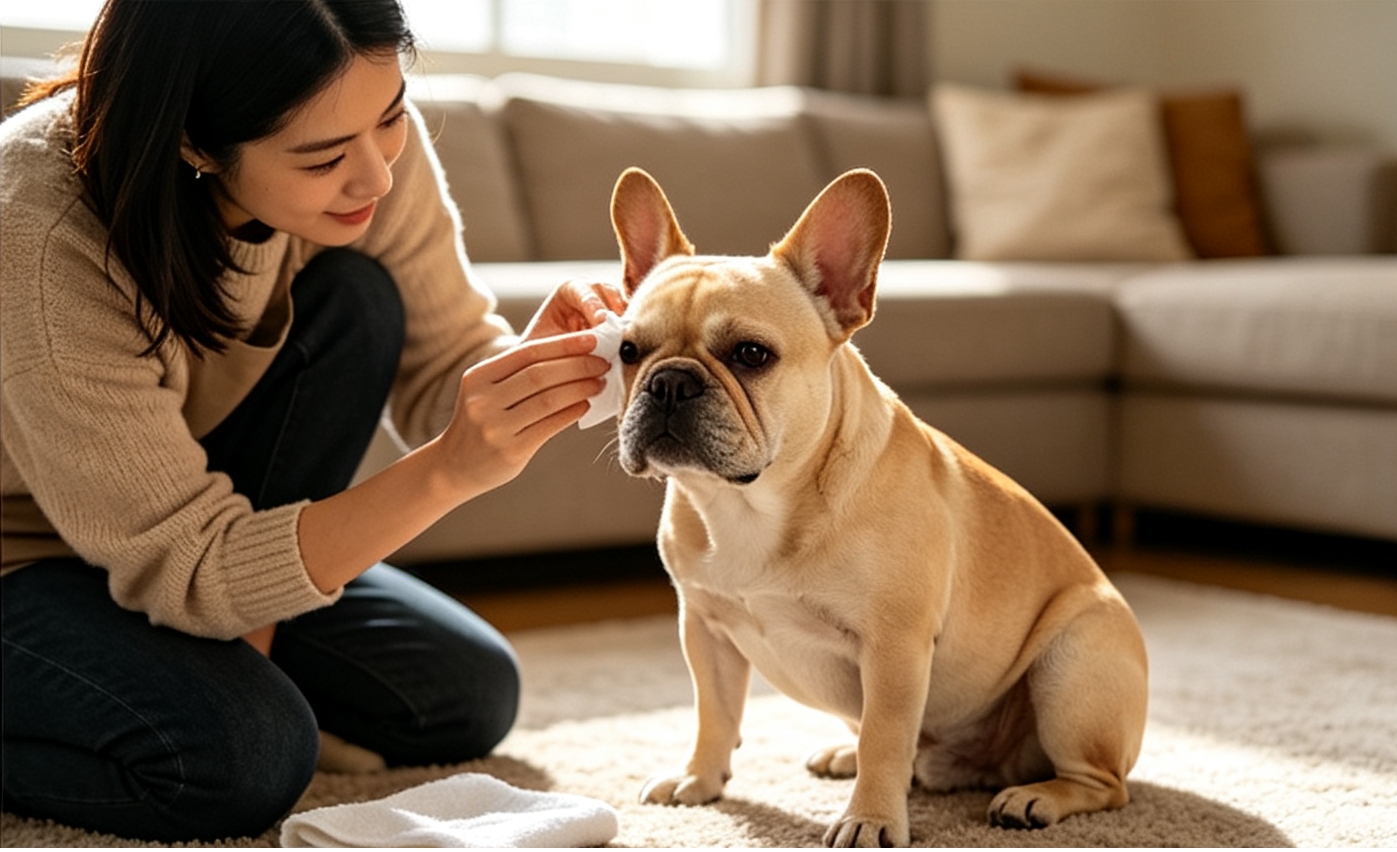
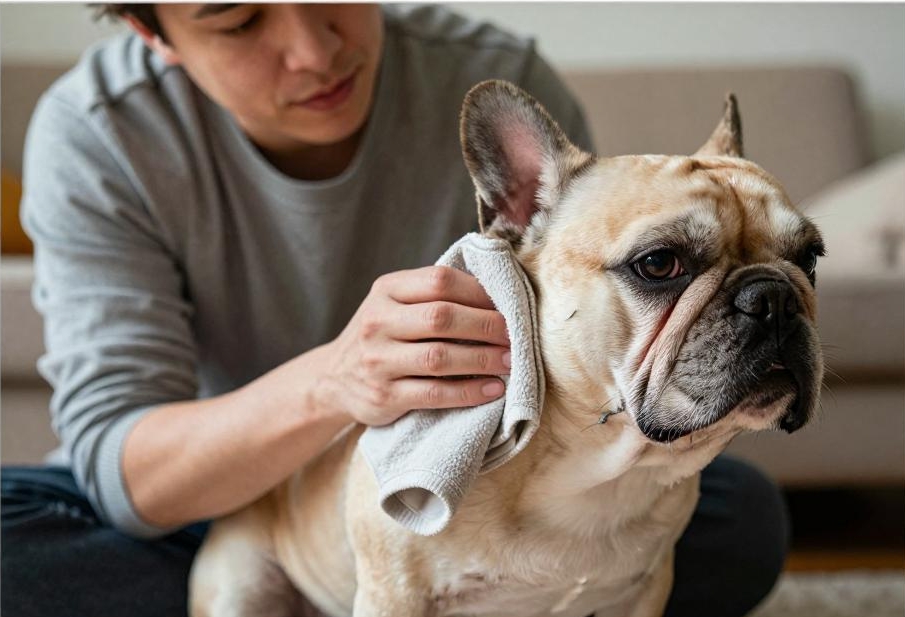
Wait 24–48 hours after application (once the liquid has fully absorbed and distributed). Take a clean, slightly damp soft cloth and gently wipe inside the neck and facial folds. This helps clear hidden parasites or eggs while keeping folds dry and hygienic. Always use soft pressure, and never wipe folds immediately after dosing — this risks removing unabsorbed medication.
4. Mistake Avoidance Guide — Never Commit These Errors
1. Mistake 1: Simply drip onto fur. This is the most common error. Liquid on hair evaporates or gets rubbed off and cannot be properly absorbed.
2. Mistake 2: Apply the entire tube at one single spot with excessive volume. Concentrated liquid irritates local skin, and excess solution runs down the coat and goes to waste.
3. Mistake 3: Bathing or heavy activity immediately after treatment. Liquid requires 24–48 hours to disperse via skin lipids. Keep your dog dry during this window; avoid swimming, bathing or rain exposure.
4. Mistake 4: Apply drops too far down the torso. Never dose areas your dog can easily reach and lick, such as the side of the neck or lower back. Even with modern safe formulations, preventing ingestion remains best practice.
5. Mistake 5: Neglect environmental parasite control. Treatment protects your dog, but flea eggs and larvae survive indoors on carpets and dog beds. Combine pet treatment with household cleaning and surface sprays to fully break the parasite life cycle.
5. Summary
Administering external parasite prevention to French Bulldogs requires patience and skill. The core principles are direct skin contact and even distribution. Using the segmented spot application method, carefully parting fur to apply liquid directly onto bare skin, and properly maintaining skin folds lets you maximise treatment efficacy and build a reliable protective barrier for your Frenchie. Remember: prevention is always better than cure. Regular external parasite control is essential to safeguard their skin health and household hygiene.
Important Reminder
The techniques shared in this article apply to routine preventive parasite treatment. If your French Bulldog develops extreme persistent itching, widespread hair loss, inflamed broken skin, or visible heavy parasite infestation, this indicates severe parasitic infection or underlying skin disease. At this stage, home medication may not resolve the issue and could delay proper care. Take your dog to a licensed veterinary clinic promptly for professional diagnosis and treatment. Your vet may prescribe stronger prescription parasiticides, medicated baths, oral treatments and targeted skin therapy. Show your love by providing timely, expert care.