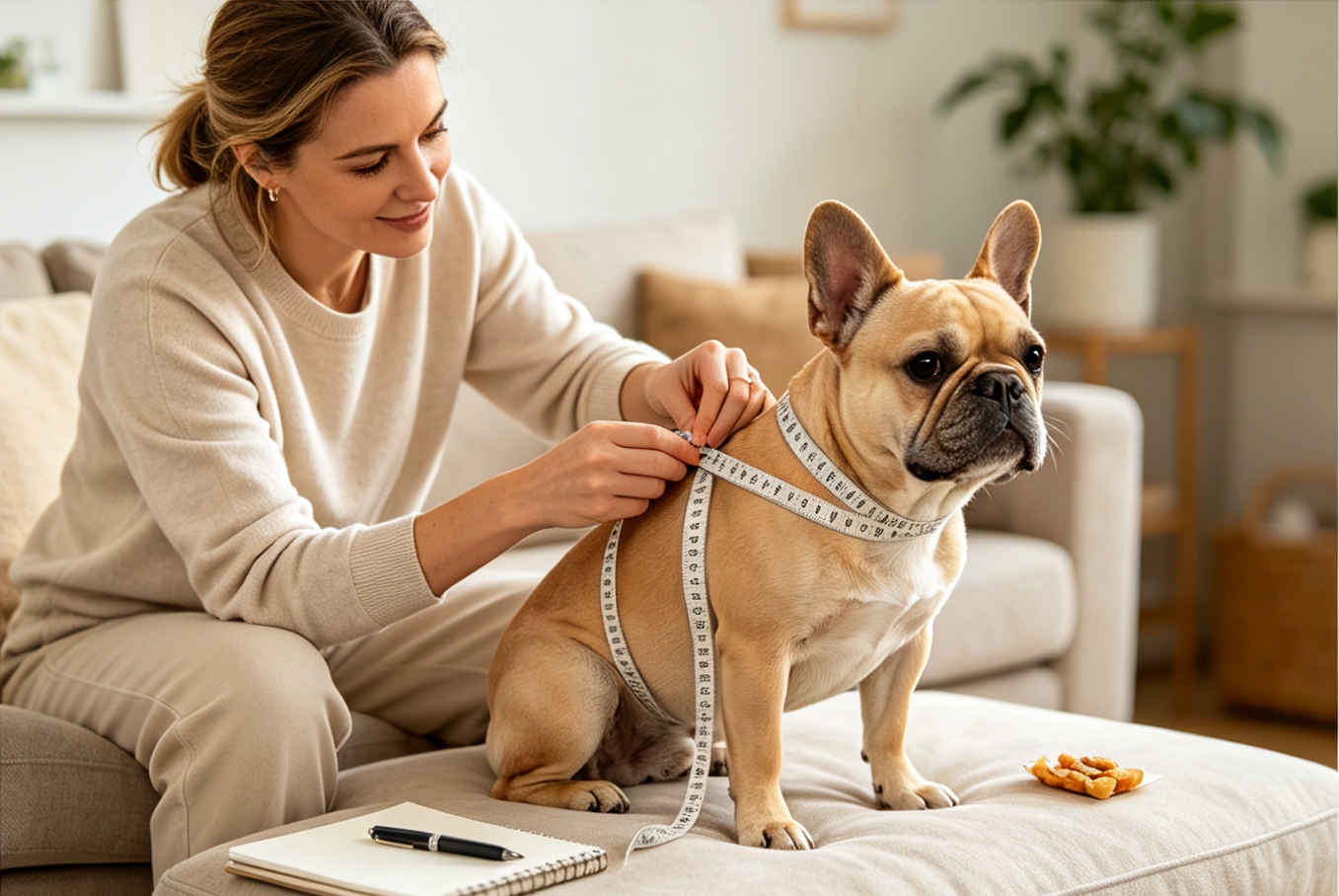
Hello everyone. After years of caring for companion pets, watching energetic young pups grow into calm senior dogs fills us with deep affection, alongside brand-new care responsibilities. Breeds with unique body builds and vulnerable joints like French Bulldogs almost inevitably face mobility limitations as they age. Drawing from hundreds of real clinical cases, today I’ll break down simple, practical home modifications to help your elderly French Bulldog live a more comfortable, safe and dignified life.
1. When Your Lively French Bulldog Turns Lethargic: Common Daily Struggles
Have you noticed your aging French Bulldog refuses to climb stairs? Where they once leaped onto the sofa effortlessly, they now stare longingly from the floor? Do their hind legs wobble while walking, do they strain to stand up, or suddenly slip and splay their legs on smooth indoor floors? Do they hunch uncomfortably to reach food and water, followed by light coughing after meals? These subtle signs are far more than just “old age slowing them down” — they are clear cries for help. Limited mobility shrinks their range of movement and brings on frustration and anxiety. Worse, fear of falling may cause them to drink less water and hold their bladder longer, triggering severe secondary health issues. Your home, their most familiar safe haven, may have silently turned into an obstacle course for their aging bodies.
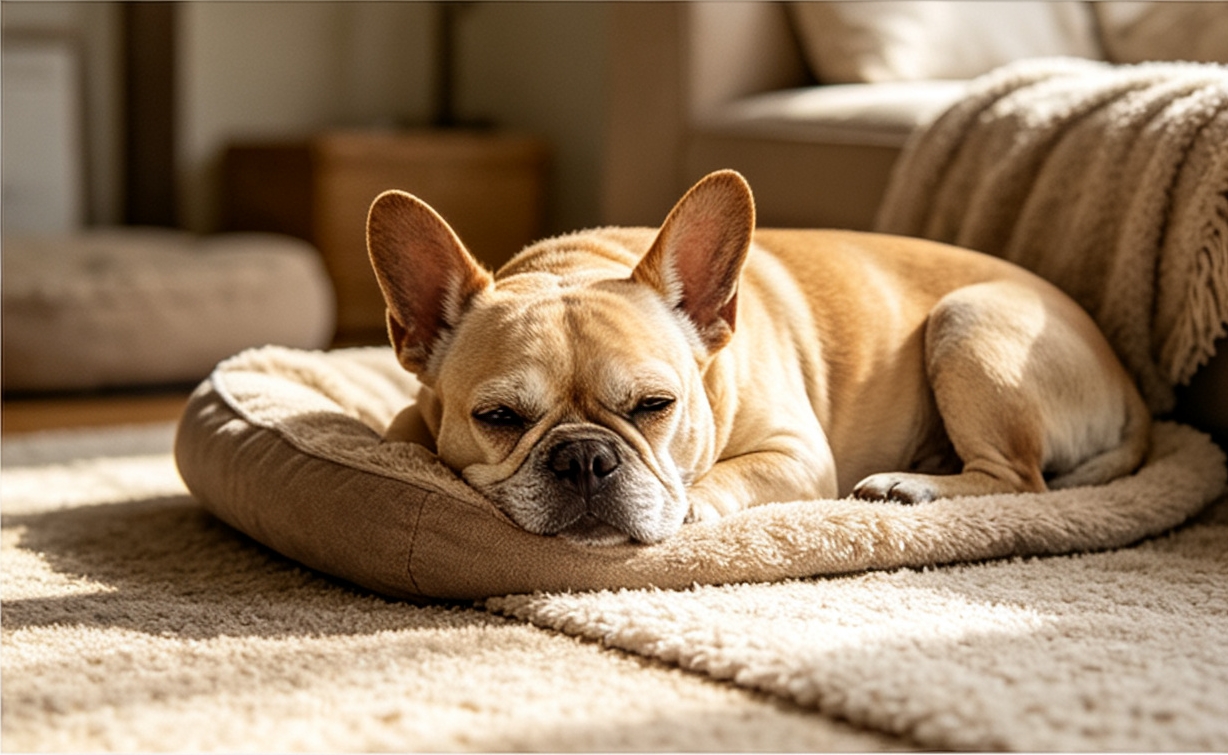
2. Why Senior French Bulldogs Require Extra Special Care: Root Cause Breakdown
To solve mobility problems, we first need to understand their origins. French Bulldogs’ distinct physical traits create overlapping health challenges in their golden years:
1. Joint & Spinal Degeneration: French Bulldogs have short legs and a forward-shifted center of gravity, placing constant strain on their spines and limb joints. In old age, rates of arthritis and Intervertebral Disc Disease (IVDD) rise sharply; chronic pain directly discourages movement and makes standing extremely difficult.
2. Age-Related Muscle Atrophy: Muscle mass naturally wastes away as dogs grow older, reducing bodily support and balance control. This makes slips and falls on slick surfaces extremely common.
3. Deteriorated Senses: Declining eyesight and hearing distort their perception of surroundings, raising risks of collisions and falls.
4. Compromised Respiratory Function: As brachycephalic flat-faced dogs, French Bulldogs already struggle with restricted airflow. Cardiopulmonary function weakens further with age. Nervousness from slippery floors or strenuous climbing triggers rapid, labored breathing.
The core goal of all home renovations is clear: reduce joint stress, compensate for lost muscle strength, prevent slip-and-fall injuries, and cut energy expenditure during daily activities. This is not just buying a few pet accessories — it means redesigning your living space from your senior dog’s perspective.
3. Turn Your Home Into a Safe Sanctuary: 5 Step-by-Step Renovation Solutions
Solution 1: Full Anti-Slip Overhaul for Maximum Floor Traction
This is the most critical, foundational upgrade. Polished tile and hardwood floors pose the biggest threat to seniors with unstable joints.
Veterinarian Case Experience: I treated a 13-year-old French Bulldog named Pudgy whose owner reported he constantly hid in corners and avoided moving. During a home visit, I saw their living room had glossy tile flooring. When Pudgy walked across it, he stepped extremely cautiously, splaying his hind legs wide to stay balanced, and wanted to sit down after only a few steps. Constant tension drained his energy rapidly.
Implementation Steps:
- Full-Coverage Non-Slip Mats / Rugs: Lay connected anti-slip mats along all regular travel paths (from bed to front door, bed to water bowl). Select styles with natural rubber dotted backing and short pile or PVC top layers — they stay fixed in place and are easy to sanitize. Avoid small loose rugs with curled edges, which become tripping hazards.
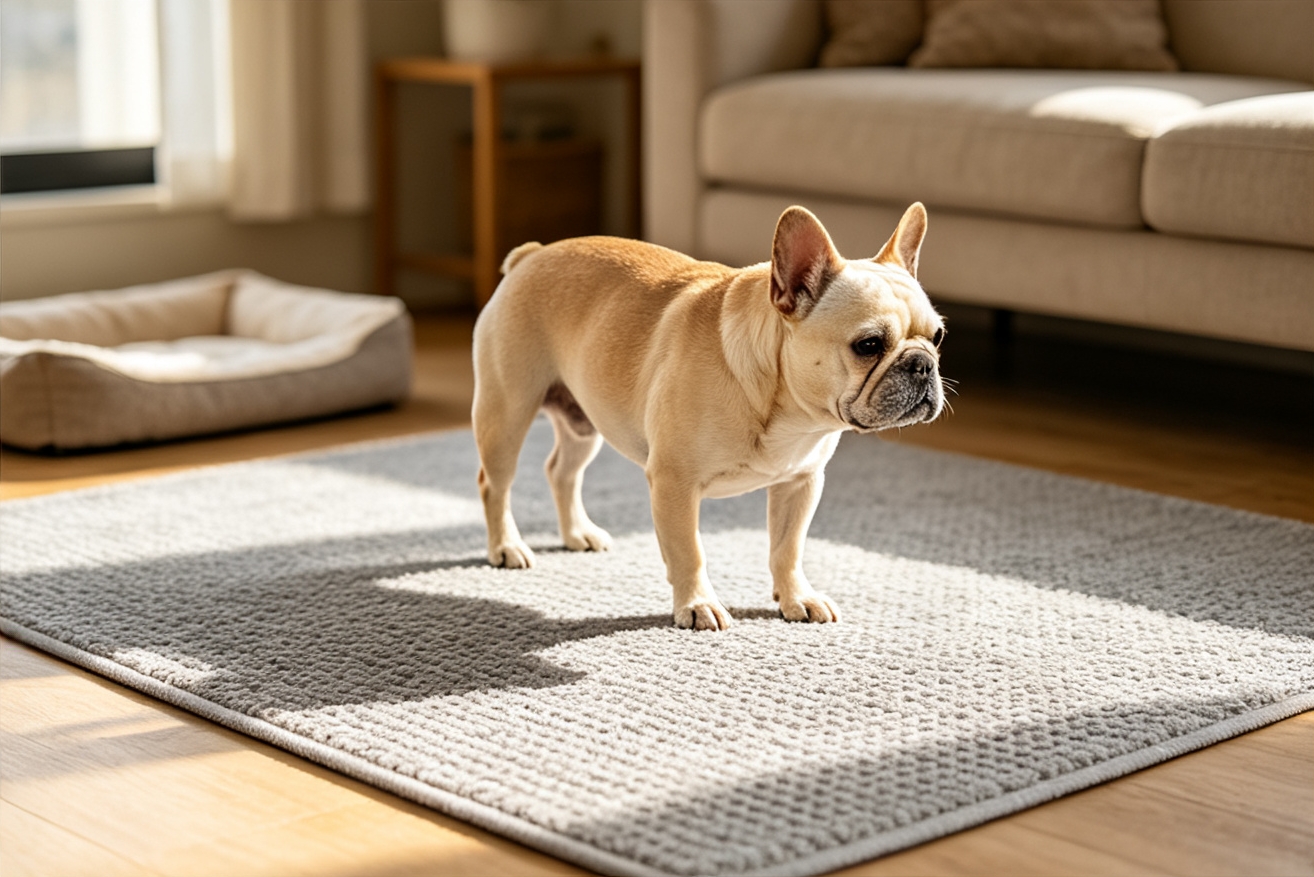
2. High-Traffic Zone Reinforcement: Place thick, heavy-duty anti-slip mats at feeding stations, beside beds, and sofa/bed edges where your dog pushes off to stand — this is where slips happen most often.
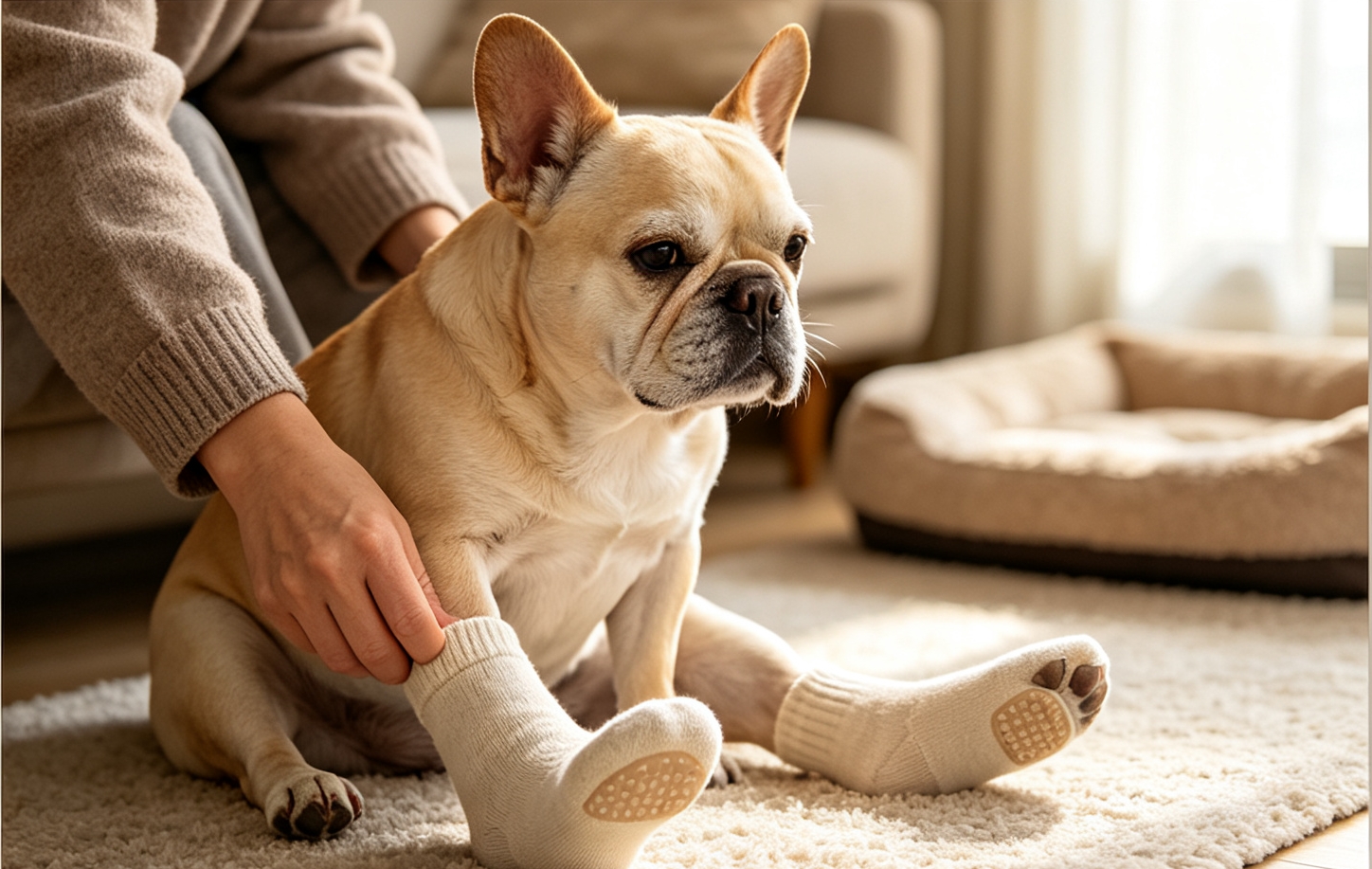
3. Temporary Quick Fixes: If full rug installation is not yet possible, purchase silicone-dotted pet anti-slip socks and slowly train your dog to wear them. A cheaper alternative: cut old yoga mats to size and lay them in key high-risk zones.
Solution 2: Eliminate Height Gaps to Protect Vulnerable Joints
Every jump or climb delivers harsh impact to a senior French Bulldog’s spine and joints.
Veterinarian Case Experience: Niu Niu, a 10-year-old French Bulldog who loved sleeping on her owner’s bed, developed front leg tremors every morning after waking. Observation revealed she launched herself upward onto the bed and jumped down with a heavy thud each night. Months of repeated impact caused hidden damage to her wrist and shoulder joints.
Implementation Steps:
1. Pet Ramps & Low Steps: Install sturdy pet ramps or gradual stair sets for sofas, beds and car rides. Ramps should feature a 20–30 degree gentle slope with full anti-slip treads. Stairs must have shallow, deep treads to let French Bulldogs pivot comfortably without straining.
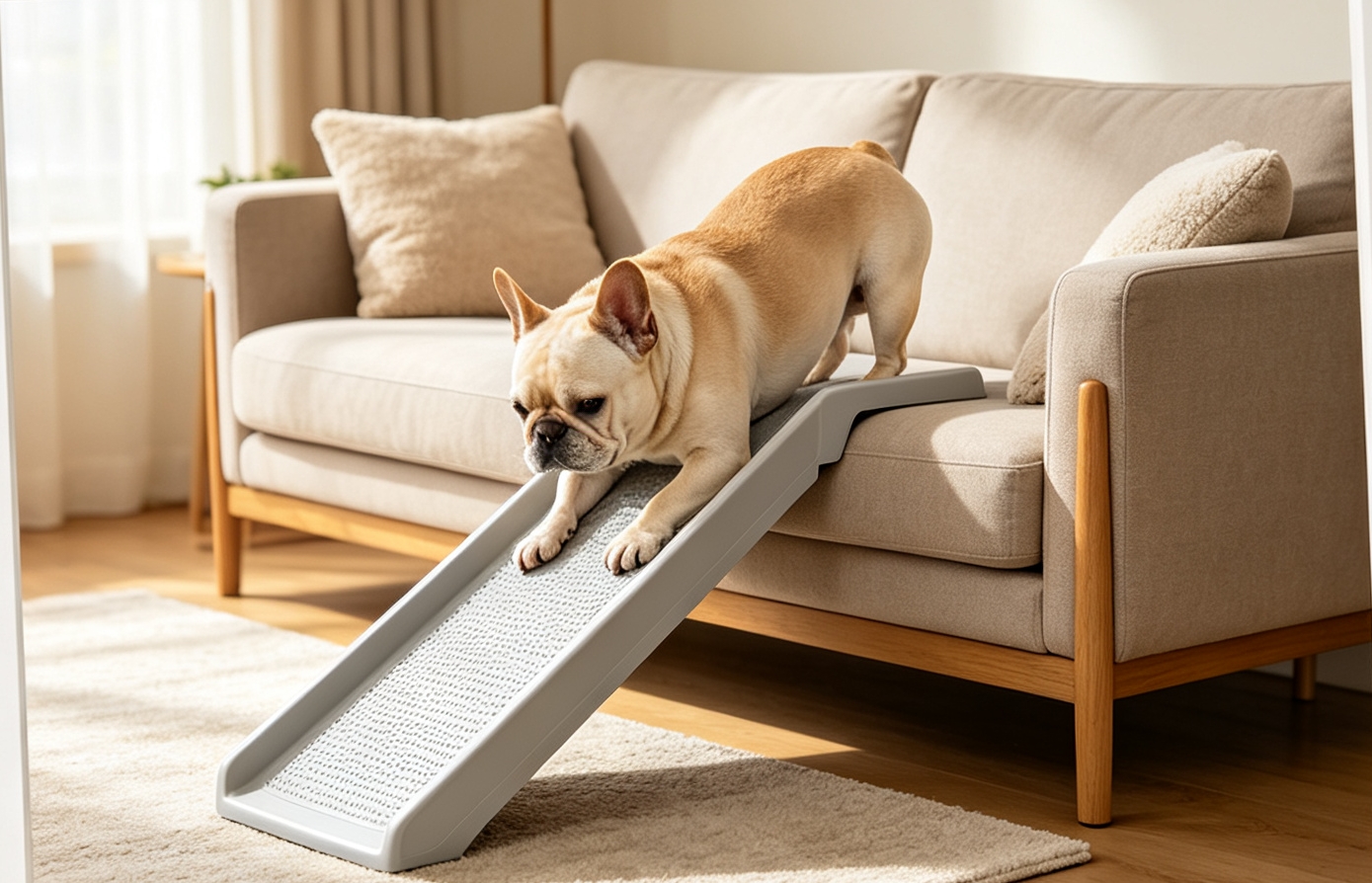
2. Ground-Level Rest Zones: The ideal long-term solution is an open-frame orthopedic senior dog bed with cushioned bolsters placed directly on the floor, encouraging ground-level rest and eliminating all climbing. I recommend positioning the bed in a quiet bedroom corner for safety and constant companionship.
3. Threshold Transition Strips: For uneven door thresholds, apply adhesive rubber ramp strips to smooth out small tripping barriers.
Solution 3: Optimize Feeding & Water Stations to Reduce Neck Strain
Hunching down to eat and drink strains cervical vertebrae. For flat-faced breeds, this posture also raises risks of choking and swallowed air leading to gastric bloating.
Implementation Steps:
1. Elevate Food & Water Bowls: Use a dedicated raised pet feeding stand, or place bowls on a stable low stool or cardboard box cut to the correct height. The ideal height aligns the bowl rim level with or slightly below their shoulder blades while standing, so they only need a slight downward tilt to eat and drink.
2. Select Appropriate Dishes: Choose wide, stable splash-proof water bowls that resist tipping. Fast-eating French Bulldogs benefit from slow feeder bowls to prevent choking and improve digestion.
3. Fixed, Quiet Placement: Position feeding areas in calm, undisturbed corners fully covered by anti-slip matting, so their paws stay stable during meals.
Solution 4: Adjust Potty Routine to Accommodate Bladder Weakness
Seniors lose bladder control, yet trips outdoors become exhausting with limited mobility.
Veterinarian Case Experience: A client’s dog Doubao suffered hind leg weakness and frequently urinated on the slick entryway tile while hobbling toward the front door to go outside. The accidents left the dog extremely discouraged and the owner frustrated — all stemming from poorly arranged indoor space.
Implementation Steps:
1. Indoor Emergency Potty Zone: If stairs or harsh weather make outdoor trips difficult, set up an indoor relief station with large disposable pet pads or artificial grass dog toilets. Place the station close to their resting area in easy-to-clean spaces such as balconies or bathrooms.
2. Outdoor Mobility Support: Keep a lightweight pet stroller or carrier by the front door for walks. If your dog shows exhaustion after eliminating outdoors, wheel them home to cut joint wear and tear.
3. Patience & Positive Reinforcement: Never scold your dog for indoor accidents. Fully clean the mess, then guide and reward them to reinforce memory of the designated potty spot.
Solution 5: Build a Fully Barrier-Free Safe Living Space
Eliminate all hidden hazards with small daily adjustments.
Implementation Steps:
1. Clear Floor Clutter: Tuck away loose electrical cords, miscellaneous items and children’s toys to keep all walking paths wide and unobstructed.
2. Edge Cushioning: Apply soft bumper guards to glass tables and sharp coffee table corners to prevent painful collisions in dogs with impaired eyesight.
3. Gentle Night Lighting: Install soft low-watt nightlights along paths your dog travels overnight to navigate safely and reduce nighttime anxiety from darkness.
4. Regulate Comfortable Temperatures: French Bulldogs overheat easily, and seniors lose efficient body temperature regulation. Keep resting zones cool and well-ventilated, away from radiators and direct sunlight; run air conditioning consistently through summer.
4. Mistake Avoidance Guide: Common Renovation Errors to Skip
1. Blind Calcium Supplementation: Joint pain rarely stems from calcium deficiency. Most senior joint issues are degenerative arthritis, and unregulated calcium supplements can cause serious health harm. All nutritional additives require veterinary approval before use.
2. Flimsy Mobility Aids: Cheap lightweight plastic ramps or stairs wobble under a dog’s weight, amplifying fear and fall risk. Only select heavy-duty products with wide, stable base frames and solid construction.
3. Forced Over-Exercise: The myth “more walking heals joints” harms seniors in pain. Extended walks worsen joint inflammation. Follow the rule of short, frequent slow strolls on flat ground, stopping immediately if your dog shows fatigue or discomfort.
4. Neglect Weight Management: Excess body weight is the biggest enemy of arthritic joints. Adjust their diet to senior or weight-control formulated kibble to maintain a healthy lean body mass — every pound lost lessens pressure on sore joints.
5. Ignore Dental Pain: Senior dogs commonly develop dental disease, and oral pain suppresses appetite and worsens mood. Schedule regular dental checks, serve soft moist meals or book professional dental cleanings as recommended by your vet.
5. Final Summary: Small Loving Details Create a Peaceful Old Age
Caring for an aging French Bulldog tests our patience and attentiveness. Every home modification we make sends a quiet message: “I see how hard this is for you, and I will support you.” These upgrades do not need to be completed all at once; start with the highest priorities — anti-slip flooring and height gap elimination — then add improvements gradually. There is no greater reward than watching them walk confidently without fear of slipping, or curl up beside you effortlessly without painful jumping, radiating renewed calm and confidence. Your senior dog’s quality of life largely depends on the small safe comforts you build within your shared home.
Friendly Medical Reminder
The home adjustment advice in this article supports daily comfort and safety for senior dogs and counts as routine wellness care only. Reduced mobility can signal severe underlying illnesses including advanced arthritis, neurological disorders, endocrine disease and more. Immediately contact your veterinarian for urgent professional diagnosis and treatment if your dog displays any of the following symptoms: sudden paralysis or inability to stand, full urinary/fecal incontinence, screaming or extreme pain when touched anywhere on the body, rapid loss of appetite and energy, severe labored breathing. At-home modifications cannot replace critical veterinary medical intervention. Schedule bi-annual wellness exams for your senior French Bulldog, maintain open communication with your vet, and follow a personalized long-term health management plan to give them the most loving lifelong care.