A Scary Real-Life Story: Why French Bulldog Car Safety Cannot Be Ignored
Hello everyone, I’m a veterinarian and professional dog trainer with over ten years of industry experience. Today I want to talk about a common yet easily overlooked topic: how to safely take your French Bulldog on short self-driving trips. Let me start with a true case: several years ago, one of my clients Ms. Wang took her beloved Frenchie Doubao for a countryside trip. The drive was only one hour long. When the car braked for a red light, excited and curious Doubao leaped from the back seat toward the front dashboard, hitting it hard and suffering a mild concussion plus nasal bleeding. He fully recovered after treatment, but the terrifying incident left both Ms. Wang and me deeply shaken. Since then, I’ve realized many dog owners love their pups dearly yet underestimate hidden dangers inside vehicles—especially for breeds with the unique body type of French Bulldogs.
French Bulldogs feature adorable flat muzzles, compact sturdy builds and lively personalities. However, these exact traits create unique safety hazards during car rides. As brachycephalic (short-nosed) dogs, they struggle with rapid breathing and heatstroke in poorly ventilated cars with drastic temperature swings. They are curious and energetic with low center of gravity, making them prone to losing balance and falling when the car turns or brakes sharply. Many Frenchies feel a mix of excitement and anxiety in vehicles; improper restraint will worsen stress, trigger escape attempts and even distract the driver. Every casual car ride with your dog carries potential risks. Our goal is to minimize all hazards through scientific, thoughtful setup and turn every trip into wonderful memories.
Root Cause Breakdown: Hidden Dangers When French Bulldogs Ride in Cars
Before designing safety solutions, we need to understand the source of risks. Safety issues for Frenchies in vehicles stem from three factors: physical anatomy, behavioral psychology and the dynamic car environment.
1. Vulnerabilities From Unique Physiology: French Bulldogs are brachycephalic breeds with naturally narrow respiratory tracts and poor heat dissipation. They face life-threatening heat stress or heatstroke quickly in warm summer cars. Their spinal structure is also distinctive; rough bumps or violent collisions may lead to severe injuries.
2. Unpredictable Behavior & Mental Stress: Untrained dogs may grow extremely excited, anxious or fearful inside cars. Overexcited Frenchies pace back and forth and bark, distracting driving. Anxious pups shake, drool heavily (a classic sign of motion sickness), and may scratch or chew seat upholstery. Sudden loud noises like car horns or thunder can spark panic and loss of self-control.
3. Hazards of Moving Vehicle Dynamics: Acceleration, braking and turning create powerful inertial force. Even a mild sudden stop can send an unrestrained dog flying forward into seats or windshields, causing critical internal bleeding or bone fractures. Additionally, partially rolled-down windows risk trapped paws, or worse—dogs jumping out of the moving vehicle.
With these risks clear, we can build a fully secure, Frenchie-friendly mobile space with targeted preparations.
Practical Solutions: 3 Steps to Build a Dedicated Safe Car Zone for French Bulldogs
Drawing on years of clinical and dog training experience, I’ve developed an easy-to-follow short-trip car safety setup system. Remember: vehicle safety is an interconnected complete system with every component playing a vital role.
Solution 1: Core Restraint – Select & Correctly Fit Safety Equipment
This is the foundation of all car safety preparations. Two mainstream reliable options are available; pick one based on your dog’s temperament and vehicle layout.
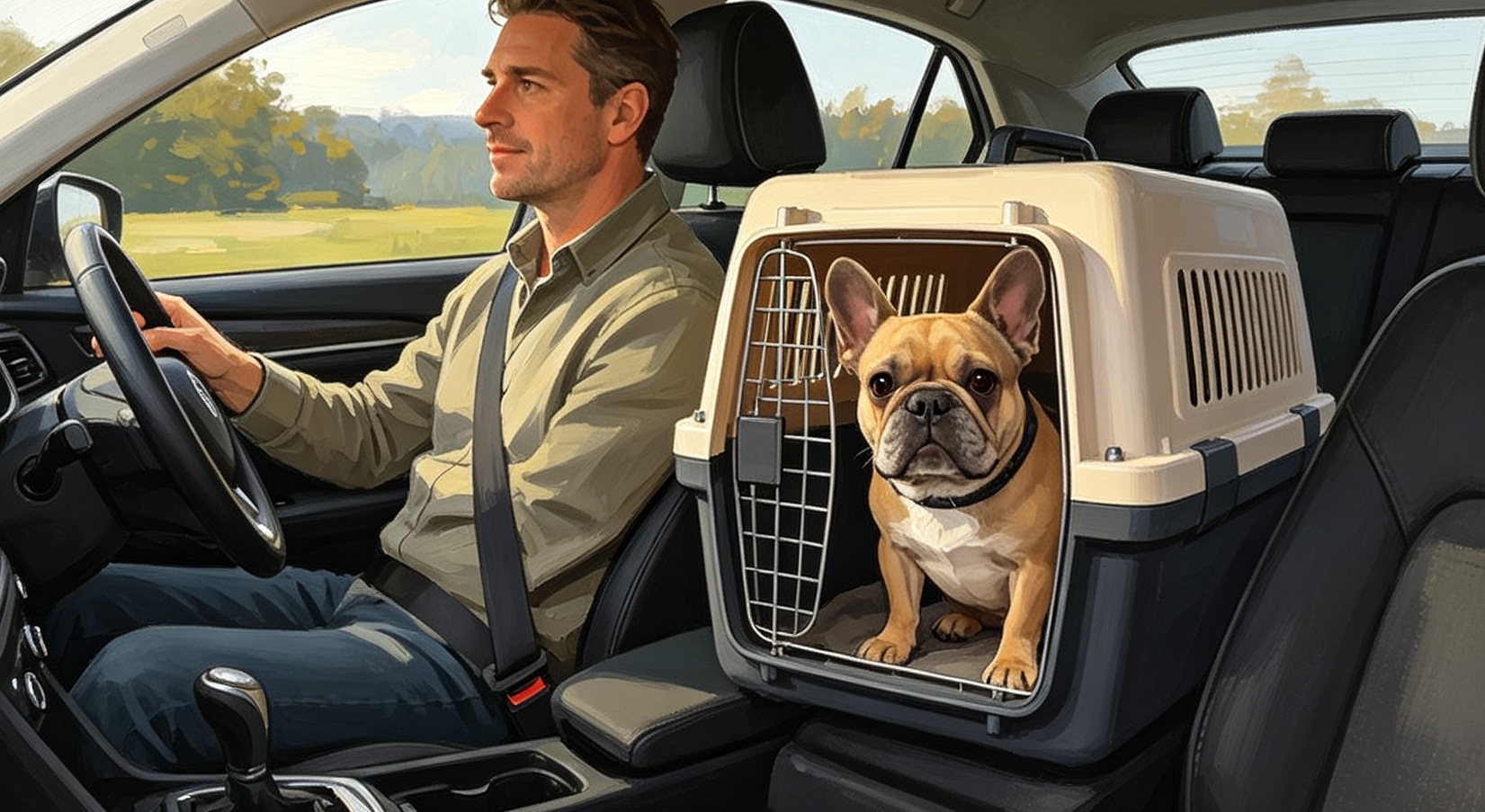
A. Hard-Sided Travel Crate (My Top Recommendation): A properly sized sturdy travel crate acts as your dog’s protective safety pod. Over 70% of my French Bulldog clients reported drastically reduced anxiety after switching to crates. For sizing, the crate length should be approximately 1.5 times the distance from your dog’s nose to the base of its tail, allowing full standing, turning and lying down. Choose durable, solid construction. The most critical step is secure anchoring! I’ve seen unfastened crates tip over during simple turns. My standard method: thread vehicle seatbelts through dedicated anchor holes built into most premium crates, or place the crate flat on the car floor and strap it firmly to factory mounting points with cargo tie-down straps to eliminate sliding entirely. Line the crate with familiar bedding and an old t-shirt carrying your scent to drastically boost your dog’s sense of security.
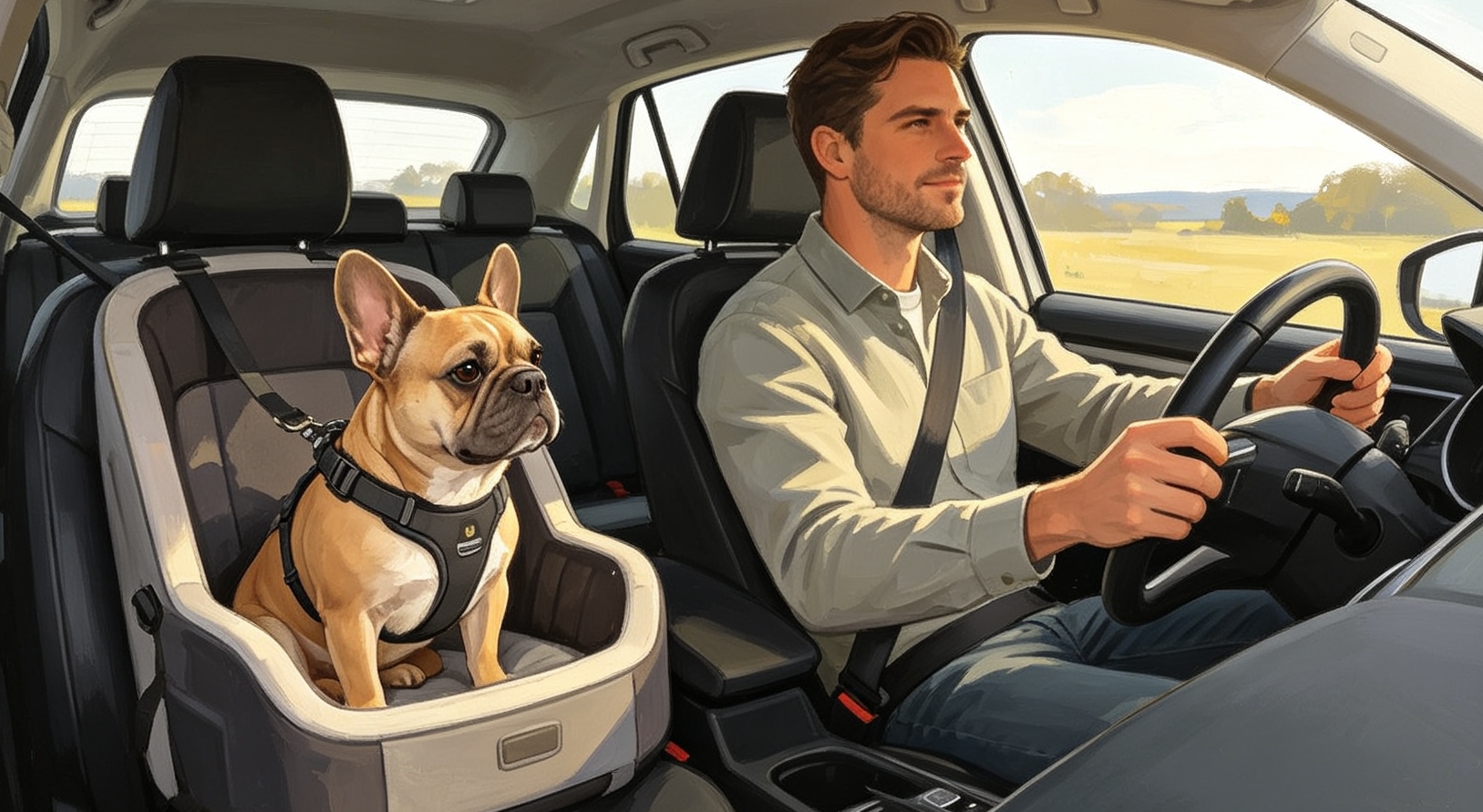
B. Crash-Tested Pet Car Harness + Seatbelt Connector: This secondary alternative works for Frenchies who refuse crate confinement. Important note: regular walking harnesses are not safe for driving! You must use a crash-tested dedicated automotive pet harness, reinforced with thick padded chest and back panels plus heavy-duty stitching. From my experience, always adjust the harness for a snug fit per official instructions—leave just enough room to slide two flat fingers underneath. Loose harnesses allow escape; overly tight straps restrict breathing. Attach the harness buckle to a dedicated car seatbelt adapter, or hardware compatible with child seat ISOFIX anchor points. This limits roaming range while evenly distributing impact force in collisions. Early on I tried standard walking harnesses for car use in simulation tests, only to watch the connection snap instantly. This frightening result convinced me to only endorse professional crash-rated car harnesses permanently.
Solution 2: Optimize Car Environment – Balance Comfort & Calming
New restraints may make dogs uncomfortable at first, so a soothing surrounding environment is essential to complement safety gear.
1. Non-Slip Mats & Zoned Partitioning: Even with a travel crate installed, I recommend laying high-quality waterproof non-slip mats across flat backseat or trunk surfaces. These mats stop crate sliding, and provide stable traction for dogs traveling without crates to stand steadily. Waterproof liners simplify cleaning accidents like urine, feces or excess drool. Additionally, install a backseat pet barrier gate or car mesh divider to separate the driver cockpit from rear passenger space. This prevents disruptive dog behavior (I’ve encountered cases where dogs suddenly licked drivers’ ears mid-drive) and blocks panicked rushes toward the front during emergencies.
2. Temperature & Airflow Control: This factor directly impacts your Frenchie’s survival. Never leave a dog unattended in a parked vehicle—even cracked windows cannot stop interior temperatures spiking to lethal levels within minutes. While driving, run air conditioning to maintain a steady 22–25°C, and avoid blowing cold air directly onto your dog. Crack two opposite windows slightly to generate gentle cross ventilation without harsh gusts blowing into the car. I always keep a portable water bottle and collapsible bowl in the vehicle, planning regular rest stops for hydration and stress relief.
3. Anxiety-Relief Accessories: Place your dog’s favorite safe chew toy (no small swallowable fragments) or treat-stuffed puzzle feeder inside the crate or near the harness. Chewing and foraging are natural stress-releasing behaviors for canines. I also use synthetic dog appeasing pheromone sprays inside vehicles, which deliver dramatic calming effects for highly nervous French Bulldogs.
Solution 3: Pre-Trip Desensitization Training – Teach Your Dog to Enjoy Car Rides
The best safety equipment loses effectiveness if your dog fights against riding in the car. Slow desensitization and positive association training solve this problem completely.
Step 1: Build Positive Associations. Do not start driving right away. Park the car in a safe quiet area, reward your dog with treats and praise just for approaching the vehicle. Next, open doors with the engine turned off, encourage exploration of the stationary car interior, and feed full meals or offer beloved toys inside. Repeat daily until your dog acts relaxed and confident around the car.
Step 2: Short Static Car Sessions. Start the engine without moving the car, place your dog in its fully set-up secured spot, reward with treats and gentle praise for several minutes before ending the session. Gradually extend the engine-running duration over multiple days.
Step 3: Ultra-Short Test Drives. Take a 5-minute loop around your neighborhood, return home and deliver excited rewards afterward. Slowly increase drive length to 10 minutes, then 15 minutes. The core goal is teaching your dog: “Car rides lead to fun activities and good things.” In my practice, consistent 2–3 weekly training sessions help most French Bulldogs overcome travel anxiety within one month. For severe motion sickness, consult your vet for anti-nausea medication to use alongside training.
Mistake Avoidance Checklist: Critical Errors You Must Avoid
After guiding hundreds of pet families through car safety setup, I’ve compiled the most frequent dangerous mistakes for your reference:
1. Allowing dogs on front passenger seats or owner’s laps: This ranks among the deadliest car safety mistakes. Deploying airbags deliver fatal force to dogs, and unrestrained canine movement severely impairs driving control. Collisions will inflict catastrophic injuries to both human and pet.
2. Securing dogs directly with standard human seatbelts: Vehicle seatbelts for people are engineered for human body proportions and impact points. In sudden stops, they will crush your dog’s neck, chest or abdomen, causing suffocation and life-threatening internal injuries.
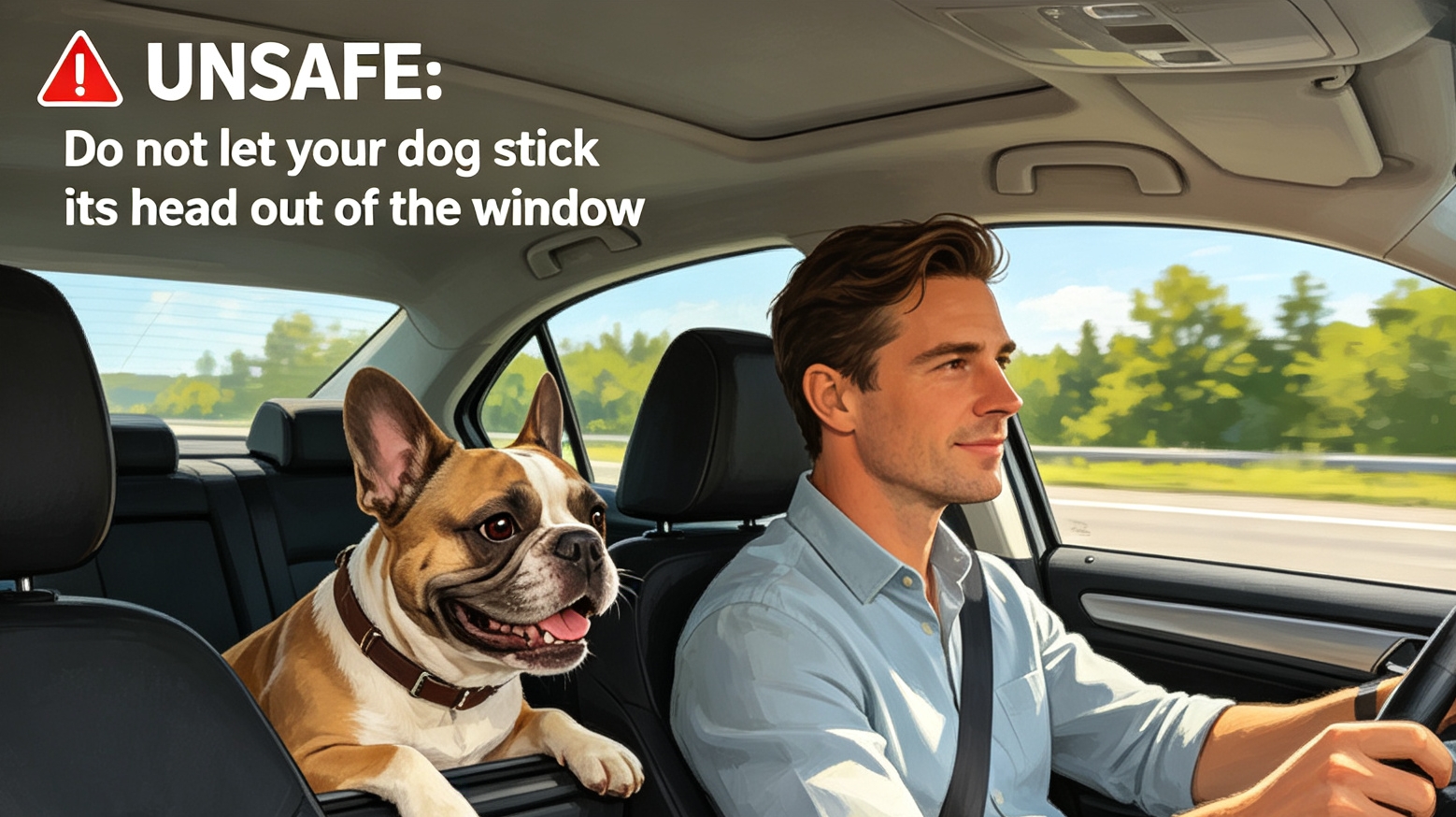
3. Rolling windows fully open for dogs to stick heads out: Extremely hazardous! Wind can scratch eye tissue, flying debris can be inhaled, external stimuli may trigger spontaneous jumps, and passing vehicles risk striking exposed heads. I’ve treated multiple severe traumatic injuries caused by this practice.
4. Feeding large meals right before travel: Fast food 1–2 hours prior to departure, or offer only tiny light snacks; fresh water can be provided normally. Full stomachs drastically raise motion sickness vomiting and discomfort risks.
5. Skipping routine gear inspections and maintenance: Before every trip, inspect harness straps and buckles for fraying, verify crate latches lock tightly, and check all connecting adapters for damage. All pet safety gear has a limited service lifespan and must be replaced once worn out.
Summary: Car Safety Is The First Lesson of Responsible Pet Love
Taking your French Bulldog on road trips is far more than simply placing them inside your vehicle. It demands the same thorough preparation you would use for a young child. From selecting proper restraint hardware, designing a comfortable car environment, to patient pre-trip training, every step reflects your love and accountability. A secure travel zone prevents physical trauma while calming your Frenchie’s mental stress, transforming dreadful car rides into enjoyable experiences. Remember: every safe arrival home is the greatest gift you can give your furry companion as a caring, responsible pet owner.
Important Emergency Reminders
Even with full safety preparations, unexpected injuries or illnesses can occur mid-journey or after arrival. Immediately end your trip and contact your veterinarian or rush to the nearest animal hospital if your French Bulldog displays any of these severe symptoms:
1. Heatstroke signs: Heavy labored panting, excessive drooling, bright red or bluish gums, lethargy, vomiting, collapse, significantly elevated body temperature (over 39.5°C).
2. Visible trauma or suspected internal injuries: Active bleeding, broken limbs (deformed legs, refusal to bear weight), inability to stand, breathing difficulty, swollen tender abdomen, unexplained whimpering and pain vocalization.
3. Neurological abnormalities: Confusion, disorientation, seizures, involuntary eye tremors, unequal pupil size.
4. Severe unrelenting stress response: Prolonged uncontrollable shaking, extreme drooling, diarrhea, complete refusal to move, or sudden aggressive behavior.
Save contact numbers for your regular vet clinic and 24-hour emergency animal hospitals along your travel route in your phone. Safe, joyful trips rely on professional veterinary care as your final critical safety backup.