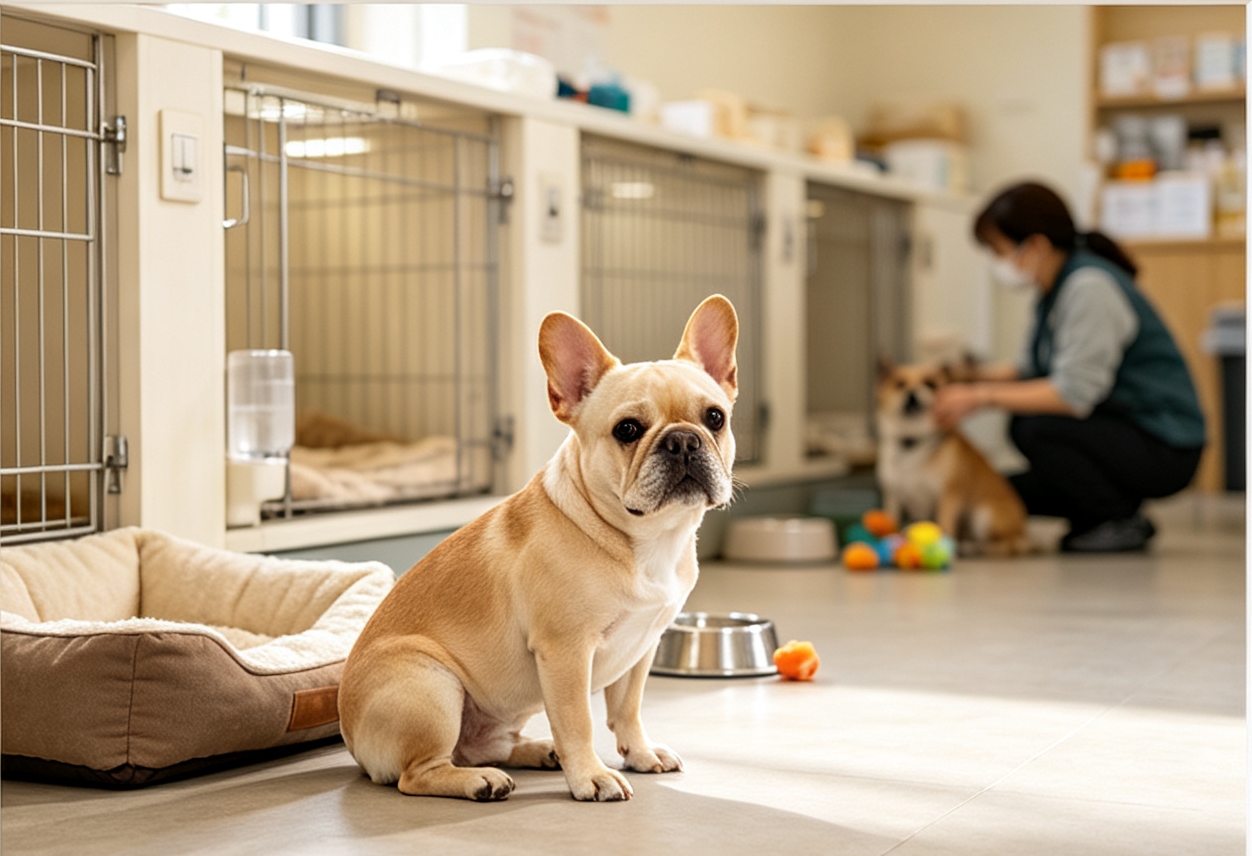
Hello, I’m Lao Chen, a veterinarian and dog trainer who has worked with cats and dogs for more than ten years. I fully understand the excitement and slight nervousness you feel when you want to bring your beloved French Bulldog to a cozy coffee shop for a lazy afternoon. French Bulldogs are adorable wonderful companion dogs, yet their unique physical build and personality create challenges in public spaces. Uncontrolled barking, overexcitement toward strangers or food, and their distinctive loud huffing panting can disturb other guests, and may even lead gentle requests from staff to leave. This is not just social awkwardness; it can also label you and your dog as irresponsible, closing off opportunities to share pleasant outings together.
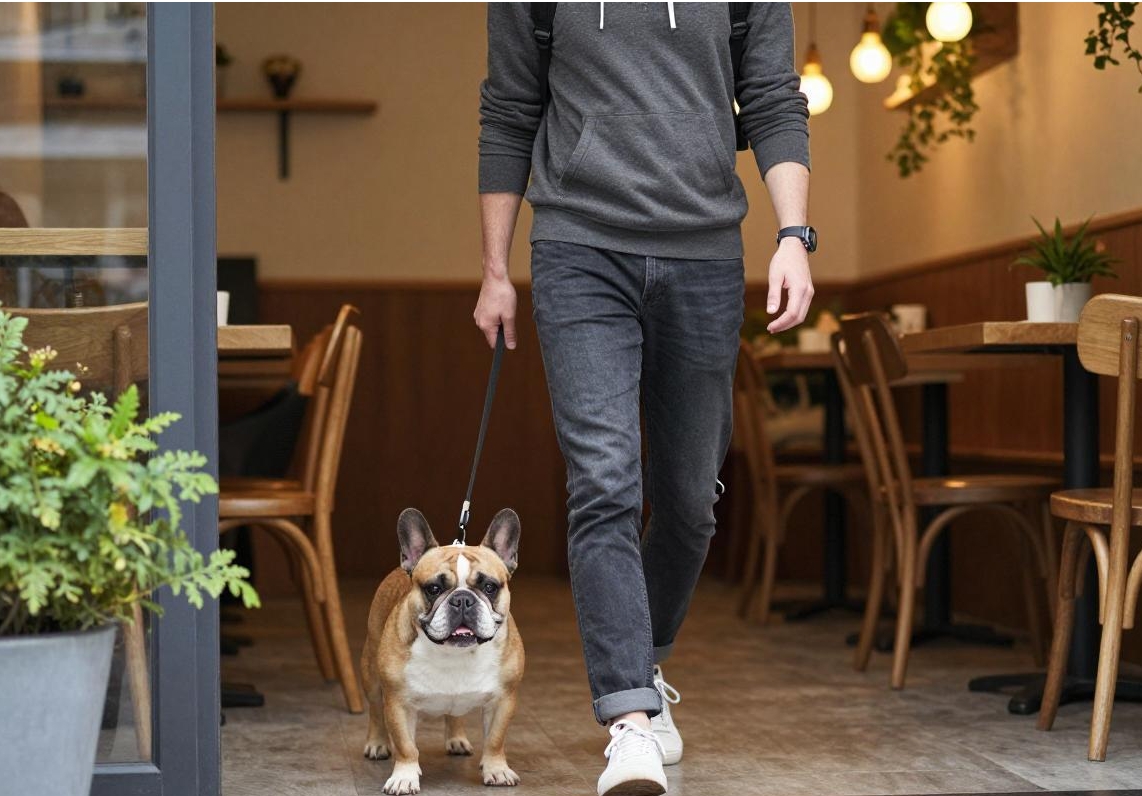
Why Do French Bulldogs Struggle To Stay Calm In Coffee Shops?
To solve these issues, we first need to understand the causes. These behaviours are not simply bad manners; they arise from a mix of natural temperament, physical traits and environmental stress.
1. Strong social curiosity paired with wariness: Frenchies are generally people-friendly and crave interaction. In unfamiliar crowded surroundings, their protective instincts activate. A sudden scraping chair or a stranger approaching quickly may be interpreted as a threat, triggering barking as a warning or confidence boost.
2. Physical strain from brachycephalic anatomy: This is the breed’s most distinctive trait. Their short-nose structure creates naturally narrow airways, so their breathing sounds heavy even at rest. Coffee shops are often enclosed and potentially warm spaces. French Bulldogs easily struggle with airflow and temperature regulation, leading to anxiety, restlessness, louder panting, whining or barking from discomfort.
3. Food motivation and intense curiosity: Aromas of cake and milk in cafes are extremely tempting to dogs. French Bulldogs tend to be persistent food lovers. Without proper training, they may beg, paw at tables or fixate on other diners’ meals, which is impolite to other customers.
4. Gaps in foundational socialization training: Many owners only interact with their dogs at home or on familiar walking routes. They skip desensitization and behavioural training in low-stimulation public environments such as quiet cafes. The dog never learns what behaviour is acceptable in this new setting.
How To Enjoy Coffee Outings Responsibly With Your French Bulldog — My Proven Strategies
Based on these insights plus my experience handling client dogs and my own pups, I’m sharing reliable methods. Remember: success relies on advance preparation and gradual progression, not last-minute fixes once you reach the café door.
Solution 1: Pre-Outing “Practice Runs” & Reinforce Basic Training
Do not attempt busy popular cafes on your first try. I recommend starting training around the perimeter of coffee shops.
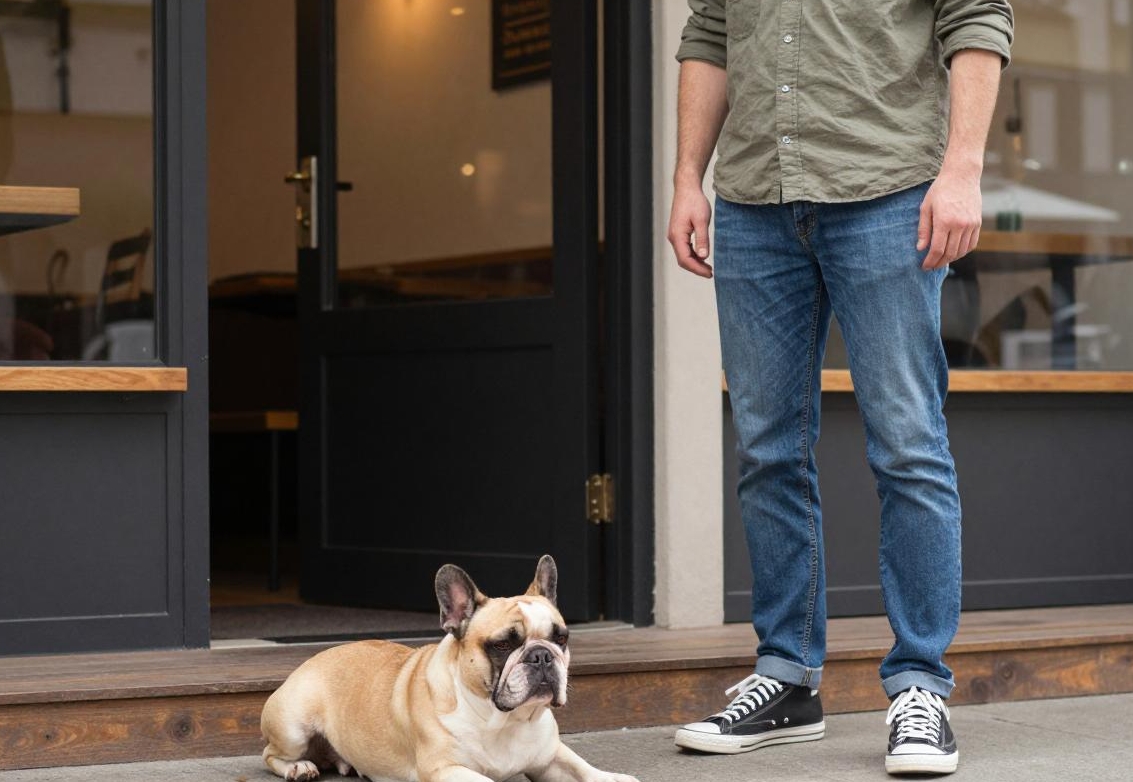
Real Case Experience: I coached an owner whose Frenchie Potato would leap excitedly toward every stranger he saw. Instead of heading straight inside, we visited a quiet neighbourhood café every day for one week, sitting at the outermost outdoor seating. The owner kept Potato on leash and guided him to lie beside their feet. At first, Potato was curious about passers-by and wanted to stand up for interaction. The owner would give a calm, firm “Down” cue. As soon as he settled quietly for over 10 seconds, he earned a tiny piece of his favourite treat. We also asked a couple friends to act as strangers, walking past from far away then slowly drawing closer. Potato received rewards whenever he remained relaxed. This routine simulated typical café scenarios and taught the dog: good things happen when I stay calm.
Step-by-Step Actions:
1. Master foundational cues: Ensure “Sit”, “Down”, “Wait” and “Stay” work reliably both indoors and outdoors. These commands are your safety control tool inside the café.
2. Quiet outdoor practice: Train your dog to lie calmly beside you for extended periods on park benches or quiet residential corners. Start at 5 minutes and slowly extend sessions; offer a durable chew toy during practice.
3. Desensitization work: Record common café noises — espresso machines, clinking cups, background chatter. Play recordings at low volume at home, reward calm behaviour, and gradually increase volume to build tolerance toward everyday ambient sounds.
Solution 2: Create A Personal “Safe Zone” For Comfortable Outings
Inside the coffee shop, you need to build a small secure space where your French Bulldog feels relaxed without disturbing other guests.
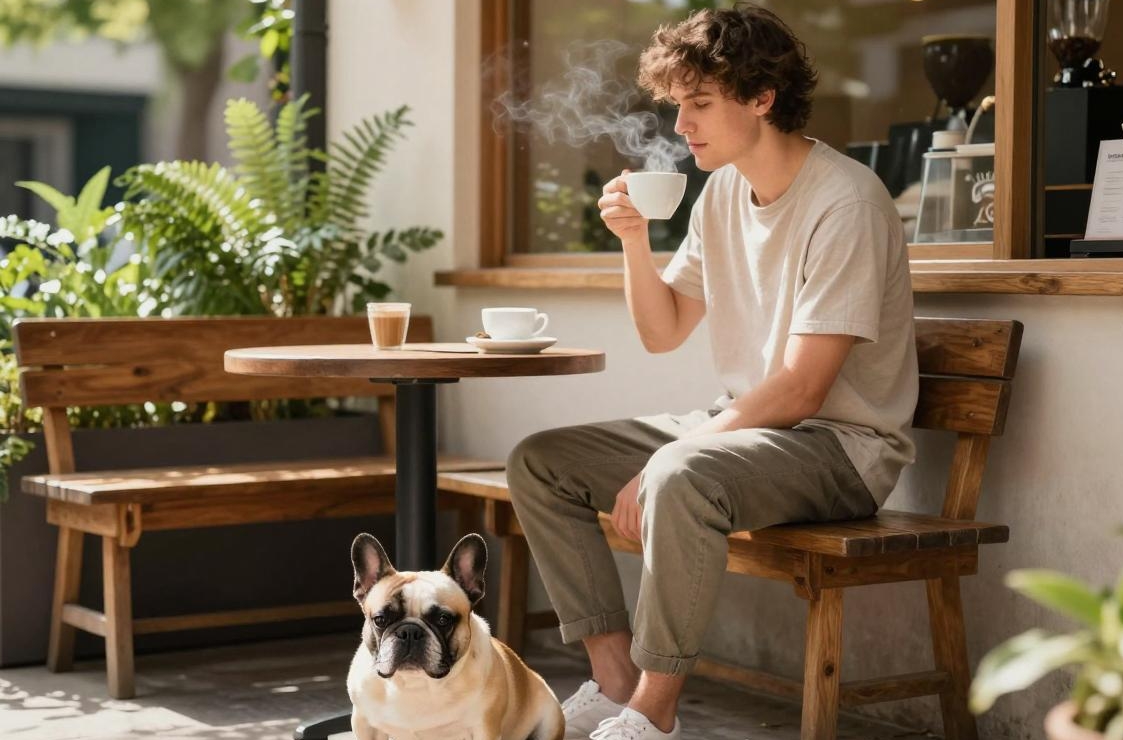
Real Case Experience: When I take my senior Frenchie Bajie out, I always bring his familiar portable pet mat or blanket. Carrying his own scent, the mat placed under the table or by my feet becomes his designated resting spot. I guide him to settle there and give him an enrichment toy stuffed with tasty food, such as a peanut butter-filled KONG. The toy distracts him from surrounding food smells, and focused licking naturally lowers anxiety. For brachycephalic breeds like Bajie, I always select well-ventilated window seats away from air vents and main walkways. I make sure he has access to shade and a constant bowl of fresh water nearby.
Step-by-Step Actions:
1. Bring familiar bedding: A foldable pet mat or blanket drastically boosts your dog’s sense of security.
2. Pack enrichment toys: Treat-dispensing balls or frozen KONG toys keep him calmly occupied for 20–30 minutes and prevent mischief born out of boredom.
3. Choose seating strategically: Prioritize quiet corner, wall-backed or window seats. Avoid high-traffic zones near entrances, aisles and checkout counters.
4. Plan for heat relief: Carry a portable water bowl. If the weather is warm or the café feels stuffy, bring a small cooling mat, or regularly wipe his belly and paw pads with a damp cloth to aid heat dissipation.
Solution 3: Owner Guidance & Ongoing Management Skills
Your own behaviour sets the tone for your dog’s mood. Staying calm and anticipating triggers is critical to success.
Real Case Experience: On one occasion, a lady sat at the table next to me with her French Bulldog. As a server carried hot coffee toward them, the dog suddenly stood up and barked once. The lady grew instantly embarrassed and instinctively shouted sharply at the dog. This only made the dog more tense and confused, leaving him anxious for the rest of the visit. A far better approach is watching for early stress body language before the server approaches — pricked ears, stiff posture. You can gently soothe him, ask for eye contact with the “Watch me” cue, and redirect focus with treats. Punishment after the fact only teaches the dog to associate servers with his owner’s anger, strengthening negative associations.
Step-by-Step Actions:
1. Maintain leash control: Once inside, shorten the leash and secure it around the table leg or your wrist. Prevent your dog from wandering freely or jumping toward other people.
2. Observe body language closely: Watch for signs of rising stress: heavier panting, frequent shifting posture, intense staring at distractions. Intervene early with calm reassurance, redirection, or take him briefly outside for fresh air.
3. Confident polite communication: If children or passers-by want to pet your dog but he shows stress cues — leaning back, lip licking, turning his head away — politely but firmly decline: “Sorry, he’s learning to rest quietly and isn’t ready for interaction right now.” This protects your dog and other people.
4. Know when to wrap up the visit: On your first attempts, reward your dog and leave after 15–20 successful minutes. Do not wait until he grows irritable and misbehaves. Gradually extend the length of each outing over time.
Mistake Avoidance Guide — Do Not Make These Common Errors!
1. “He will settle once tired” — This is wrong! Bringing your French Bulldog straight to a café after intense exercise often leads to greater restlessness from exhaustion and heavy panting. Plan outings after moderate activity when his mood is already calm.
2. Leaving your dog unattended at the table — Critical risk! Never let your dog out of sight, even for a short moment. Accidents can happen instantly.
3. Using human food as rewards — Dangerous! Coffee, chocolate, grapes and xylitol-containing desserts are toxic to dogs. Only feed safe, dog-specific treats you brought from home.
4. Ignoring house rules and other guests — Inconsiderate! Confirm in advance that the venue is truly pet-friendly and ask about designated pet seating areas. Always keep your dog confined beside your table, blocking neither walkways nor other customers.
Summary
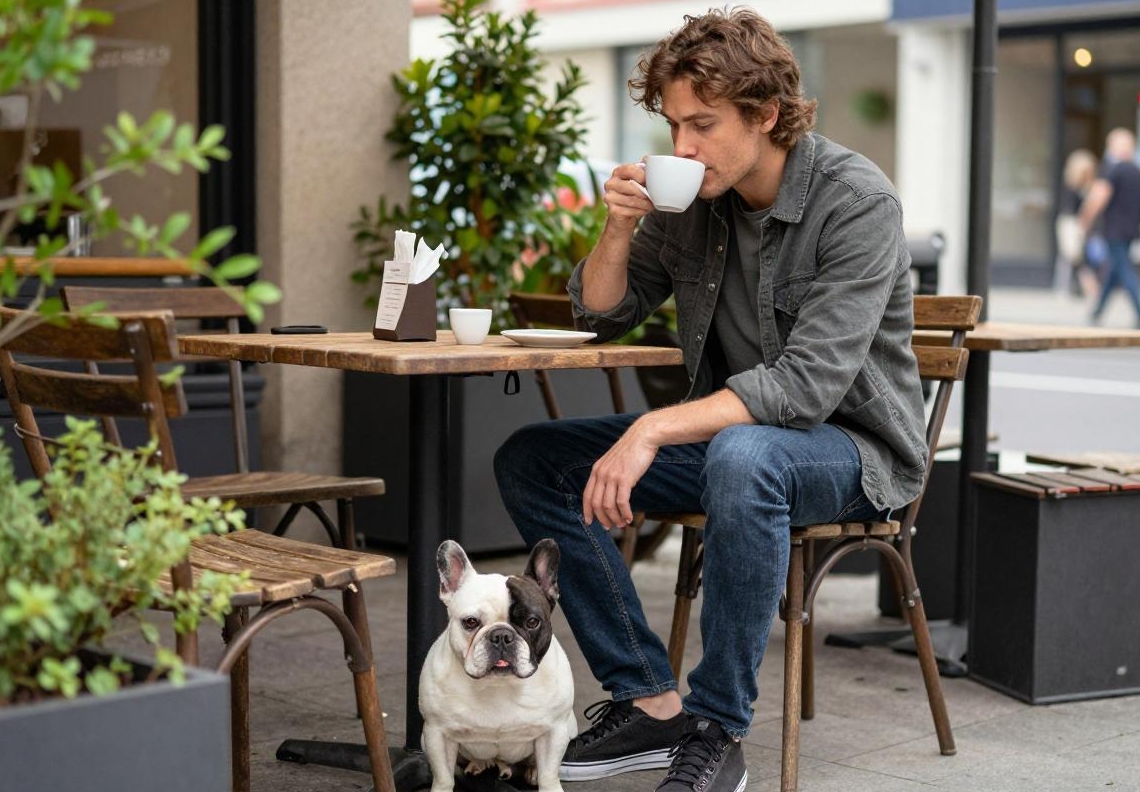
Sharing coffee time with your French Bulldog makes a lovely scene, yet it requires patience, planning and thorough advance preparation from the owner. It tests not just your dog’s obedience, but also your sense of responsibility and public awareness. With structured pre-outing training, thoughtful space setup and consistent gentle guidance, you can help your Frenchie become a calm, well-mannered café guest. This is more than simply an outing — it is valuable socialization that deepens trust and understanding between you two. The quiet harmony of having your pup lie peacefully at your feet while you enjoy your coffee is the perfect reward for all your hard work.
Important Reminder
Please note: the guidance shared in this article applies to general behaviour adjustment and everyday manners training. If your French Bulldog shows extreme fear in public settings (severe trembling, loss of bladder/bowel control, attempts to flee), strong aggressive tendencies, or dangerous breathing distress caused by his brachycephalic structure (purple gums, dramatic abdominal heaving while breathing, inability to settle), these may signal severe anxiety disorders or underlying health conditions. Immediately end social outings, move away from stressful stimuli, and consult a professional canine behaviourist or veterinarian for full assessment and intervention. Your pet’s physical and mental wellbeing always comes first.