Hello everyone. I am Dr. Chen, with over ten‑year working experience in clinical pet medicine and animal care. I have treated countless dog breeds, among which French Bulldogs generate the most owner questions and confusion. Especially when autumn turns to winter, my inbox fills with repeated enquiries: “Dr Chen, temperatures have dropped today, should my French Bulldog wear clothes outside?” “I see it shivering — is it cold?” “Too many layers and I fear overheating; too few and I worry about colds. How do I decide?”
This is indeed a shared headache for many French Bulldog owners. Watching these short‑nosed, big‑eyed little companions, we fear their thin coats cannot block cold wind, yet also worry over‑protection will make them uncomfortable. Such hesitation comes from deep affection and responsibility for our pets. Today we go deep into this topic so you can become the best‑informed “stylist” for your own French Bulldog.
Why Are French Bulldogs So Sensitive To Both Cold And Heat?
Before tackling clothing decisions, read your French Bulldog’s physical “spec sheet”. Their temperature sensitivity stems from physiology rather than being overly delicate.
First: Inherent limitations of their coat. French Bulldogs are single‑coat short‑haired dogs. Unlike double‑coated breeds such as Golden Retrievers or Samoyeds with dense undercoats plus coarse guard hairs, French Bulldog fur lies flat against skin, sparse and short — comparable to a human wearing only a thin T‑shirt. This coat delivers minimal thermal insulation and cannot form stable trapped‑air warmth layers like double coats. Therefore they are naturally weaker at regulating body temperature and resisting cold outdoors.
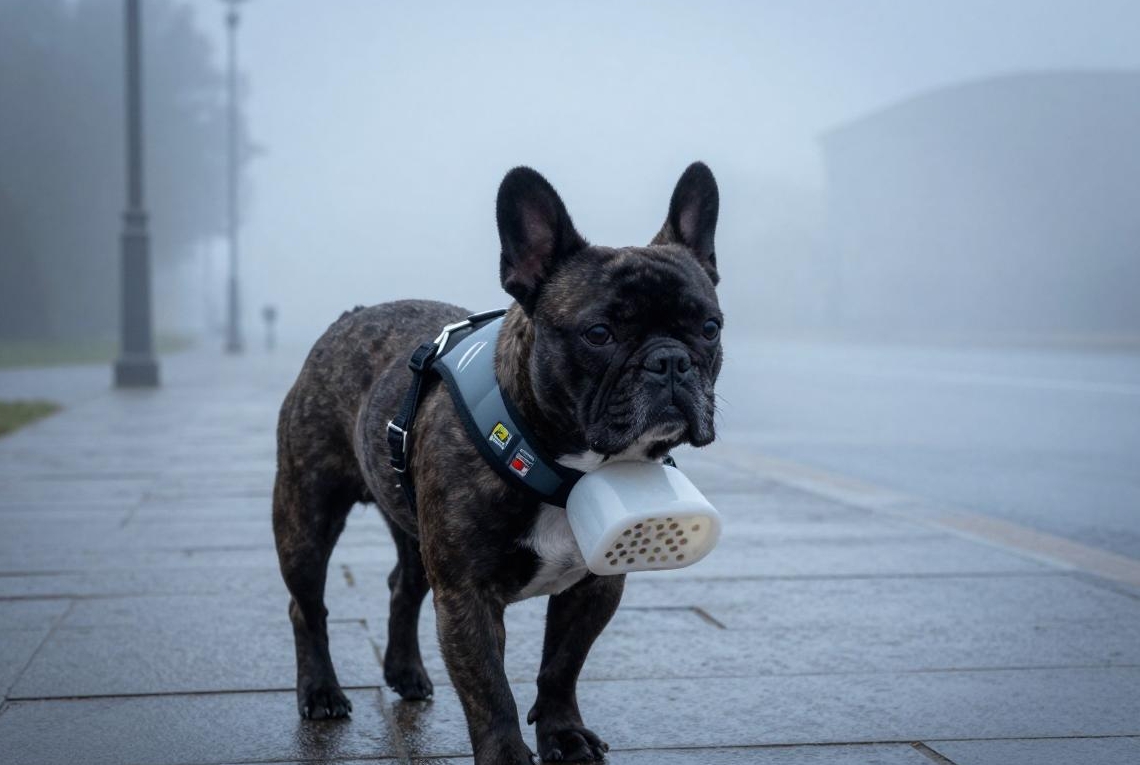
Second: Special challenges of the respiratory system. French Bulldogs are classic brachycephalic flat‑faced dogs. Behind their cute appearance lie narrow nostrils, elongated soft palates and comparatively small tracheas. Their breathing efficiency is inherently lower than other breeds. Cold outdoor air directly irritates respiratory passages, easily triggering coughing, wheezing and even bronchitis. For them, warmth is not merely about comfort — it forms a vital line of defence for respiratory health.
Third: Thermal limits of muscle and fat tissue. Though French Bulldogs look stocky, that build comes from solid muscle rather than insulating fat layers. Puppies, senior dogs, post‑recovery patients and lean individuals often have lower muscle mass and metabolic rates, generating and retaining less body heat. These groups deserve extra attention to warmth.
Three Key Signals To Judge Your French Bulldog’s Cold‑Warm Needs
Now for practical application. Core principle: Observe your dog instead of relying purely on thermometers. I always remind owners that outdoor temperature, wind speed and humidity serve only as reference. Your dog’s real‑time reactions are the gold standard.
Signal 1: Body language and behavioural observation
This is the most intuitive method. Watch closely outdoors:
1. Shivering: Clear physical response where muscles contract rapidly to produce heat. Persistent mild trembling across back and hind legs almost always means “I am cold”.
2. Curled posture: Does it walk with a hunched back and tail tucked tightly between hind legs? This instinct reduces exposed body surface area to preserve core heat.
3. Sluggish, hesitant movement: Once excited to go outside, it now drags its feet, refuses to move forward, or tries heading home and seeks wind‑sheltered spots such as under cars or against walls.
4. Alternating paw lifting: On frosty or icy ground, repeated lifting of paws off cold surfaces signals discomfort from frigid pavement.
Signal 2: Tactile check of surface body temperature
Touch often tells more than sight. While your dog stays calm, place your warm, dry palm onto inner forelegs or abdomen (areas with little or no fur).
- Feels warm or slightly cool: Normal body temperature and good blood circulation.
- Noticeably cold to touch: The body is shunting blood away from skin toward internal organs for heat preservation — clothing is needed.
- You may also feel ear edges; cold ear rims offer supporting evidence.
Signal 3: Combine environmental conditions and individual traits
Consider the following factors. Even without obvious shivering, clothing should be considered:
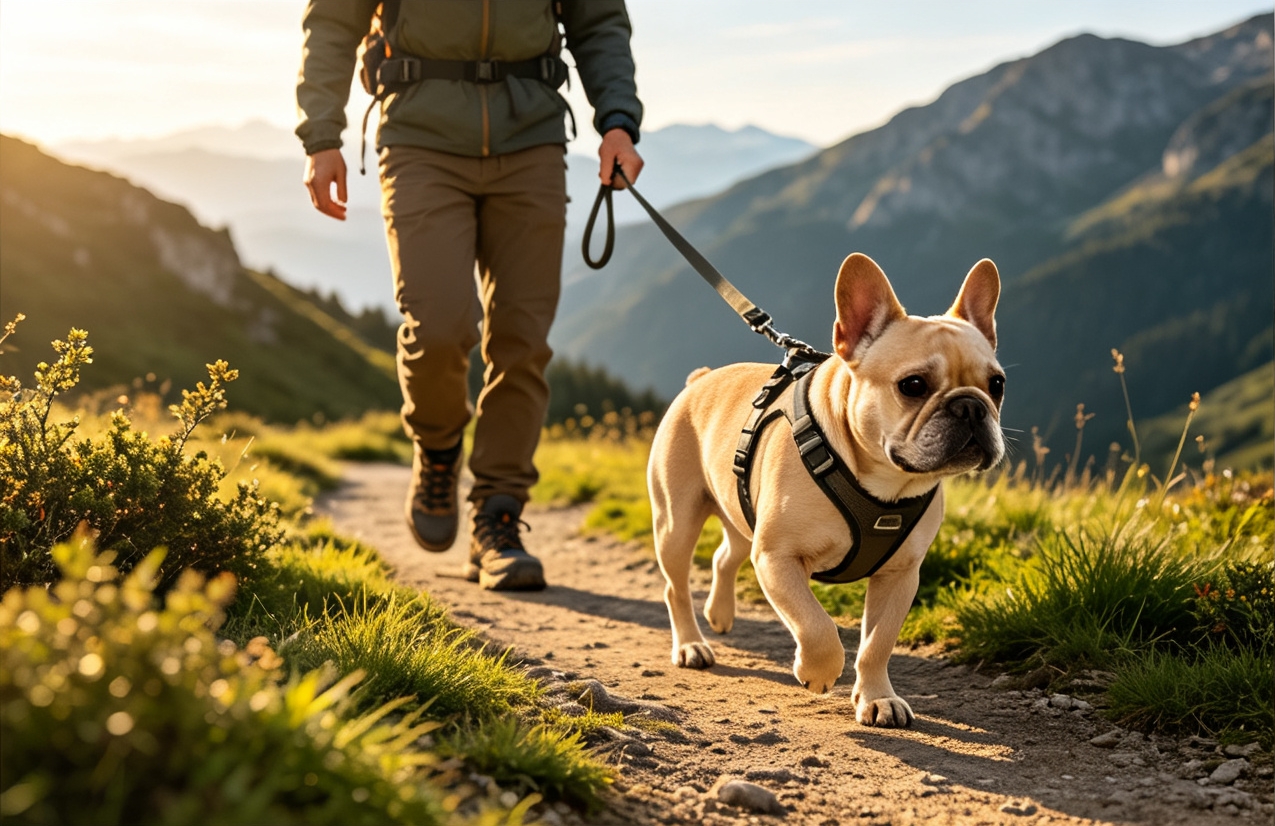
- Temperature and wind: From personal experience, most French Bulldogs need extra layers once temperatures stay steadily below 10°C or winds reach force 3 or higher. Wind rapidly strips surface heat via wind‑chill effect.
- Time and location: Early mornings, nights, post‑rain and post‑snow bring high humidity and lower perceived temperature. Open plazas and river‑side areas frequently have stronger winds.
- Individual differences: As noted above, puppies, seniors, lean dogs and pets with chronic illnesses such as arthritis tolerate cold poorly and require earlier, more comprehensive warmth protection.
Practical Experience: Four‑Step Dressing Routine For Autumn‑Winter French Bulldog Walks
Drawing on my own French Bulldog “Potato” plus hundreds of client cases, I have summarised a simple repeatable workflow you can follow directly.
Step 1: Pick suitable garments — function beats appearance
Do not choose purely based on cute styling. Prioritise:
- Materials: Soft skin‑friendly inner layer (cotton, fleece); wind‑resistant water‑repellent outer shell (nylon, technical fabrics). Avoid poor‑quality static‑prone non‑breathable fabrics.
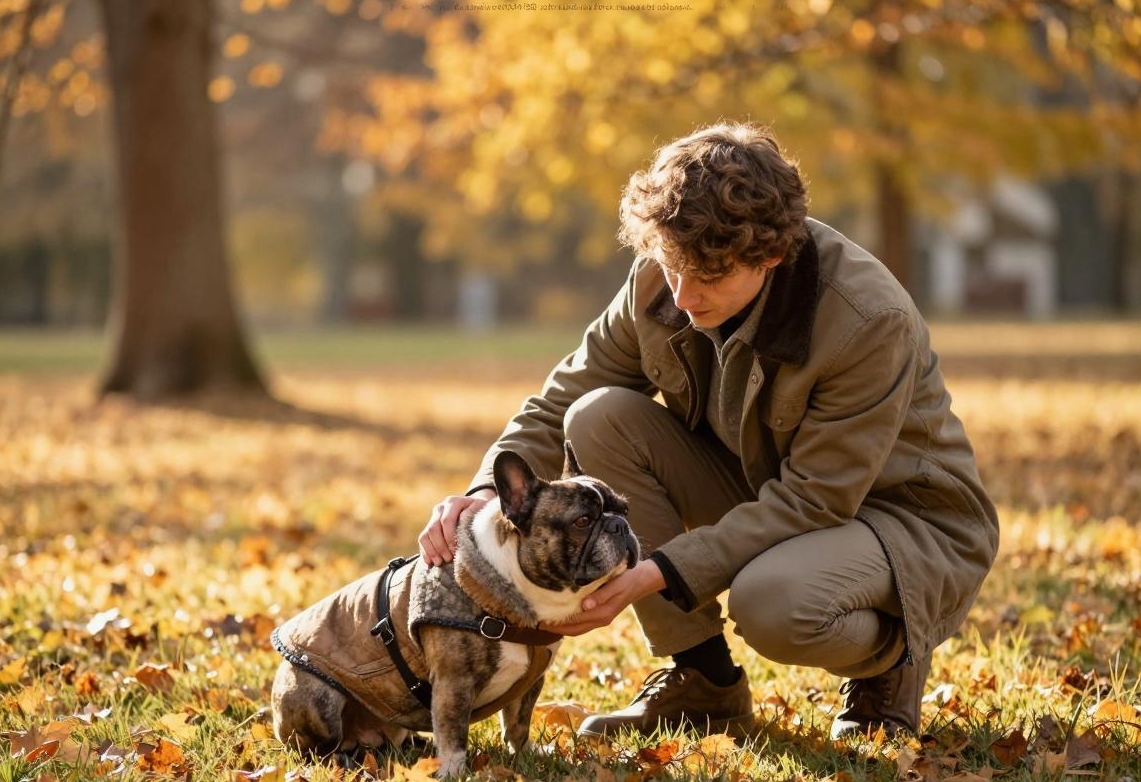
- Styles: Full‑body jumpsuit or vest with attached sleeves work best, covering core chest, belly and back. I have met owners who only used short vests; their dogs developed diarrhoea from cold abdomens. Ensure coverage runs from neck down to tail base.
- Proper fit: Critical! Too‑tight clothing restricts movement, breathing and circulation. Over‑loose items fail to insulate and may catch on objects. You should comfortably fit two fingers between fabric and skin while your dog moves freely.
Step 2: Build positive associations with wearing clothes
Many dogs resist being dressed. My method: link clothing to pleasant experiences. Call your dog in an upbeat tone when bringing out clothes and offer small treats. Move gently while continuously praising and reassuring. Immediately follow dressing with something enjoyable, e.g. going outdoors for a walk. Over time your dog will learn “putting on clothes means going out to play”.
Step 3: Dynamic adjustment — know when to put on and take off
Clothing is not set‑and‑forget. My routine:
- Dress indoors or in building hallways before going outside; avoid struggling with garments in cold wind.
- Mid‑walk: if your dog starts heavy open‑mouthed panting (exclude normal excitement‑ or exercise‑related panting) or grows noticeably lethargic, it may be overheating. Find a wind‑protected spot, unzip or unfasten part of the garment for ventilation, but do not fully remove it.
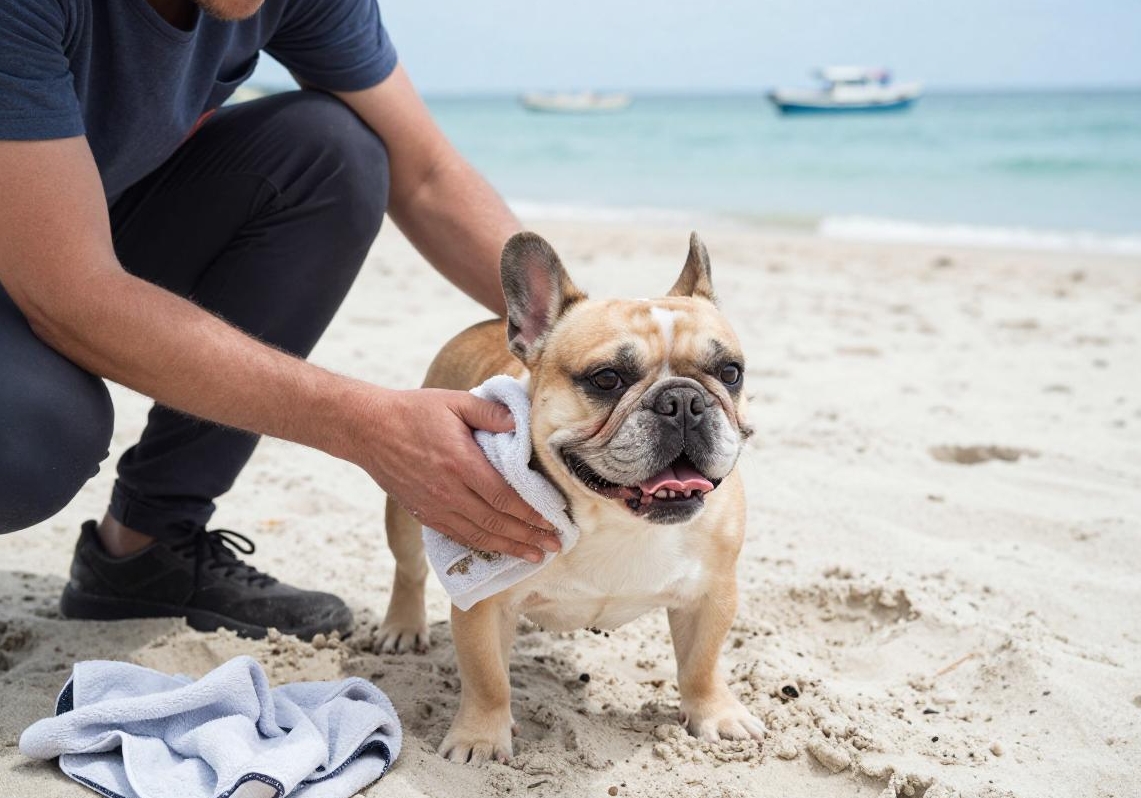
- Upon returning home, take outerwear off straight away. Wipe paws and belly fur dampened by fog or snow with dry towels to prevent skin disorders or chill caused by moisture.
Step 4: Do not forget supplementary warmth accessories
Under extreme cold (below 0°C) or where ground carries de‑icing salt and ice shards:
- Boots: Protect paw pads from frostbite and chemical irritation. Require gradual patient training for acceptance.
- Belly protector: For extra‑cold‑sensitive dogs or French Bulldogs fond of rolling in snow, add a soft cotton belly liner underneath jumpsuits for extra abdominal shielding.
Pitfall‑Avoidance Guide: Steer Clear Of These Common Mistakes
From years of consultations I have observed frequent errors owners should avoid:
Mistake 1: Keeping clothes on continuously indoors.
Incorrect! If indoor heating or air‑conditioning keeps rooms at a comfortable 18‑22°C, always remove outdoor garments. Permanent indoor clothing compresses fur, disrupts skin respiration and sebum secretion and may cause dry coat, skin sensitivity or dermatitis. Pet clothes count as outdoor gear, not permanent house wear.
Mistake 2: Judging purely by breed without individual assessment.
Incorrect! Not every French Bulldog is identical. Some robust, energetic adult French Bulldogs may need no heavy layers in mild 5‑10°C breezy weather. Always prioritise your pet’s personal responses. Use the three signals described above as your practical guidelines.
Mistake 3: Excessively thick or overly tight wrapping.
Dangerous! Over‑insulation raises body temperature and blocks heat dissipation. French Bulldogs already have weak cooling capacity. Overheating may trigger heatstroke (possible even in winter inside houses or cars), severe dehydration and added strain on heart and lungs. Choose breathable clothing easy to partially or fully remove for adjustment.
Mistake 4: Neglecting paw and ear care.
Oversight! After outdoor trips inspect and clean paws thoroughly to remove residual ice, snow and de‑icing salt. Ear rims have poor blood flow and are prone to frostbite. After short walks in severe cold you can gently massage ear flaps to boost circulation.
Summary
Dressing French Bulldogs appropriately during autumn and winter is a practice built upon observation, understanding and care. There exists no universal fixed temperature threshold. The key lies in you, the owner, reading body‑language signals from your pet. Remember our principles: Reference ambient temperature but prioritise your dog’s real‑time reactions; select well‑fitted functionally‑suitable clothing; dynamically add and remove layers; avoid over‑protection and permanent indoor clothing. Following these rules shields your dog from cold‑related discomfort and respiratory trouble, and turns every autumn‑winter outing into happy, healthy bonding time.
Important Reminder
Content above shares daily‑care and preventive advice. If your French Bulldog shows any of the following signs: persistent heavy coughing, rapid laboured breathing even at rest, lethargy, complete loss of appetite, abnormally increased nasal or eye discharge, abnormal body temperature (rectal thermometer normal range: 38‑39°C), these may signal colds, bronchitis or even pneumonia. Do not self‑medicate or merely add extra clothing. Visit a formal veterinary hospital promptly for professional diagnosis and treatment. Autumn‑winter brings high incidence of canine respiratory diseases. Early detection and intervention are critical to safeguard your pet’s wellbeing.