Hello everyone. Over ten years supporting countless French bulldog owners, one of the most frequent complaints I hear is: “Doc, my French bulldog is being picky again, sniffs the kibble and walks away. What should I do?” Or: “I added some meat to his food and now he has diarrhoea…” I fully sympathise with owners’ anxiety and distress seeing their pets lose weight or suffer digestive upset. French bulldogs are adorable yet stubborn with famously sensitive stomachs, so feeding them truly demands extra care.
Why Are French Bulldogs’ Appetite and Digestion So Delicate?
To solve feeding troubles, we first need to understand root causes. Picky appetite and gut sensitivity are not merely bad behaviour or poor constitution; they stem from distinct breed‑specific physiological traits:
1. Breed‑related physical structure: French bulldogs are brachycephalic (flat‑faced) dogs. Their unique oral anatomy changes how they chew and swallow, making them extra selective about food texture, shape and aroma. Their oesophagus and stomach are also more prone to regurgitation and indigestion.
2. Metabolism and activity level: French bulldogs are not high‑energy breeds with relatively low calorie requirements. Improper portion sizes or overly calorie‑dense food remove hunger drive, leaving them uninterested in meals.
3. Sensitive gastrointestinal system: This is a common breed weakness. Their gut microbiome is fragile. Sudden diet shifts, high‑fat content, certain protein sources or additives can easily trigger loose stools, diarrhoea or vomiting.
4. Behavioural and psychological factors: French bulldogs are intelligent and stubborn. If they learn that refusing food brings tastier options such as canned food or fresh meat, they quickly weaponise pickiness to manipulate their owners, creating a vicious cycle.
Understanding this makes it clear: simply adding tasty extras can overload digestion, yet starving them feels cruel. The key lies in striking a perfect balance between enhancing palatability and maintaining easy digestibility. Below I share practical core principles and actionable solutions built from real‑world clinical experience.
Core Solutions: Three‑Step Plan To Solve Your French Bulldog’s Feeding Struggles
Solution 1: Start With Gentle Protein Sources To Spark Appetite
Many owners reach for beef or salmon when wanting to boost nutrition. Yet for French bulldogs with sensitive guts, high‑fat or highly‑allergenic meats carry significant risk. I recall a client’s French bulldog “Niuniu”, who developed loose stools whenever beef was mixed into kibble. The owner blamed the dog food and switched several brands with no improvement.
My experience & recommendations:
Choose white‑meat proteins first: Always start with the mildest protein options. I generally recommend chicken breast or duck breast. Preparation: boil plain meat (skin‑free and fat‑trimmed) in clean water with zero seasonings. Save the cooking broth; it works as a natural flavour enhancer.
Key details: Shred cooked meat into fine strips or tiny cubes instead of large chunks. This blends evenly with kibble so every piece carries meat aroma and reduces chewing and digestive strain. To begin, meat portions should not exceed 10 % of daily total food intake. For example, for 100 g of daily kibble, start with 10 g of shredded meat.
Advanced trial: If chicken is well‑tolerated, introduce steamed cod fillets. Rich in Omega‑3 for skin health, cod is extremely digestible. Be thorough to remove every fish bone.
Solution 2: Use Dietary Fibre Wisely For Balanced Gut Health
Meat‑only toppers are insufficient long‑term and may lead to constipation or nutritional imbalance. Vegetables make excellent add‑ins, supplying vitamins and fibre to support intestinal motility, though not all vegetables suit French bulldogs.
Hard‑learned lesson: I once advised a client to feed broccoli to their French bulldog. The dog developed severe bloating with a distended belly and needed emergency care overnight. This taught me cruciferous vegetables such as broccoli and cauliflower are poorly tolerated by some French bulldogs.
Safe, effective vegetable picks:
Pumpkin purée (top recommendation): A saviour for French bulldog digestion. Steamed pumpkin purée is high in soluble fibre and offers dual regulation for both diarrhoea and constipation. My home routine: steam small pumpkin portions, mash, portion and freeze. Thaw one small spoonful in the microwave at mealtime and stir into kibble for excellent results.
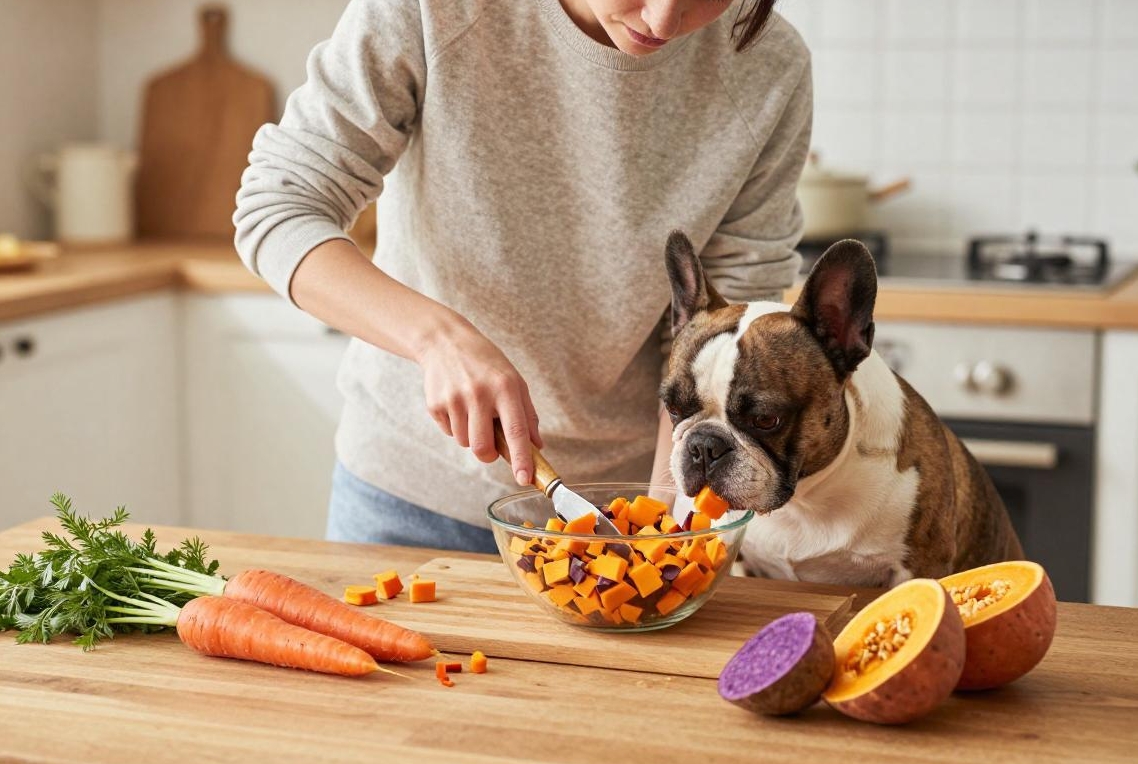
Diced carrot & sweet‑potato chunks: Carrots are rich in beta‑carotene good for eye health. Always steam until fully soft before chopping and mixing. Sweet potato is a quality carbohydrate source delivering satiety and natural sweetness to entice dogs. Important: all vegetable toppers must be fully cooked, dogs cannot properly break down raw‑vegetable cell walls.
Solution 3: Natural Flavour Boosters & Probiotics To Support Digestive Resilience
Beyond solid toppers, certain “liquid gold” items and supplements greatly improve mixed‑meal outcomes.
1. Unsalted meat / bone broth: Fantastic for boosting kibble palatability. Simmer chicken frames or fat‑trimmed beef bones for hours. Add a small splash of apple cider vinegar to help leach minerals; never add salt or seasonings. Skim surface grease, cool until gelled. Each day thaw one spoonful of broth jelly in the microwave and pour over kibble for rich aroma plus extra moisture intake.
2. Prebiotics & probiotics: Fundamental support for French bulldogs with fragile digestion. I often suggest occasional servings of unsweetened yogurt (confirm lactose tolerance first) or veterinary‑formulated probiotic powder. Prebiotics (fibres found in pumpkin, banana) act as “food” for probiotics. Combined, they help build stable gut flora, fundamentally improve digestion and lower sensitivity to dietary changes.
Pitfall‑Avoidance Guide: Well‑Meaning Add‑Ins Can Become Burdens
When working to improve appetite, watch out for these common mistakes:
1. Avoid frequent kibble brand or flavour switches: Frequent food changes are the top trigger for French bulldog gastrointestinal upset. If switching diets, strictly follow the 7‑10‑day gradual transition method, slowly blending old and new kibble by proportion.
2. Strictly forbid human table scraps: Onions, garlic, grapes, chocolate and more are toxic to dogs. High‑salt, high‑fat and seasoned human foods severely burden French bulldog kidneys and digestive tract.
3. Toppers must not overtake main meals: Toppers stay supplementary; high‑quality complete‑nutrition kibble remains the staple. Total topper volume should never exceed 20 % of daily food intake (start at 10 % for sensitive‑stomach French bulldogs), otherwise nutritional imbalance will easily occur.
4. Watch for hidden fat: Trim away all visible fat when preparing meat. Chicken skin and fatty meat are major triggers for acute pancreatitis, a condition French bulldogs are predisposed to.
5. Stick to consistent feeding routines: Feed fixed portions at set times. Remove food 15‑20 minutes after serving regardless of leftovers. This builds good eating habits and prevents them from stalling for tastier food.
Summary
Getting your French bulldog to eat heartily and digest well is a long‑term task requiring patience and science. The core principles are gentle introduction, gradual progression and close observation of tolerance. Start with highly digestible chicken breast and pumpkin purée, and slowly refine the perfect recipe for your individual pet. Remember every French bulldog reacts uniquely to food; you as their attentive owner know them best. By monitoring stool quality, appetite and energy levels while tweaking topper types and ratios, you will find their ideal custom mix‑in formula.
Important Reminder
The advice and methods shared apply to mild picky‑eating and gut‑sensitivity cases. Seek immediate veterinary care if your French bulldog shows complete food refusal lasting over 24 hours, repeated vomiting, severe bloody or watery diarrhoea, lethargy, abdominal pain (prayer posture) or any other worrying symptoms. Stop home adjustments right away and visit a licensed animal hospital. These signs may signal food poisoning, pancreatitis, intestinal foreign bodies or other serious illnesses requiring professional diagnosis and treatment. Love means timely, science‑driven care for your companion.