Does Your French Bulldog Refuse to Sleep in Its Bed? The Bed Might Be the Root Cause
Having worked in veterinary clinics and dog training facilities for over a decade, I’ve treated countless French Bulldogs with behavioral or health troubles stemming from uncomfortable sleeping quarters. Owners often ask me in confusion: “Doc, I splurged on a luxury dog bed, but my pup Niu Niu won’t sleep on it and prefers cold tile floors instead.” Or “He snores extremely loudly and tosses and turns all night — is he sick?”
More often than not, the issue isn’t a picky dog; we overlook the breed’s distinct physical makeup and special needs. They are not ordinary dogs — as brachycephalic breeds with stocky muscles, abundant skin folds, and a tendency to overheat yet catch cold easily, an ill-suited bed becomes a constant source of stress rather than a resting zone. Today, drawing from years of professional experience, I’ll walk you through how to create a five-star den that perfectly matches your French Bulldog’s natural instincts.

Why French Bulldog Beds Require Specialized Design: Core Physiological Reasons
First, let’s break down the French Bulldog’s unique physical characteristics:
1. Brachycephalic Obstructive Airway Syndrome (BOAS): This is the top priority. Short nasal cavities and constricted respiratory tracts lead to labored breathing, heavy snoring and even sleep apnea overnight. Hot, poorly ventilated sleeping spaces drastically worsen respiratory strain.
2. Extreme Heat Sensitivity: French Bulldogs have very limited heat dissipation capabilities, putting them at high risk of life-threatening heatstroke. Breathability of the bed is a critical life-or-death factor.
3. Sensitive Skin: Skin folds trap dirt and moisture that breed bacteria. Rough, damp or airtight fabrics easily trigger dermatitis and skin infections.
4. Joint & Spinal Pressure Risks: Though muscular and compact, their spines and joints need firm supportive padding; overly soft beds cause long-term skeletal damage.
5. Need for Emotional Security: Despite their tough-looking appearance, many French Bulldogs are emotionally delicate. Semi-enclosed bolster beds provide the sense of shelter they crave.
With these points in mind, our core goals for bed setup are clear: Cool, well-ventilated, supportive, easy to sanitize, and psychologically comforting.
Golden Rules for Bed Setup: 3 Fully Actionable Solutions
Rule 1: Location & Base Layout — Create a Stable Microclimate
Clinical Case Experience: One client’s French Bulldog repeatedly suffered from pododermatitis and eczema. After extensive testing of its diet and grooming routine, we traced the issue back to the bed’s placement: it sat beside a floor-to-ceiling balcony window exposed to harsh afternoon sunlight, trapping heat and dampness inside the bed and creating a breeding ground for bacteria.
Practical Implementation Steps:
1. Steer Clear of Hazard Zones: Never place beds under direct air conditioner drafts, next to radiators, or beside windows with prolonged sun exposure. Extreme temperature swings here easily cause colds or heatstroke in French Bulldogs.
2. Choose the Ideal Spot: Position the bed in a well-ventilated indoor corner with consistent temperatures, such as an interior living room wall. Place its back against a wall or furniture (leave small gaps for heat circulation). This lets the dog observe household activity without sitting in high-traffic walkways, satisfying its dual need for vigilance and rest.
3. Elevate & Isolate From Ground Moisture: Especially for households in humid southern climates, opt for raised dog beds with supporting legs, or lay a cooling, moisture-proof underlay (rattan mat or ventilated plastic mat) before setting down the bed. This blocks cold dampness seeping up from the floor.

Rule 2: Core Gear Selection — Scientific Matching of Fabrics & Structure
Personal Experience: I once favored fully enclosed fluffy fleece beds, thinking they looked warm and adorable. After my own French Bulldog Tank slept one night in such a bed, he woke up soaked in sweat and gasping for air — I immediately realized these beds act like saunas for brachycephalic breeds.
Practical Implementation Steps:
1. Bed Shell Fabric: Prioritize Maximum Ventilation: Top choices include four-sided breathable mesh, high-thread-count pure cotton, or premium canvas. Avoid thick foam, down-filled or long-pile plush fully enclosed beds entirely. For summer, rattan beds or elevated camping-style dog cots work perfectly for cooling.
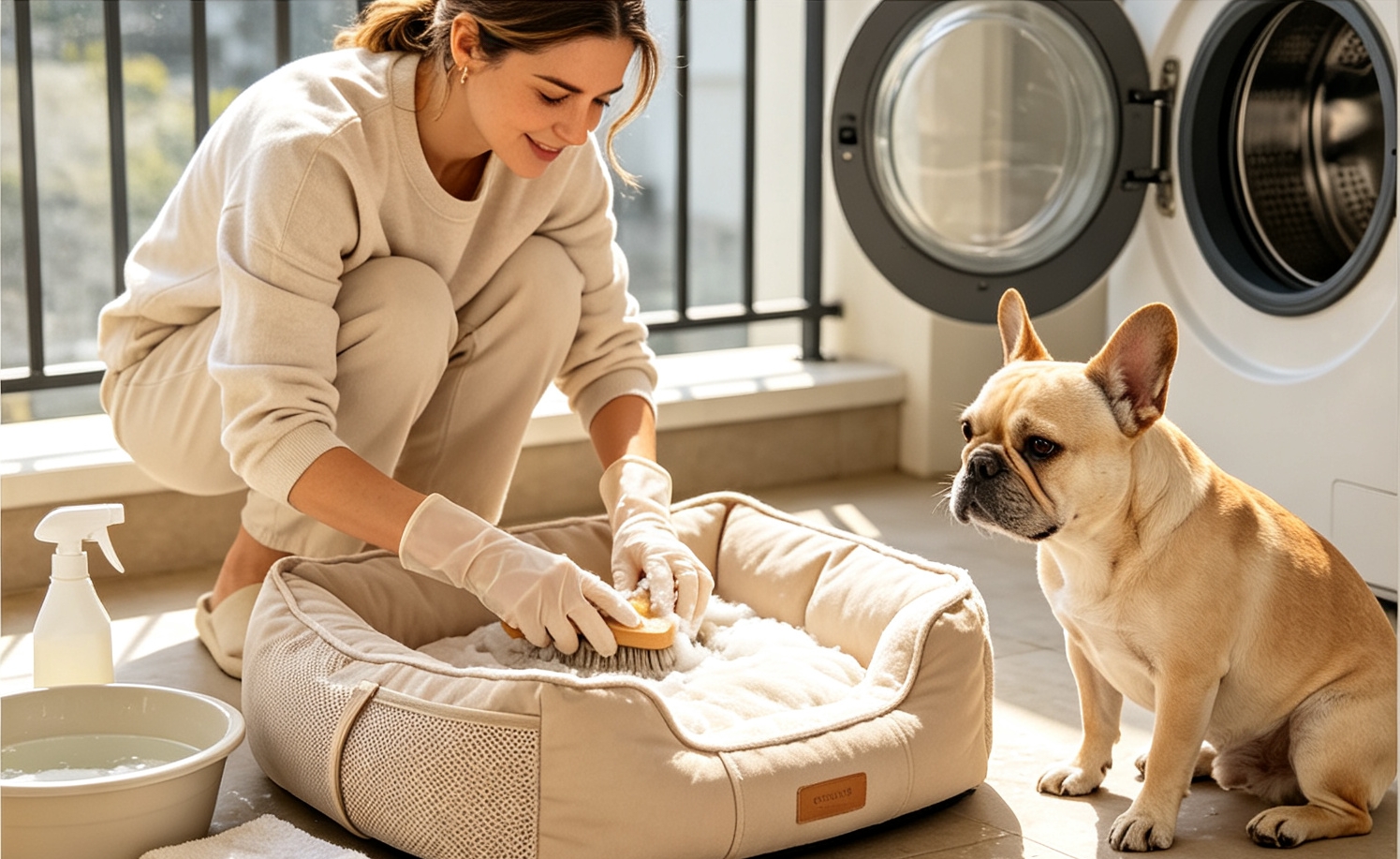
2. Mattress Selection: Removable Covers + Firm Support: Pick mattresses made of memory foam or high-density foam for moderate skeletal support. All outer covers must be fully detachable pure cotton or cooling fabric. I recommend owning at least two spare slipcovers to allow weekly washing and sun-drying, eliminating mites and bacteria buildup.
3. Structural Design: Semi-Open Bolster Style: Select cave-style or bolster-edge beds with low raised borders on three sides and one open entrance, resembling a small fortress. This delivers immense mental comfort, as French Bulldogs love resting their heads against the raised edges while sleeping. The bolster height should match the dog’s shoulder height when lying flat — overly tall borders trap heat, while short edges fail to offer a sense of safety.
4. Sizing Standard: Larger Is Always Better: The bed must give your dog enough space to stand, turn around, and stretch out fully (add 15–20 cm to its total body length). Cramped beds force curled postures that compress the chest and impede breathing.
Rule 3: Tiny Safety & Comfort Details — Hidden Caring Adjustments
Training Class Case Warning: A client’s French Bulldog puppy suddenly developed vomiting and loss of appetite. X-rays revealed foreign objects in its intestines; emergency surgery retrieved decorative buttons and a length of zipper chewed off its bed. This incident left a lasting cautionary impression on me.
Practical Implementation Steps:
1. Simplify All Decorations: Inspect the bed thoroughly and remove every chewable, swallowable ornament including buttons, lace, tassels, plastic labels and long fabric tassels. Only purchase seamless, tightly stitched bed designs.
2. Manage Chewing Behaviors: For dogs prone to destructive chewing (especially teething puppies), place a durable appropriately-sized solid rubber chew toy inside the bed to redirect their biting urge away from the bedding. When unsupervised, temporarily cover the bed with a heavy-duty old sheet as a protective barrier if needed.
3. Temperature Regulating Accessories: In summer, place a bite-resistant cooling mat wrapped in thin soft cloth beside the bed, or use a circulating fan pointed away from the dog to avoid direct drafts. Do not add thick padding in winter; instead provide a lightweight thin blanket the dog can choose to burrow under voluntarily. French Bulldogs have poor natural thermoregulation — offer them options instead of forcing over-insulation.
4. Odor Control Routine: Use mild pet-specific sanitizing deodorizers during regular washes. Skip strongly scented laundry detergents; French Bulldogs have an extremely sensitive sense of smell.
Mistake Avoidance Guide: Think Twice Before Buying These Popular Bed Styles
1. Fully enclosed yurt-style dog beds: Disastrous ventilation for French Bulldogs, leading to frequent overheating and breathing difficulty.
2. Oversunk ultra-soft sofa/bean bag beds: Zero structural support, making standing up exhausting and amplifying joint strain, plus poor heat dissipation.
3. Beds with built-in electric heating pads: Extremely high safety risk! French Bulldogs cannot sense gradual overheating and may develop low-temperature burns or heatstroke after prolonged contact. If extra warmth is required, use an external controllable heating pad layered under a thick blanket, and only operate for short monitored sessions during freezing weather.
4. Low-quality beds with harsh chemical odors: They contain toxic chemical additives that harm the dog’s health via inhalation and skin contact.
5. Overcomplicated multi-level luxury villa beds: Multi-story, compartmentalized designs serve little purpose for French Bulldogs, who prefer simple functional resting spaces. Complex nooks become hard-to-clean hygiene hotspots.
Summary: Love Your French Bulldog by Understanding Its Unique Needs
Setting up a dog bed for a French Bulldog fundamentally requires us to shift our perspective. We cannot judge comfort by human standards or the care requirements of other dog breeds. It does not need to be the most expensive bed — only the most suitable one, with the right fabric, location and structure. When you spot your French Bulldog lying flat on its back in its bed with steady gentle snores (even if they are still somewhat loud), you will know all your thoughtful preparations are fully appreciated. A properly fitted bed forms the core foundation of its physical health, emotional joy and sense of security.
Friendly Veterinary Reminder
The guidance shared in this article covers routine daily care for most healthy French Bulldogs. Keep a close eye on your pet’s condition. Seek immediate professional veterinary consultation or visit a reputable animal hospital if your dog suffers from persistent harsh coughing, loud labored breathing noises, frequent panting even in cool environments, abnormal swollen/ulcerated skin, or loss of energy and appetite. For all brachycephalic breeds, respiratory issues demand early, specialized veterinary intervention to prevent deterioration.