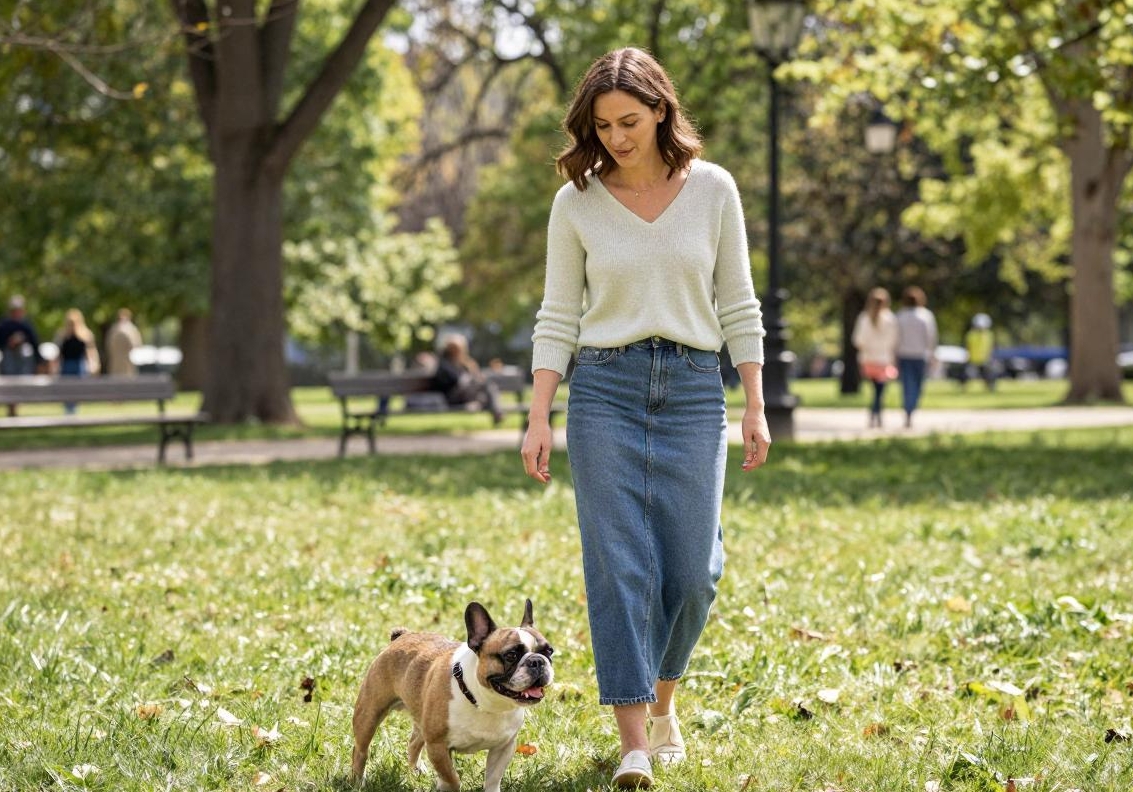
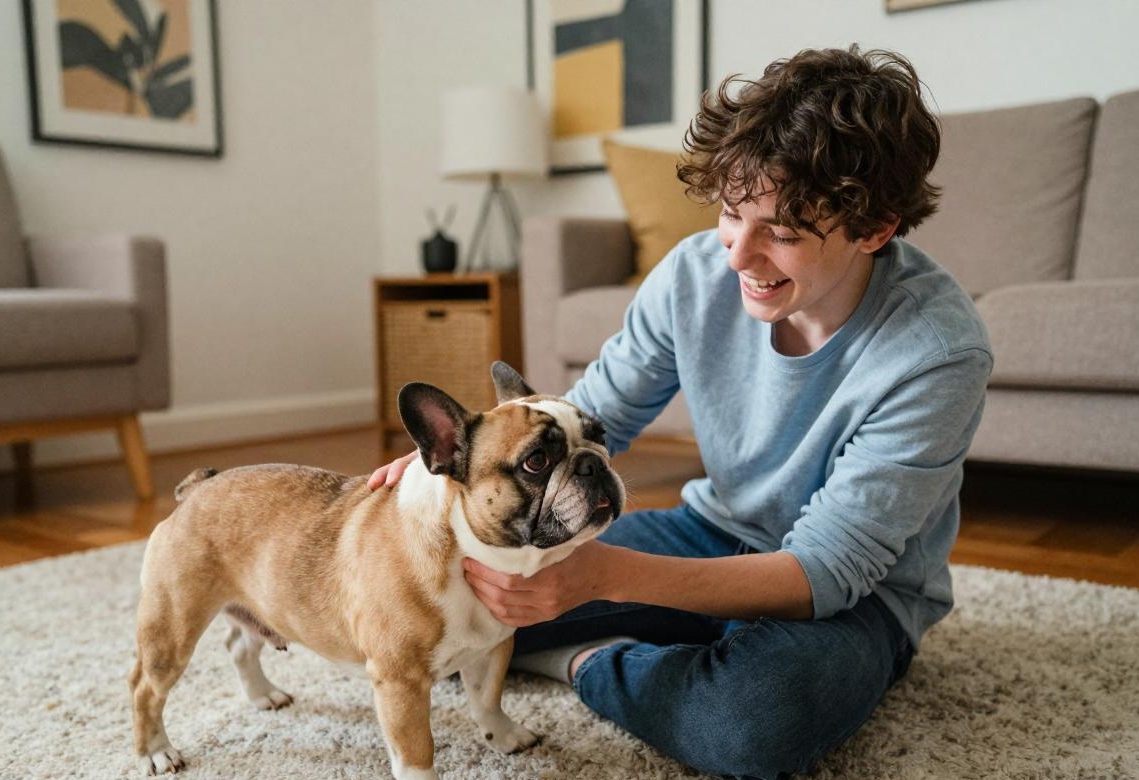
During clinic consultations, I meet countless stressed pet parents whose little bully — the French Bulldog — gulps down all the cat food in sight. It’s heartbreaking watching the cat grow thinner from missing meals or nervously eating in hidden corners. This is far more than simple greed; it carries hidden health risks and household tension. Drawing on ten years of experience resolving similar cases, I will systematically explain how to create peaceful, separate dining zones so your Frenchie and cat can eat without conflict.
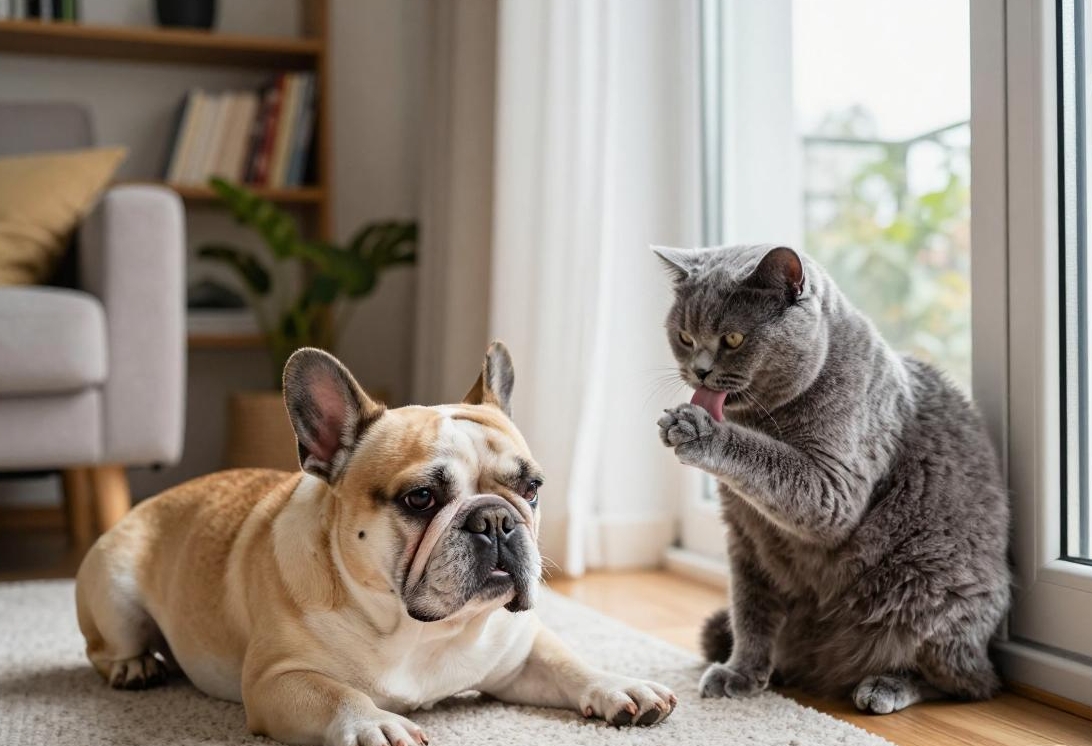
Why Do French Bulldogs Constantly Try To Steal Cat Food?
First, understand this is not a moral failing in your dog; it is instinct embedded in their genetics and behavioral patterns. Though French Bulldogs are not giant breeds, their ancestors share lineage with terriers, giving them strong prey drive and intense food motivation. Cat food, wet or dry, usually contains high protein and rich aromas, making it irresistibly tempting to dogs. Additionally, Frenchies often display stubborn, self-centered personalities. Once they believe “all food in the house belongs to me”, this mindset is hard to reverse naturally.
More importantly, from an animal behavior perspective, food stealing counts as resource guarding behavior. Every successful theft reinforces the habit, teaching the dog “stealing food works”. Over time, this creates severe stress for your cat, which may trigger stress-induced urinary disorders such as cystitis. It can also spark food guarding aggression in the dog and lead to direct fights between cat and dog, disrupting harmony in your home.
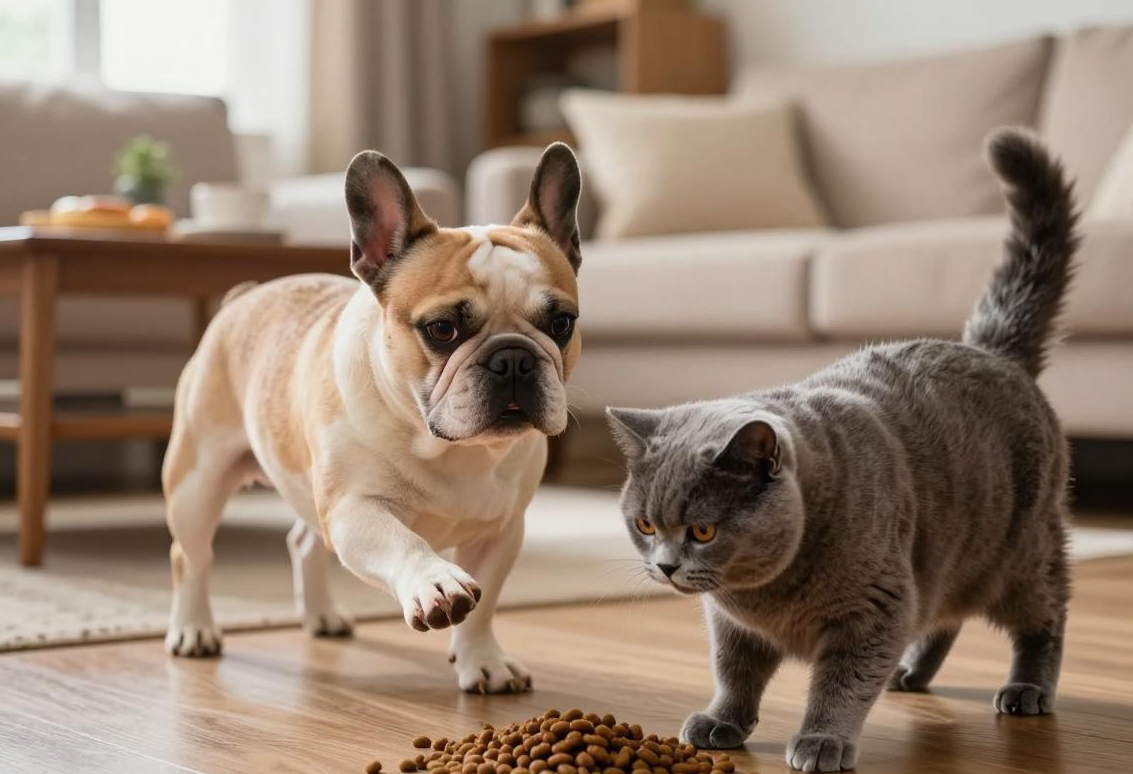
Practical Solutions: Zone Management — Separate Dining Spaces
Now that we understand the root causes, we can implement targeted fixes. The core principle: physical separation combined with behavior management. The following strategies have been tested and refined in countless households; you can combine methods to suit your living situation.
Solution 1: Vertical Space Separation — Build An Elevated Dining Spot For Your Cat
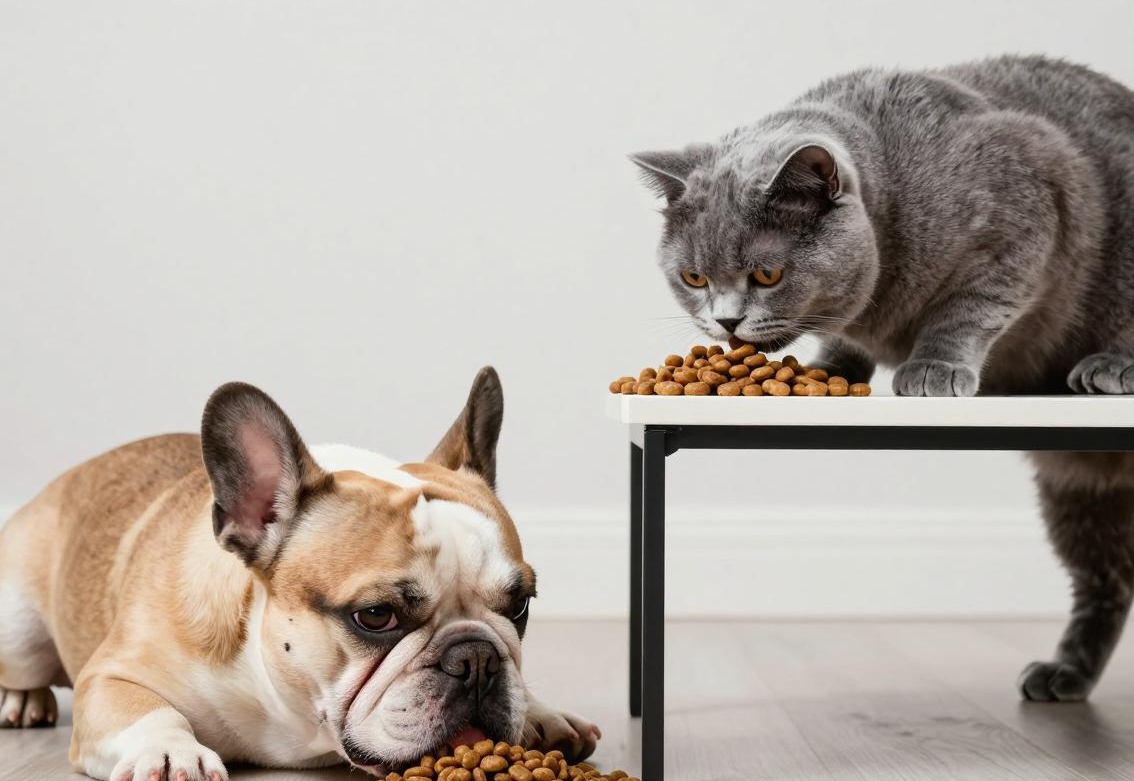
This is my top recommended and most effective foundational strategy. Cats excel at jumping and climbing, while French Bulldogs — especially stocky, short-legged individuals — have limited leaping ability. We can create an exclusive elevated feeding zone only accessible to the cat.
My Real-World Case: I advised a family whose French Bulldog, Tank, was obsessed with cat food. I suggested placing the cat bowl on a stable cabinet or custom cat tree platform roughly 1.2 meters high. At first, their cat Coal hesitated to climb up, so we added stepped ramps nearby for easy access. Within only three days, Coal loved this secure perch overlooking Tank. After several failed jumping attempts, Tank gradually lost interest in the unreachable food source.
Key Implementation Tips: The platform holding cat bowls must be sturdy to prevent tipping. Provide easy access such as connected low furniture or cat tree steps. Place this feeding area in a relatively quiet spot away from the dog’s usual running routes.
Solution 2: Staggered Feeding Schedule — Create A Clear Meal Timetable
If physical space separation is difficult to set up, or you want double protection, time management is another powerful tool. Feed your cat and dog at different times, and remove all food bowls immediately after meals — no permanent self-service feeding allowed.
My Real-World Case: This method is especially critical for households with free-feeding cats and scheduled-meal dogs. I usually recommend feeding the cat while the dog is resting or out for a walk. For example, feed your dog fully before morning and evening walks, then let the cat eat safely during the 15–20 minutes your dog is outdoors. Once the cat finishes eating, pick up and clean the bowl right away to eliminate lingering food smells. This rule is non-negotiable for cats eating wet food.
Key Implementation Tips: Pet owners need a relatively consistent daily routine. Create a fixed feeding cue for your cat, such as shaking a treat jar, building a conditioned reflex so the cat comes to eat promptly when signaled for higher efficiency.
Solution 3: Physical Barrier Separation — Designate Dog Off-Limit Zones
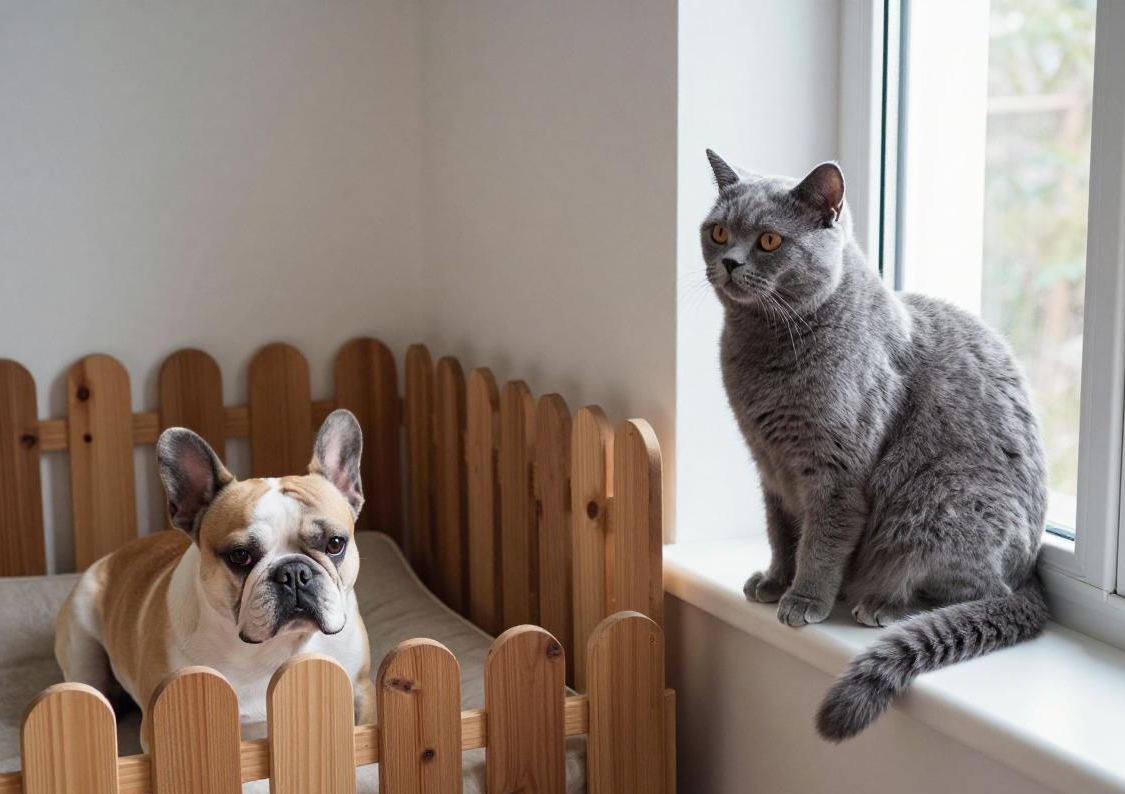
Reserve a secure room or balcony exclusively for your cat, fitted with a microchip-activated pet cat flap. These doors use magnetic or electronic locking systems, and only cats wearing the matching collar tag can pass through freely.
My Real-World Case: One client’s clever French Bulldog figured out how to open regular doors. Our final solution was installing a bidirectional microchip cat flap on the lower section of the study door. The cat could enter and exit freely using the collar magnet, while the Frenchie could only watch from outside. The study contained litter boxes, water, food and resting areas, forming a permanent safe haven for the cat. This not only solved food theft but drastically reduced the cat’s overall anxiety at home.
Key Implementation Tips: Choose well-built, smoothly operating cat flaps. Train your cat to use the passage with treats in the early stage. Stock all essential resources your cat needs within this safe zone.
Solution 4: Reinforce Behavior Training — Teach Your Frenchie Boundaries & Self-Control
This method addresses the root of your dog’s behavior and requires patience and consistency from you. The core training goal: help your dog understand the area around the cat bowl is off-limits, and waiting calmly earns better rewards.
My Real-World Case: Start training when your dog stays away from the cat bowl. Reward your dog instantly with high-value treats (small pieces of boiled chicken breast) whenever it voluntarily moves away from the cat bowl or looks toward you when you give the command “leave it”. Repeat frequently to build a positive association: moving away from the cat bowl leads to good things. Meanwhile, reinforce “wait” and “place” feeding training. Teach your dog to sit patiently by its own bowl and wait for your “ok” command before eating. This improves your control over the dog’s feeding behavior.
Key Implementation Tips: Keep your dog on a leash during early training to prevent sudden rushes toward the cat bowl. Never punish your dog physically for stealing food; punishment may trigger severe resource guarding or fear aggression. Positive reinforcement and consistent rules are the foundation of effective training.
Mistakes To Avoid: Stop These Common Errors
1. Relying on your dog’s self-control: Food triggers primal instincts. Never test a dog’s willpower; physical barriers are always more reliable than trust.
2. Forcing your cat to eat under stress: If your cat constantly gulps food nervously, vomiting and indigestion become likely. Long-term stress can trigger serious stress-related illnesses. Always ensure your cat has a relaxed dining environment.
3. Using punitive tactics: Shouting, hitting your dog, or setting scare devices (water sprayers) near the cat bowl will heighten tension between pets. Your cat may avoid that area entirely, and your dog could develop aggressive tendencies.
4. Ignoring safe water access for cats: Dogs will also drink from cat water bowls. Bacteria in dog saliva may harm cats. Place your cat’s water bowl in the same elevated or separated safe zone.
5. Overlooking your dog’s nutritional needs: Food stealing sometimes stems from hunger or unbalanced nutrition. Follow veterinary guidance to provide adequate, high-quality dog food for your French Bulldog.
Summary
Stopping a French Bulldog from stealing cat food requires combined planning covering space design, timing management and behavioral education. No single method works universally, yet pairing vertical separation with staggered feeding often delivers immediate results. Remember, our goal is not to suppress your dog, but to implement scientific management so every furry family member can enjoy meals peacefully and comfortably — this is the foundation of a happy multi-pet home. Watching your cat calmly groom its paws after eating and your dog resting contentedly in its bed, this peaceful harmony rewards all your hard work.
Important Reminder
If you have tested multiple strategies yet persistent food stealing continues alongside the following symptoms: continuous weight loss, vomiting, diarrhea, abnormal urination (blood in urine, frequent litter box visits), excessive overgrooming or lethargy in your cat; intense food guarding aggression, extreme anxiety or pica in your dog. These signs may extend beyond simple behavioral issues and signal underlying health conditions (hyperthyroidism, diabetes, parasites) or severe psychological stress. Please bring your pets to a veterinary clinic promptly and consult a professional veterinarian or animal behaviorist for full health screening and behavioral assessment to receive targeted diagnosis and treatment. Your pets’ health and welfare are always our top priority.