Dear French bulldog owners. Over my veterinary career, I have treated countless French bulldogs suffering from recurring skin conditions. Whenever seasons shift, especially spring‑summer and summer‑autumn transitions, these patients appear frequently in my clinic. Anxious owners stand by while their dogs scratch non‑stop from itching. Visible symptoms include skin rashes, dandruff and even open sores. This becomes a regular seasonal scenario. I know skin illnesses cost owners money, energy and mental stress. It is upsetting to watch your beloved pet suffer while feeling helpless. Today I will break down this subject systematically and share a field‑tested home‑based “season‑change deep‑cleaning routine”, designed to stop skin‑disease flare‑ups before they worsen.
Why Are French Bulldogs So Prone To Skin Diseases?
To solve the problem, understand its root causes first. Frequent skin‑disease outbreaks in French bulldogs are not random; they result from the combined effects of anatomy, genetics and living environment.
First and foremost are their signature skin folds. Folds on the face, neck and tail base act like small warm, humid, poorly‑ventilated greenhouses. Sebum, sweat, dust and food debris easily get trapped inside these crevices. Without timely cleaning, these spots become perfect breeding grounds for bacteria such as Staphylococcus and fungi such as Malassezia. I once treated a French bulldog that developed severe fungal dermatitis spreading across its whole neck simply because one overlooked fold behind its ear stayed uncleaned for a long time.
Second, though French bulldogs are short‑haired, they possess highly active sebaceous glands, leading to abundant skin‑oil secretion. Moderate sebum protects skin, yet excess oil mixed with shed skin cells (dandruff) forms greasy biofilms. These block hair follicles and encourage massive Malassezia overgrowth. The distinctive body odor, greasy dandruff and dark spots often seen on French bulldogs frequently signal Malassezia over‑proliferation.
Third, French bulldogs sometimes have sensitive immune systems. Some individuals suffer from atopic dermatitis, an allergic tendency causing overreactions to environmental triggers like pollen and dust mites. Seasonal environmental shifts and fluctuating allergen levels trigger or worsen skin inflammation. Once inflammation damages the skin barrier, secondary bacterial or fungal infections easily develop, creating a vicious cycle.
Lastly, improper grooming habits make matters worse. Excessively frequent bathing with human shampoo or overly alkaline pet shampoo destroys skin’s protective acid mantle and normal microbial balance. Failure to fully dry fur after bathing, especially moisture trapped inside folds and between paw toes, or long‑term misuse of hormone‑based ointments that only relieve symptoms temporarily, cause skin dependency and far more serious complications.
Complete Home‑Based Season‑Change Deep‑Cleaning Workflow
Drawing from the above‑mentioned causes, I developed a four‑step seasonal‑care framework: “Inspect → Clean → Protect → Observe”. This routine comes from numerous clinical cases. One French bulldog named Potato stands out in my memory. Every spring‑summer transition he suffered skin flare‑ups. His owner tried countless medicated baths and ointments; symptoms improved briefly then relapsed. I advised stopping blind medication and focusing on foundational grooming. After strictly following this workflow through two consecutive seasonal cycles, Potato’s skin improved fundamentally and relapse intervals grew much longer.
Solution 1: Full Skin‑Fold Inspection & Pre‑Treatment
This lays the foundation for all cleaning work. Always work gently and carefully.
Clinical Notes: Prepare soft disposable baby wipes or medical‑grade lint‑free cotton balls, plus alcohol‑free pet ear cleaner or low‑irritant saline wash. Avoid ordinary commercial wet wipes; fragrances and preservatives may irritate skin. Fully moisten cotton pads then wring until no liquid drips off.
Gently pull open every skin fold on the face, neck, tail base and inner limbs just like doing careful excavation work. Even when outer skin looks clean, deep‑fold areas may already hold reddish secretions or yellow‑white oily grime. Wipe in one single direction following fold lines with damp cotton pads to lift softened dirt. Use a fresh cotton pad for each separate fold to prevent cross‑contamination. For heavily soiled or mildly inflamed folds, hold an ear‑cleaner‑soaked cotton pad against the area for ten‑plus seconds before wiping. The mild cleaning properties and slightly acidic environment of ear cleaner help suppress microbes. Perform this step 2‑3 times weekly; increase frequency during seasonal transitions.
Solution 2: Medicated Bathing & Thorough Drying
Bathing quality matters more than bathing frequency. For French bulldogs with past skin‑disease history or high‑risk seasonal periods, administer therapeutic grooming baths every 2‑4 weeks.
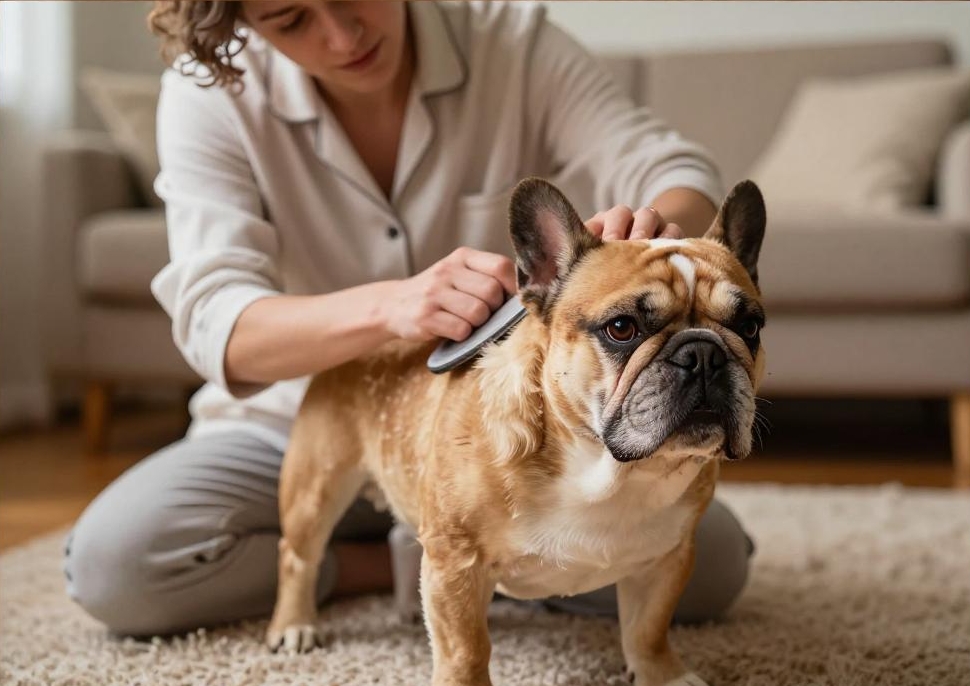
Clinical Notes: Thoroughly brush out fur with a pin‑brush before bathing. Keep water temperature at 38‑40°C, slightly cooler than lukewarm human bath water; hot water irritates skin. Select shampoo according to the dog’s prevailing symptoms. For excess oil and foul odor, choose formulas containing chlorhexidine, miconazole or plant‑sourced ketoconazole targeting Malassezia and bacteria. For dry skin with dandruff without severe infection, pick soothing moisturizing shampoo formulated with oatmeal and essential fatty acids. One critical rule: allow shampoo adequate contact time on skin. Follow product instructions; typically leave lather for 5‑10 minutes. During this interval massage skin softly, paying extra attention to folds, so active ingredients take full effect. Those 5‑10 minutes of medicated soaking achieve far better results than quick rinsing‑off of foam.
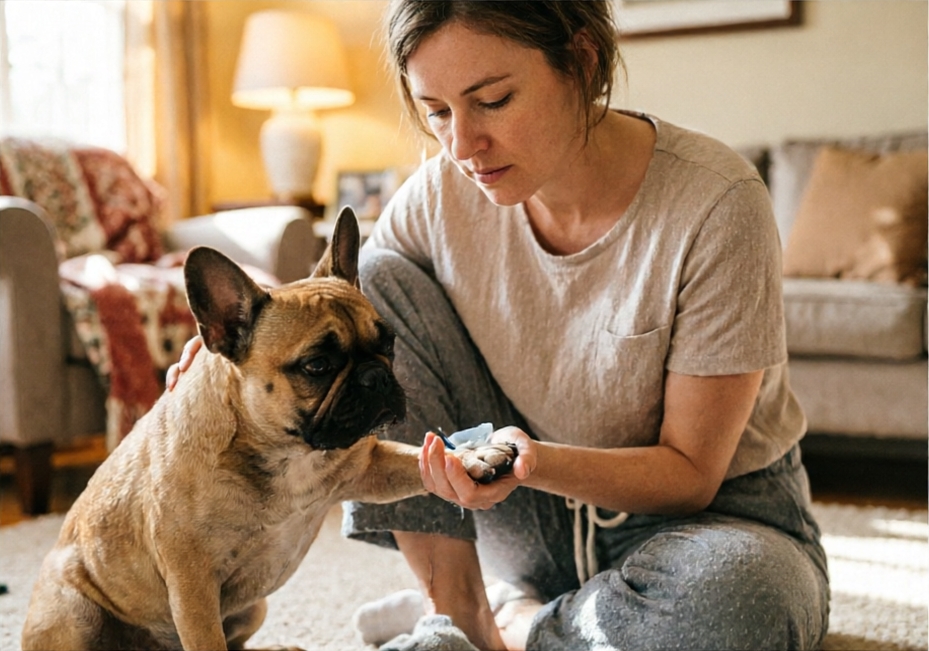
Post‑bath drying is absolutely critical. I have seen many cases where all prior efforts were wasted due to incomplete drying. Use a hair‑dryer on medium‑low warm‑heat setting. Pull back fur and skin folds layer by layer to guarantee every section of skin — especially deep folds, groin area and between paw toes — is fully dried. Touch manually to confirm skin feels warm and dry instead of damp. This process may take 15‑20 minutes and requires patience. For noise‑sensitive dogs like Potato, let them adapt to dryer noise from a distance and use treats for positive reinforcement.
Solution 3: Skin‑Barrier Repair & Nutritional Support
Cleaning removes dirt yet may strip away beneficial natural skin oils. Post‑bath and ongoing daily skin‑barrier repair are essential.
Clinical Notes: After Potato’s bath and complete drying, apply small amounts of pet‑specific moisturizing lotion or ceramide‑ and fatty‑acid‑enriched repair ointment onto relatively dry, dandruff‑prone skin regions (avoid oily fold areas). Ensure products are pet‑formulated and non‑greasy to prevent pore clogging. For nutrition, I recommended Potato’s owner consistently supplement Omega‑3 (e.g. fish‑oil source) and Omega‑6 fatty acids (plant‑oil sources). These building‑blocks of skin cell membranes strengthen skin‑barrier function internally and reduce inflammatory responses. Choose high‑quality pet fish‑oil supplements or switch to complete kibble fortified with these nutrients. Combine external grooming with internal nutritional support to genuinely boost skin resistance.
Solution 4: Environmental Management & Daily Observation
Skin conditions are tightly linked to living surroundings.
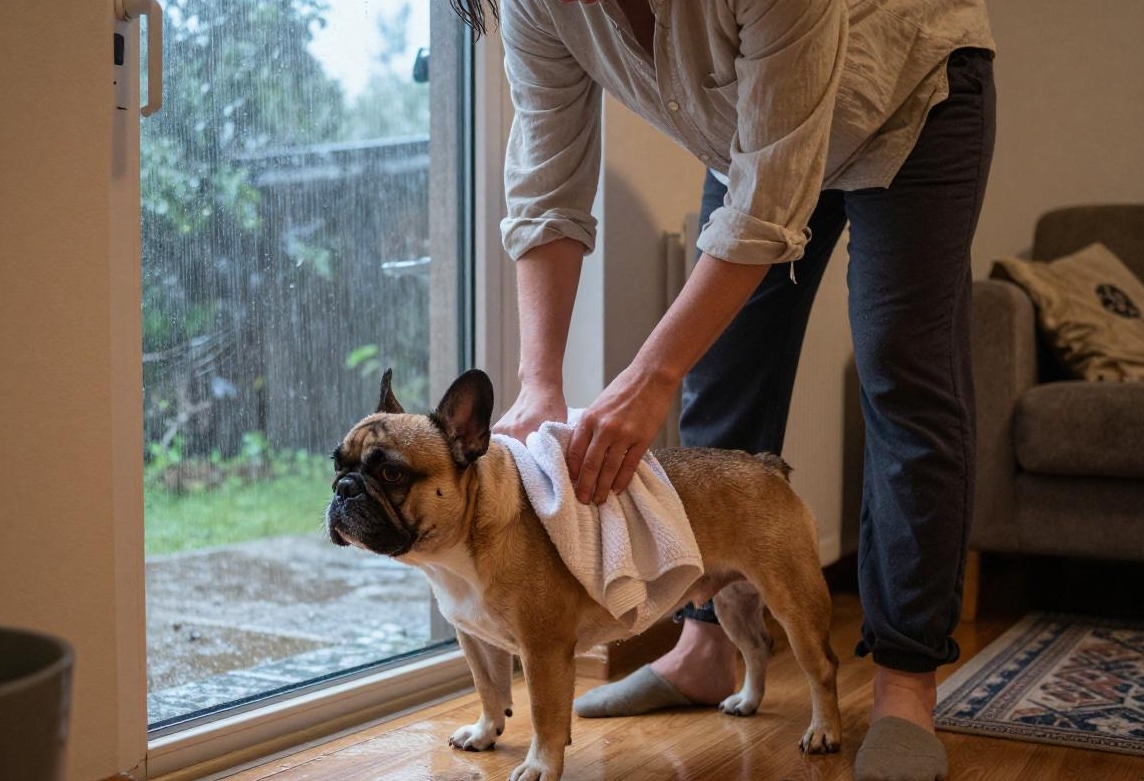
Clinical Notes: I reminded Potato’s owner to regularly wash bedding and toys and sun‑dry them when possible. Keep living spaces — especially areas where the dog spends most time — clean and well‑ventilated to minimize dust‑mite populations. After outdoor walks, particularly on rainy days or after grass‑field visits, wipe paws, belly and body with damp towels to remove external allergens and contaminants.
Build a daily hands‑on‑check habit. While interacting with your dog, run your hands over its full body to detect new lumps, dandruff or red patches. Sniff the coat, especially skin folds, for unusual sour‑rank odors. Spot abnormalities early and intervene promptly to stop minor issues from developing into severe infections.
Mistake‑Avoidance Guide: Never Commit These Common Errors
1. Misusing human‑grade products or potent medications: Human shampoo has unsuitable pH for canine skin. Disinfectants such as povidone‑iodine or alcohol cause harsh irritation. Long‑term use of antibiotics or hormone ointments without veterinary guidance leads to drug resistance and skin atrophy.
2. Over‑cleaning: Daily fold‑wiping or overly frequent bathing disrupts healthy skin microflora and sebum layers, rendering skin increasingly fragile.
3. Neglecting drying: Air‑drying or only drying top‑layer fur leaves damp conditions inside folds, creating ideal breeding grounds for microbes.
4. Reckless product‑switching in crisis: Skin recovery requires time; stable improvement usually takes 4‑8 weeks. Frequent shampoo or supplement changes confuse the skin.
5. Treating externally while ignoring internal balance: Disregard nutritional support for skin health is like pouring water into a leaking bucket; benefits cannot last long.
Summary
Fighting seasonal skin disease in French bulldogs is a patient, science‑driven long‑term campaign rather than a quick fix. Core logic: Gently and thoroughly remove dirt and disrupt damp micro‑habitats for microbes through physical cleaning; repair and strengthen native skin‑barrier defenses both externally via medicated bathing and internally via nutritional support. This workflow may look tedious at first, yet once it becomes routine it consumes far less time than repeated veterinary visits for advanced skin illness. Remember: prevention beats treatment every time.
Important Reminder
The home‑care workflow shared here applies to routine prevention and early‑stage mild‑issue intervention. If your French bulldog develops large‑area red rashes, severe hair loss, pus discharge, scabs, intense itching, loss of appetite or low energy, this often signals advanced infection or underlying endocrine disorders. Seek prompt professional veterinary care at a formal animal hospital. Your vet may perform skin scrapings, fungal cultures and other diagnostics to design targeted treatment plans. Combine home grooming with professional medical intervention to maximize your pet’s well‑being.