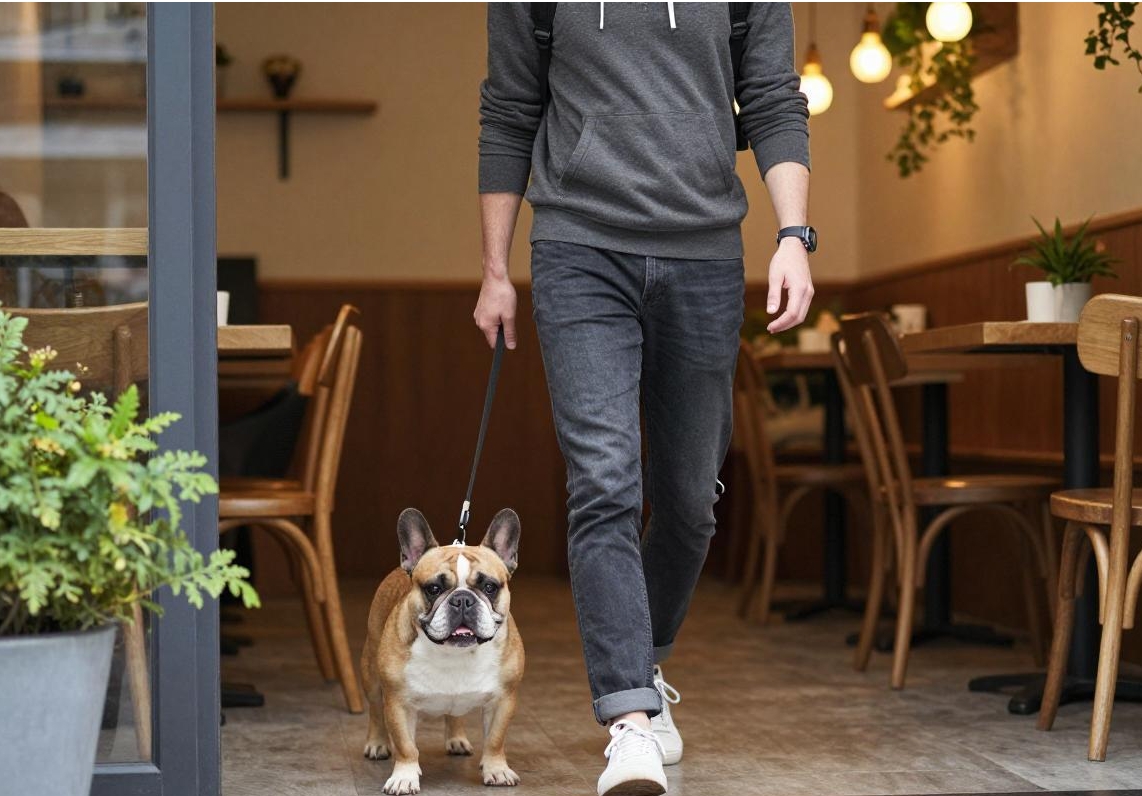
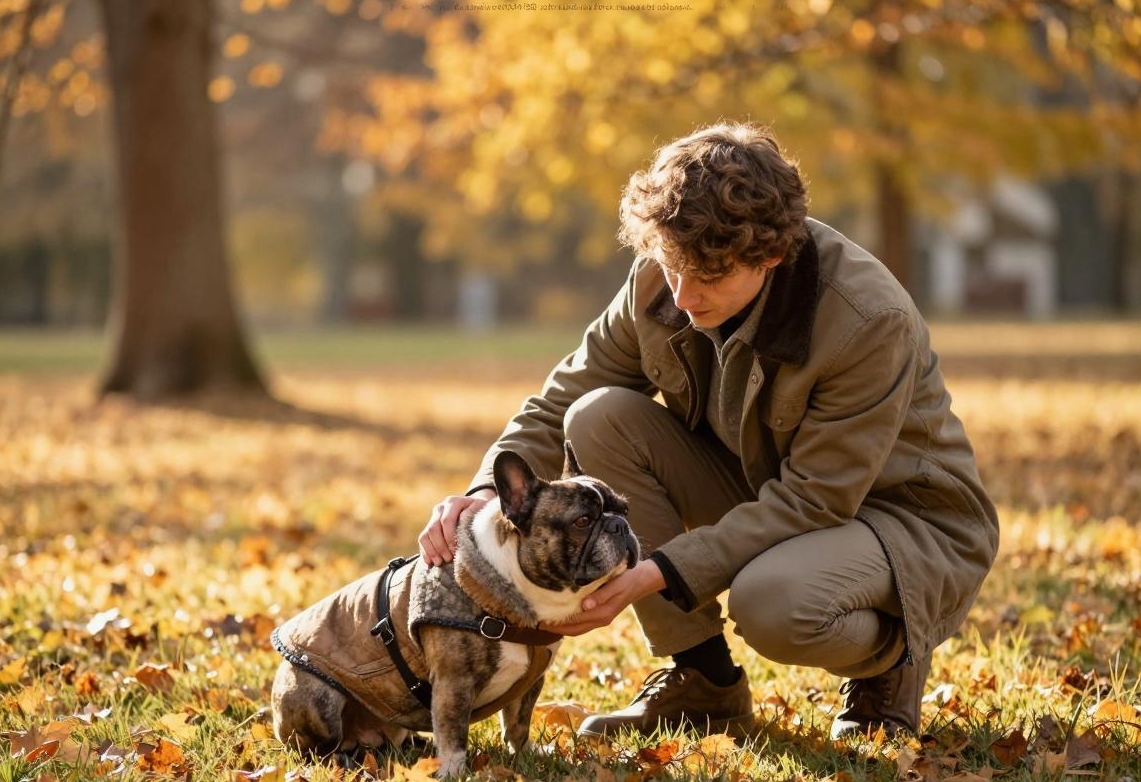
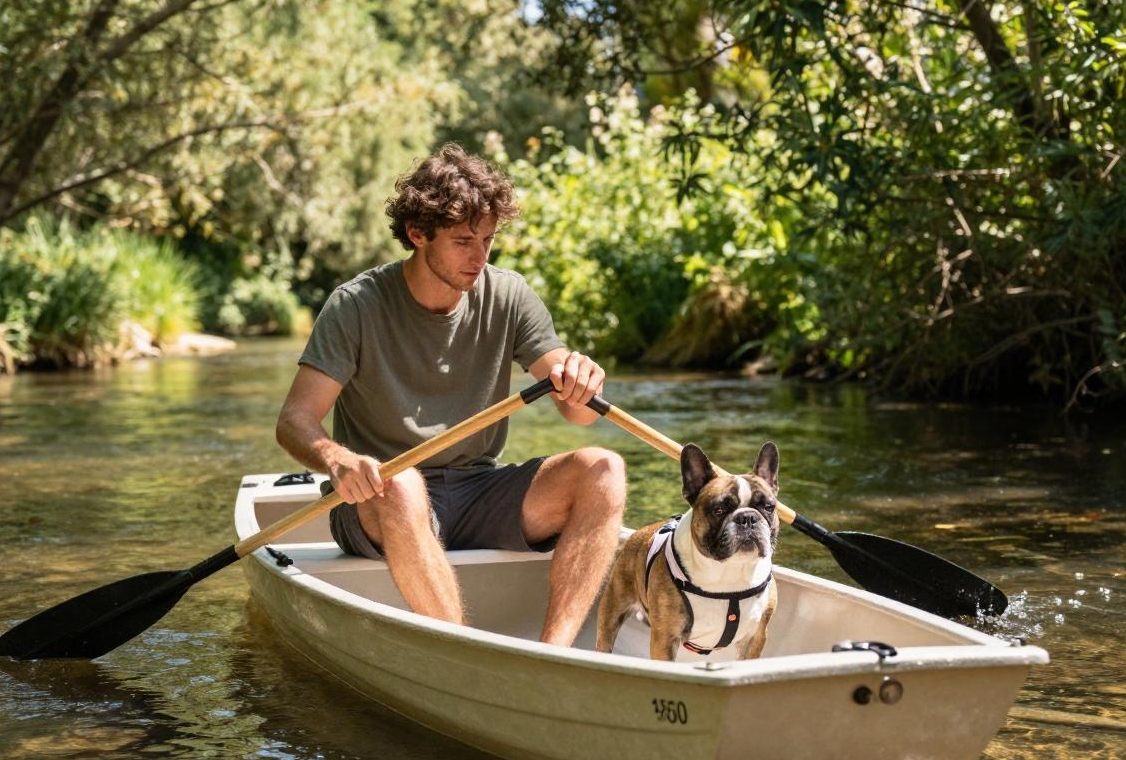
Hi fellow dog lovers, especially all parents of lovely French Bulldogs (Frenchies). I’m Ajie, and I’ve worked in pet behaviour guidance and animal healthcare for ten years. Over this decade, I’ve seen countless dogs suffer injuries or discomfort from inappropriate exercise routines. Among all breeds, the gentle, distinctive French Bulldog always weighs on my mind. Today I want to dive deep into a popular yet risky activity: cycling with your French Bulldog.
A Common, Concerning Scenario
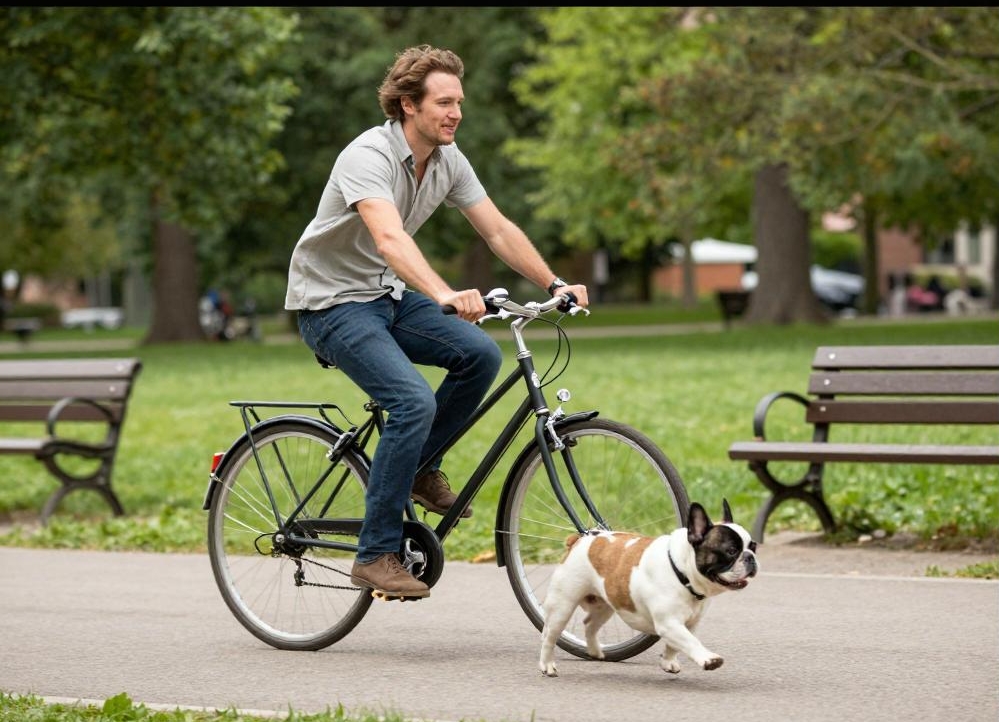
Picture this scene: sunset arrives, you ride your bicycle while your beloved French Bulldog runs happily beside you, tethered to the handlebars. You think this saves energy and lets your dog burn off excess energy. But as the run continues, you notice the dog’s tongue hangs far out, breathing grows heavier — shifting from regular panting to harsh rapid huffing, and even noises similar to snoring or choking. The dog may still try to keep up, yet its gait becomes unsteady and its gaze unfocused. This is not simple exhaustion; it is likely a desperate distress signal from its respiratory tract. I have treated multiple French Bulldogs rushed to emergency clinics after severe heatstroke and acute respiratory distress following fast runs in summer. That worrying feeling still stays with me.
Why Do French Bulldogs Require Extra Speed Management?
The root cause lies in their iconic, endearing flat muzzle, medically known as Brachycephalic Obstructive Airway Syndrome (BOAS). This is not just a cute facial feature; it creates significant physiological limitations.
They possess short, narrow nasal cavities, an often elongated soft palate, and looser throat tissue prone to swelling compared to other dog breeds. It is comparable to breathing through a thin straw while wearing a poorly ventilated mask, with loose tissue inside the throat threatening to block airflow. When calm, they may only snore loudly. Once they begin running quickly, oxygen demand surges dramatically. Their naturally restricted “air passages” cannot keep up. Heavy forced breathing triggers further swelling and collapse of soft tissues in the throat and trachea, creating a vicious cycle. In severe cases, hypoxia, heatstroke, or even life-threatening complications can develop rapidly.
Therefore, for any activity where your French Bulldog follows you, the core rule is never “how fast can he run”, but “how smoothly can he breathe”. When biking, you control the speed — and that carries heavy responsibility.
My Experience: Three Strategies To Build Biking Safety Defenses
After years of observation and practice, I have developed a tailored safe biking routine for French Bulldogs. These methods are not just theory; each comes from mistakes my clients and I have made, alongside proven solutions.
Strategy 1: Gear Is Your First Safety Lock — Shift Tether Point From Handlebars To Your Waist
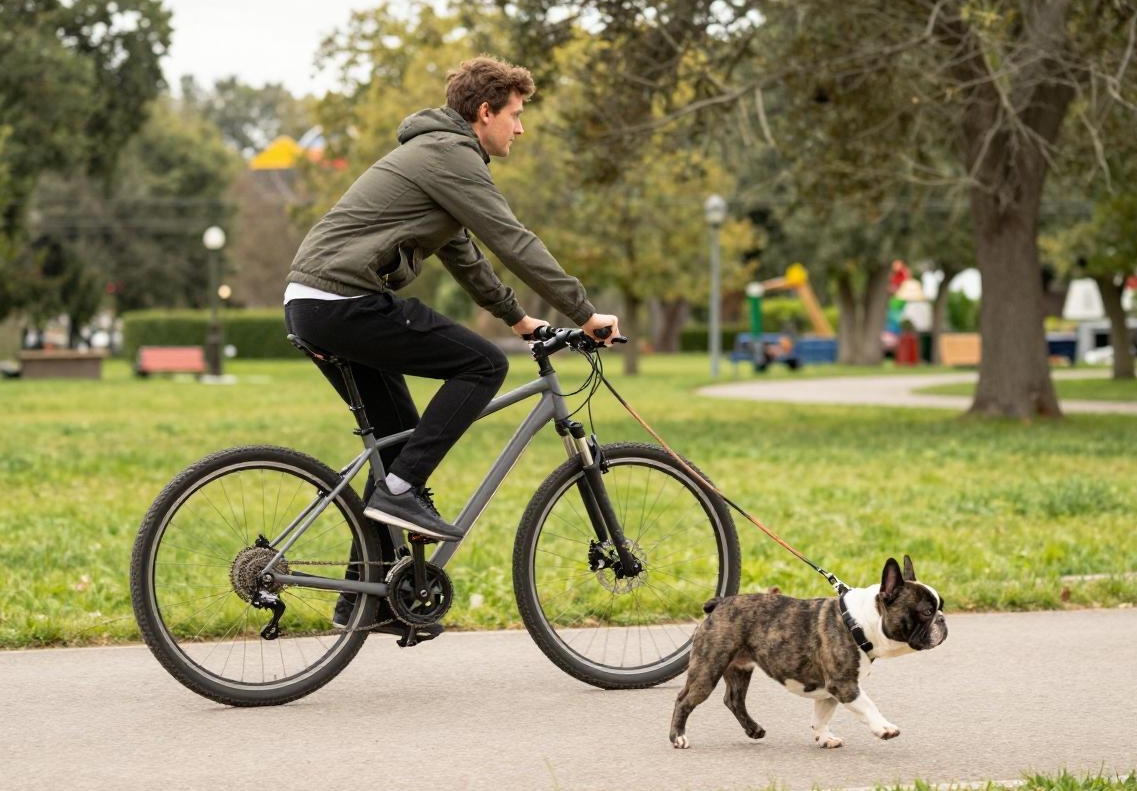
Incident I Encountered: Early on, I also simply attached my dog’s leash to the bicycle handlebars. Once the dog suddenly darted toward something on the roadside. The bike instantly lost balance, and both of us fell. Fortunately we only sustained minor scrapes, but that frightening accident made me realise fully: handlebars control steering. Any sudden pulling force from the dog directly compromises cycling stability, creating extreme danger.
My Recommended Solution: I strongly advise using a hands-free biking dog walking belt paired with a shock-absorbent elastic leash.
1. Waist Belt: Move the leash anchor point away from the handlebars onto your waist. Your core muscles absorb sudden surges of force far better than your arms, with zero interference to your steering.
2. Leash Selection: Choose leashes built with spring shock absorbers or constructed from elastic material. The elastic section absorbs most impact when the dog speeds up or slows down, preventing harsh jerks that injure the dog’s neck and your lower back.
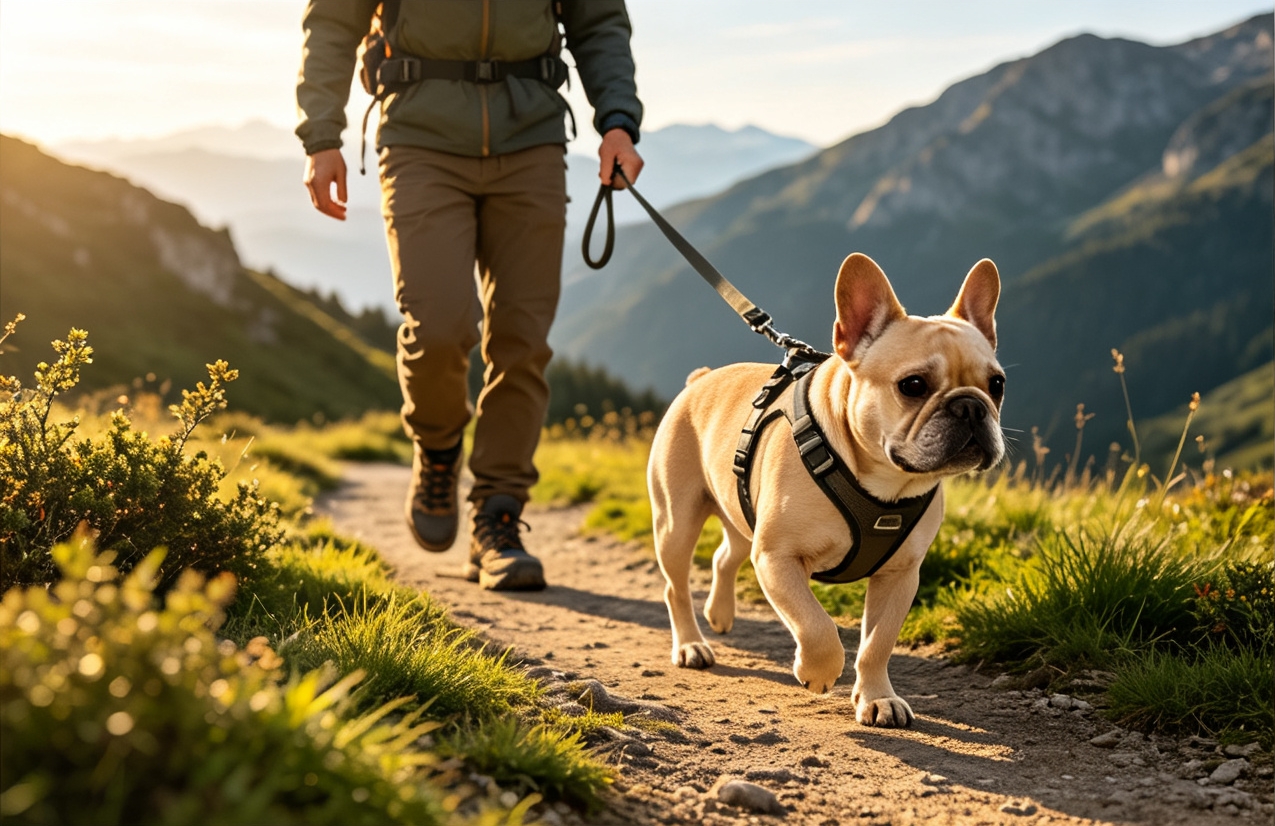
3. Extra Reminder: Always fit your dog with a comfortable harness instead of a collar. During movement, collars compress the trachea — an especially dangerous risk for French Bulldogs.
Strategy 2: Speed Depends On The Dog, Not You — Master The Breathing Rhythm Observation Method
Incident I Encountered: Many owners ask: “How slow should I cycle?” I previously shared a rough benchmark such as jogging pace, yet later discovered this guideline is unreliable. Every French Bulldog differs in fitness, weight and nasal constriction. Some struggle with brisk walking, while others can sustain light trotting. Relying on a universal speed limit is risky.
My Recommended Solution: I developed the Breathing Rhythm Observation Method.
1. Baseline Reference: Before setting off, let your dog sit quietly. Observe its resting breathing pattern — the rhythm of chest and abdominal movement plus sound. Memorise this baseline breathing state.
2. Green Light Breathing While Cycling: Keep your pace slow enough so the dog’s breathing is only slightly heavier than its baseline, tongue slightly extended, with light, steady strides. This marks a sustainable safe speed.
3. Red Light Breathing — You Must Stop Immediately: If you notice distinct rattling, choking-like noises in its breath, an overly protruding tongue with darkened colour (purple/blue tongue is an extreme emergency warning), or stringy thick saliva, halt right away! Short rest will not resolve this. These signs signal airway obstruction or severe tissue swelling. Let the dog settle completely, offer small sips of water if willing, and wait until breathing nearly returns to baseline. For future rides, cap your speed below the threshold that triggered the red light alert this time.
Strategy 3: Environment & Timing Matter More Than Effort
Incident I Encountered: One client cycled two kilometres with his French Bulldog on hot asphalt in the afternoon, and the dog ended up hospitalised for heatstroke. He said defensively: “I cycled slowly!” Yet he ignored air temperature and scorching pavement.
My Recommended Solution: Planning your biking route for a French Bulldog requires the same careful thought as planning trips for an infant.
1. Timing: Strictly avoid outings during the hottest hours (10 a.m. – 4 p.m.). Choose cool conditions in early morning or after sunset.
2. Ground Surface: Prioritise soft, cool surfaces such as grass or dirt trails. Avoid midday asphalt and concrete; radiated heat from these surfaces rapidly triggers heat stress.
3. Route Planning: Map shaded paths with regular safe stopping points for rest and water. Structure the activity as intermittent sessions: cycle for a stretch, pause to rest, offer water and sightsee. Limit total outing duration to 15–20 minutes ideally.
4. Carry Essentials: Always bring ample room-temperature fresh water plus a portable water bowl. Offer hydration regularly, and dampen paw pads and belly skin to aid heat dissipation when needed.
Mistake Avoidance Guide: Never Make These Errors
1. Do not prioritise distance or speed: This is not endurance training. You are pushing your dog toward its physiological breaking point. A successful biking walk means your dog happily drinks water and rests after arriving home — not collapsing on the ground gasping heavily.
2. Do not start cycling while your dog is overexcited: Take a 5–10 minute calm stroll first so the dog can relieve itself and settle emotionally before riding. Shifting from full rest straight into activity places massive strain on the heart and respiratory system.
3. Do not use fixed-length non-elastic leashes: These greatly raise risks of tripping or traumatic pulling injuries.
4. Do not overlook any minor unusual breathing noises: French Bulldogs naturally breathe loudly, yet owners must learn to distinguish normal heavy panting from abnormal respiratory sounds. Any new odd noise signals an immediate stop.
5. Do not serve large amounts of ice water right after intense exercise: This may trigger stomach cramps and discomfort. Provide room-temperature water in frequent small portions.
Summary
Cycling outings with your French Bulldog can be joyful opportunities to strengthen your bond — but only if protecting respiratory health always takes priority over exercise volume. Remember, you are not training a herding dog; you are caring for a family member with unique physical traits who demands extra attentive care. With proper equipment (waist belt + shock-absorbent leash), speed control guided by your dog’s breathing rhythm, and thoughtful selection of timing and surroundings, you can safely open the door for them to enjoy the outdoors.
Important Reminder
The advice shared in this article applies to daily prevention and light activity. Seek immediate veterinary consultation if your French Bulldog suffers severe respiratory distress, purple gums, fainting after mild exercise, persistent loud breathing noises in cool environments, or breathing pauses during sleep. These symptoms may indicate advanced Brachycephalic Obstructive Airway Syndrome requiring medical intervention. Your vet may prescribe medication to reduce swelling, or recommend corrective surgery such as soft palate resection to fundamentally improve quality of life and exercise safety. Love your dog by providing scientific, professional care.