Dear French Bulldog Owners, Are You Worried About Your Dog’s Bone Health?
Hello everyone. With over ten‑years of clinical practice and pet‑care consulting, I have worked with hundreds of French bulldogs. Almost every owner asks me the same question when their dog hits rapid‑growth phase (3‑8 months old) or enters middle‑to‑old age: “Doc, does my French bulldog need calcium supplements? How can I supplement calcium safely?”
I have witnessed many distressing cases. Some owners, out of deep affection and fear of stunted growth, blindly give high‑dose calcium tablets. This causes premature bone closure and body stiffness in puppies. Others follow the myth “food‑based supplementation is best” and feed large amounts of chicken liver and lean meat long‑term. This triggers severe calcium‑phosphorus imbalance and even rickets. More commonly, owners panic when seeing their French bulldog struggle climbing stairs, have wobbly hind legs after jumping, or lie down quickly after short play sessions, yet do not know what to do. These are real worries and confusion around calcium supplementation for our little “tank‑like” companions.
Why Calcium Supplementation Is Special & Critical for French Bulldogs
To solve the problem, we first need to understand the root causes. French bulldogs’ skeletal structure means their calcium requirements and utilisation differ from many other dog breeds.
1. Innate build and weight‑bearing pressure: French bulldogs are brachycephalic, heavily‑muscled dogs with relatively heavy bone mass. Their signature compact, short‑limbed build puts greater mechanical stress on the spine and limb joints than slimmer breeds of equal weight. Sturdy, resilient bones lay the foundation for their lively nature.
2. Rapid growth and developmental demands: French bulldog puppies grow extremely fast between 3‑8 months of age. At this stage, bones are like a concrete‑reinforced building under construction, and calcium acts as the essential cement. Insufficient calcium results in porous, easily‑deformed bones (such as bow‑legged O‑shaped legs). Excess calcium or improper ratios harden bones prematurely, hindering normal development and joint mobility.
3. The golden calcium‑phosphorus ratio rule: This is one of the most vital professional principles. Calcium absorption and utilisation depend on phosphorus. The ideal canine calcium‑phosphorus ratio is roughly 1.2:1 to 1.4:1. If dietary phosphorus far exceeds calcium (e.g. long‑term feeding of pure meat or animal organs), the body pulls calcium out of bones to balance blood phosphorus levels, leading to bone calcium deficiency. This is the scientific reason why feeding only meat can still cause calcium shortage.
Gentle Food‑Based Supplementation Plans From Real‑World Clinical Experience
Once you grasp these principles, you no longer need mysterious “miracle calcium supplements” of unknown composition. The best calcium sources usually come from diverse natural foods. The following validated gentle approaches have been fine‑tuned from feedback while advising many French‑bulldog households. Remember: gentleness and long‑term consistency are the core of dietary calcium support.
Solution 1: Basic Golden Calcium‑Phosphorus Meal — Cooked Egg Yolk + Yogurt
This is my recommended safe starting point for puppies and adult dogs when introducing food‑based calcium support.
My clinical case: I once treated a one‑year‑old French bulldog named “Tank”. He had poor appetite, dull coat, and weak hind legs after moderate exercise. Pathological causes were ruled out; his issues stemmed from nutritional imbalance caused by monotonous diet. I advised the owner to cut out all extra treats and add the following mix to his daily kibble:
Step‑by‑step: Mix half a cooked egg yolk plus one small spoon (roughly 5‑10 g) of unsweetened plain yogurt into high‑quality dog kibble per meal. Egg yolk is a natural nutrient powerhouse rich in calcium, phosphorus, lecithin and vitamin D (boosts calcium absorption). Yogurt delivers easily‑absorbable lactic acid calcium plus probiotics. This combination approximates the ideal calcium‑phosphorus ratio and is mild on the digestive tract with low upset risk.
Outcome & observation: After roughly one month of consistent feeding, Tank’s owner reported noticeable shinier fur, stronger hind‑leg thrusting during ball play, and fewer episodes of slumping onto the floor. This plan focuses on small, steady doses. It serves as daily nutritional reinforcement rather than medical treatment.
Solution 2: Advanced Bone‑Nourishing Broth — Slow‑Simmered Cartilage & Vegetables
Suitable for adult French bulldogs needing extra joint support, or post‑illness / post‑surgery nutritional recovery.
Common owner mistake I encounter: Many owners know bone broth, yet select large marrow bones, only serve the broth, or feed sharp bone fragments that lacerate intestines — dangerous and ineffective. I once handled an intestinal‑blockage case triggered by chicken‑bone ingestion in a French bulldog, a hard‑learned lesson.
My solution: Use safe cartilage cuts and long slow cooking to leach nutrients fully into broth.
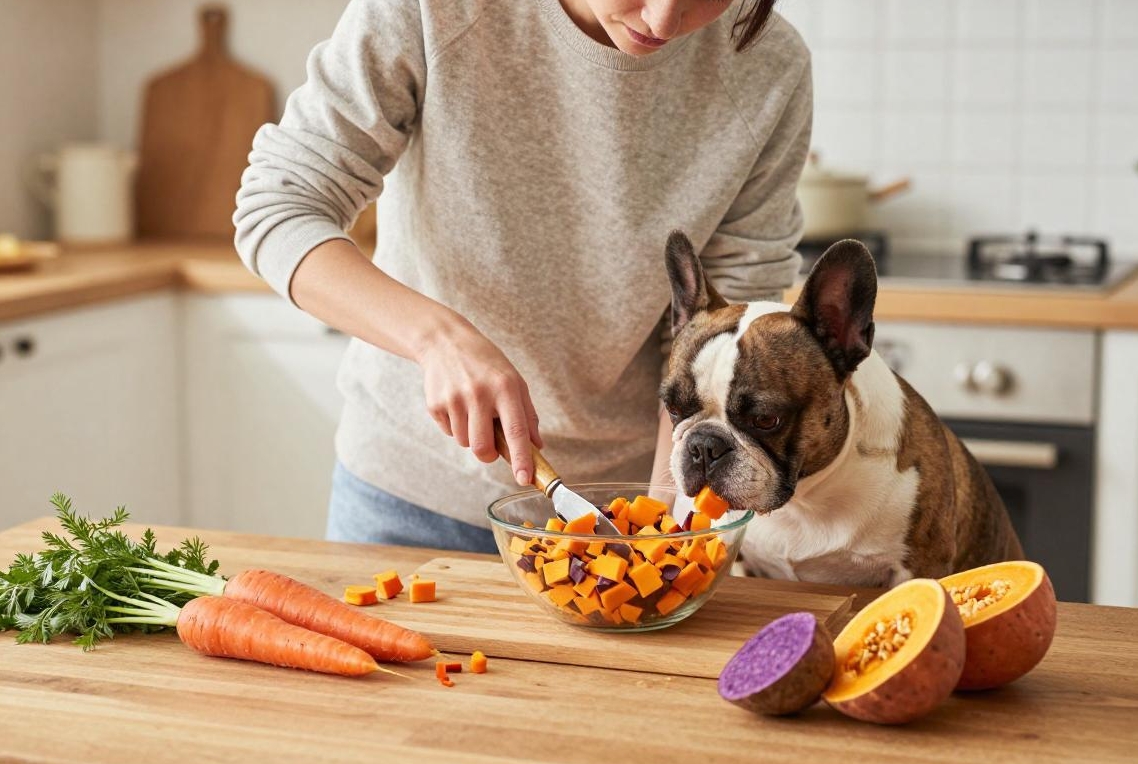
Step‑by‑step: Prepare pork or beef cartilage. Blanch in boiling water, then place in slow‑cooker or pressure‑cooker together with carrot chunks and a couple of broccoli florets (for vitamins and minerals). Add plenty of clean water and simmer for 2‑3 hours until cartilage turns tender‑soft and broth becomes milky‑white. Cool and skim off surface grease.
Serving method: Mash soft cartilage, mix with vegetables and broth. Replace part of drinking water with this liquid, or stir it into kibble. Offer 1‑2 times weekly only. Cartilage is rich in collagen and chondroitin sulfate to nourish joint cartilage, and calcium released by long simmering is highly bio‑available. Important rule: serve only thoroughly‑softened cartilage and broth. Never feed any hard, splinter‑prone bones.
Solution 3: Daily Calcium‑Boost Homemade Treats — Dehydrated Cheese & Smelt Fish
Turn calcium supplementation into rewarding fun.
My experience: Substitute commercial treats with healthy homemade rewards during training and daily interaction for dual benefits. My own French bulldog “Baozi” is crazy about these homemade snacks.
Instructions:
1. Cheese cubes: Pick low‑salt or unsalted natural cheese (cheese sticks work well). Dice into thumbnail‑sized pieces. Dehydrate in dehydrator at 70°C for 2‑3 hours, or bake at oven’s lowest setting until dry and firm. Cheese is a concentrated calcium source.
2. Dried smelt fish: Buy fresh or frozen whole smelt fish, rinse clean, spread evenly on baking tray. Bake at low temperature around 100°C for 1‑2 hours until fully dry and crispy. Feed whole fish including bones and flesh — a natural calcium‑phosphorus source packed with Omega‑3 fatty acids.
These crispy homemade snacks support teeth‑grinding and oral cleaning while supplementing minerals gradually. 2‑3 pieces per day as rewards are sufficient.
Pitfall‑Avoidance Guide: Steer Clear of These Calcium‑Supplement Mistakes
When pursuing canine health, avoiding errors is equally important as picking correct practices.
1. Blindly adding calcium tablets / calcium powder: This is the biggest trap! Without veterinary‑diagnosed calcium deficiency, extra calcium supplements for dogs eating complete commercial kibble (especially puppy formula) easily cause calcium overload, triggering bone disease, urinary stones and other complications. Food‑based supplementation carries low over‑dosage risk.
2. Drinking only thick marrow‑bone broth: Long‑simmered marrow‑bone broth actually contains very little calcium; its main components are fat and purines. French bulldogs are prone to obesity and joint issues, so high‑fat high‑purine broth does more harm than good.
3. Raw‑meat‑and‑bone feeding without balanced ratios: Raw BARF feeding requires precise science. If formulating meals yourself, you must accurately calculate proportions of muscle meat, bone and organs plus extra calcium sources. Random feeding of large raw bones or plain meat carries severe risks.
4. Ignoring vitamin D synergy: Calcium absorption relies on vitamin D. Ensure moderate daily outdoor exposure under gentle sunlight (avoid harsh mid‑day sun), the best way for dogs to synthesise endogenous vitamin D.
Summary: Love Means Scientific Care
Calcium supplementation for French bulldogs is not “more is better”. It calls for careful management focused on balance, gentleness and consistency. From kibble mixed with egg yolk and yogurt, to warm cartilage‑vegetable broth, to tiny homemade cheese treats during training, these ordinary‑looking steps build lifelong skeletal health.
Every thoughtful dietary choice you make for your dog counts more than expensive nutritional supplements. By observing your dog’s energy levels, athletic performance and body condition, you become their best health manager.
Important Reminder
The food‑based plans in this article serve for prevention and mild‑level maintenance. Immediately stop all home‑administered supplementation if your French bulldog develops serious warning signs: obvious lameness, swollen joints, severely abnormal gait (such as paddling‑style movement), pain when bones are touched, or temperament shifts caused by pain. Visit a licensed animal hospital promptly for professional veterinary assessment (may include X‑rays, blood biochemistry tests and more).
Severe bone‑joint conditions such as hip dysplasia, acute arthritis flare‑ups and fractures require formal veterinary intervention and treatment. Food‑based nutrition can only act as rehabilitation‑phase support. Do not delay optimal treatment by self‑managing symptoms. To love them is to give timely, professional protection.