Hello everyone, I am Old Chen, a veterinarian with more than ten‑year experience in pet medicine and nutrition. Over the years I have worked with countless families and watched many companion animals change from lively youngsters into slow‑moving seniors. When I see dogs developing health problems in old age — especially sensitive‑breed French Bulldogs — I truly share owners’ anxiety and concern. Today I will discuss how to pick properly formulated food for our senior companions, in particular ageing French Bulldogs.
Problem Introduction: When the Little Tank Becomes an Old Gentleman
I recall a neighbour’s French Bulldog named Tank. In his youth he was high‑energy, bounding onto sofas and climbing stairs effortlessly. Starting around 8 years old, his owner noticed clear changes: meals once finished in ten minutes now took half an hour. On walks he no longer charged ahead; after a few steps he would pant heavily and want to sit down. Most noticeably, his weight crept upward, firm muscle softened and his abdomen rounded. His owner felt confused: “I feed him exactly the same as before, why does he seem so run‑down?”
This is a typical sign of declining metabolic function in senior dogs. French Bulldogs already have relatively low metabolic rates. Upon entering senior life (generally after 7 years of age), their bodies act like well‑worn precision machinery where every component loses efficiency.
Root‑Cause Analysis: Why Senior French Bulldogs Cannot Eat Generic Adult Food
To select appropriate food, you first need to understand physical changes in ageing French Bulldogs. Ageing means coordinated decline across several key bodily systems:
1. Markedly reduced metabolic rate: This is the most important shift. The body burns energy more slowly. If fed the same calorie and fat levels as during adulthood, surplus energy is stored as body fat. Obesity is the root of many senior‑dog illnesses, placing extra strain on joints, heart and pancreas.
2. Muscle loss and reduced protein‑synthesis efficiency: Senior dogs develop sarcopenia, the natural loss of muscle mass. In addition, their bodies become less effective at using protein to build new muscle and repair tissues. This does not mean they need less protein — they require higher‑quality, highly digestible protein.
3. Joint and skeletal challenges: Inherent breed conformation puts heavy stress on French Bulldog joints. Cartilage wear and arthritis are extremely common in old age. Ordinary dog food fails to deliver targeted joint support.
4. Diminished digestive function: Intestinal motility slows and digestive‑enzyme secretion drops, leaving the gut fragile. Constipation and poor digestion become frequent, and tolerance toward certain ingredients decreases.
Choosing food for senior French Bulldogs is far more than buying any bag labelled “senior dog”. Food selection should be as precise as preparing a prescription, matched to their weakened metabolism.
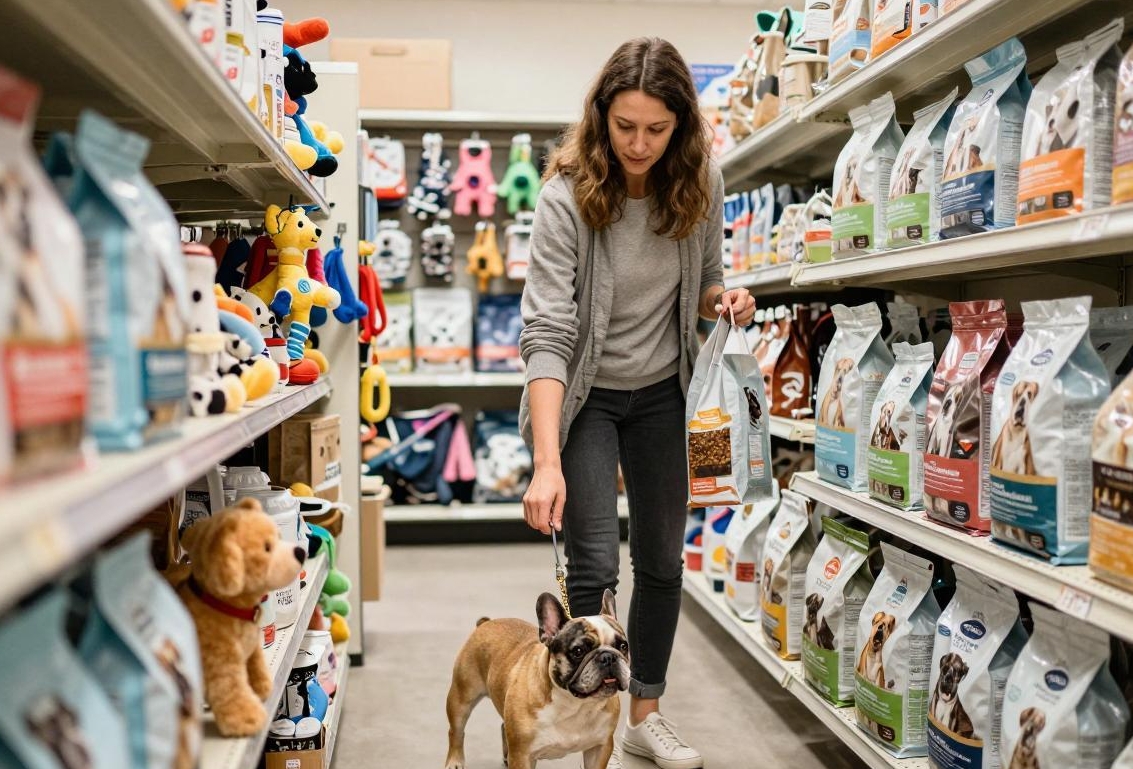
Practical Actionable Solutions: Accurate Selection Based on Four Core Dimensions
Built on the above analysis and my experience adjusting diets for numerous senior French Bulldogs, I have compiled key selection criteria you can use like a shopping checklist.
Dimension 1: Protein — Prioritise Quality Over Mere Quantity
Myth: Senior dogs should eat less protein to reduce kidney workload.
Truth: Senior dogs need high‑quality, highly bioavailable protein to preserve muscle mass and prevent emaciation.
Real‑world case: I treated a 10‑year‑old French Bulldog whose owner followed misinformation and fed long‑term low‑protein “light” kibble. The dog suffered severe muscle loss, became underweight and had very poor immunity. We switched to food with primary animal‑protein sources such as de‑boned chicken, fish and eggs. These animal proteins supply complete amino‑acid profiles and high biological value. Within months, muscle condition and energy levels improved noticeably.
Your checklist:
• Check ingredient lists: ensure top‑ranked items are named animal meats (chicken, duck, salmon), rather than meat by‑products or grains.
• Target protein content of 22‑28 % on a dry‑matter basis. Too‑low protein fails to sustain muscle; excessively high protein may stress rare individuals with impaired kidney function (follow veterinarian guidance).
• Avoid products padded with plant proteins such as corn gluten meal or soy protein.
Dimension 2: Fat and Calories — Strict Control to Prevent Obesity
This directly addresses age‑related metabolic slowdown.
Real‑world case: Tank’s story illustrates this point clearly. We selected low‑fat senior kibble with roughly 10 % fat content and reduced his daily portion by about 15 % compared to his adult‑dog intake. In only two months his weight returned to a healthy range and panting improved.
Your checklist:
• Choose senior kibble clearly marked “Low Fat” or with fat content between 8‑12 %.
• Calculate daily feeding portions following the senior‑dog feeding guide on packaging; weigh your dog regularly and adjust portions accordingly.
• Eliminate high‑calorie treats. Replace them with a few kibbles or lightly boiled vegetables such as carrot or broccoli.
Dimension 3: Joint‑Support Nutrition — Lubricate Ageing Joints
This criterion is mandatory for French Bulldogs.
Real‑world experience: Many senior‑dog formulas add joint‑health nutrients. I place high value on glucosamine and chondroitin sulphate, natural cartilage components that slow wear. Good senior kibble includes these additives. After switching to such food combined with gentle exercise, one client’s French Bulldog showed greatly reduced stiffness when standing up.
Your checklist:
• Look for Glucosamine and Chondroitin in ingredient lists or product feature descriptions.
• Natural joint‑support sources such as green‑lipped mussel and eggshell membrane are also excellent options.
• If food levels are insufficient, add joint‑health supplements under veterinary supervision.
Dimension 4: Fibre, Prebiotics and Probiotics — Protect Fragile Digestive Tracts
Improved digestive comfort ensures proper nutrient absorption.
Real‑world case: Constipation is common among senior dogs. One French Bulldog under my care strained to defecate and lost appetite. After ruling out organic disease, I recommended kibble containing moderate soluble fibre (beet pulp, chicory root) plus prebiotics such as FOS and MOS. Prebiotics act as food for beneficial gut bacteria and restore microbial balance. Dietary adjustment quickly returned bowel movements to normal.
Your checklist:
• Select kibble with labelled Prebiotics or Probiotics to support intestinal health.
• Fibre content around 3‑5 % works best; excessive fibre hinders absorption of other nutrients.
• Avoid food loaded with poorly digestible fillers such as excessive bran.
Pitfall‑Avoidance Guide: Steer Clear of These Common Mistakes
1. Rely only on marketing labels, ignore ingredients: Do not be misled by buzzwords such as “All‑Natural” or “Senior‑Specific”. Always read full ingredient panels and guaranteed analysis values on packaging.
2. Blindly chase extremely high protein: High‑quality protein benefits seniors without severe kidney disease, yet abrupt switches to very‑high‑protein kibble (>30 %) may trigger digestive upset. Transition gradually.
3. Skip food‑transition periods: Senior dogs have extra‑sensitive guts. Always follow the 7‑day food‑switch method: mix old and new kibble while slowly increasing the proportion of new food to prevent diarrhoea.
4. Neglect water intake: Thirst perception weakens in old age. Ensure constant access to clean fresh drinking water. Water consumption matters especially with dry kibble. You may occasionally mix in warm water or serve high‑moisture complete‑diet cans.
Summary
Choosing kibble for senior French Bulldogs is an act of loving, science‑based matching. Core principles: supply high‑quality digestible protein to preserve muscle, lower fat and total calories for weight management, reinforce joint‑support nutrients for mobility, and protect digestion with fibre and prebiotics. No single kibble is perfect. The best option keeps your senior companion at a healthy weight, maintains energy, supports regular bowel movements and eases joint discomfort.
Important Reminder
Dietary adjustment supports senior‑dog health yet is not a universal fix. Seek immediate veterinary help if you observe: rapid weight loss or weight gain, complete loss of appetite, frequent vomiting or diarrhoea, abnormal urination (excessive, scanty, bloody), obvious pain while moving or inability to stand, severe lethargy. Stop home‑based dietary changes and arrange full veterinary examinations. These may signal serious illness requiring professional diagnosis and treatment. With scientific care and timely medical support we can help our dogs enjoy a comfortable old age.