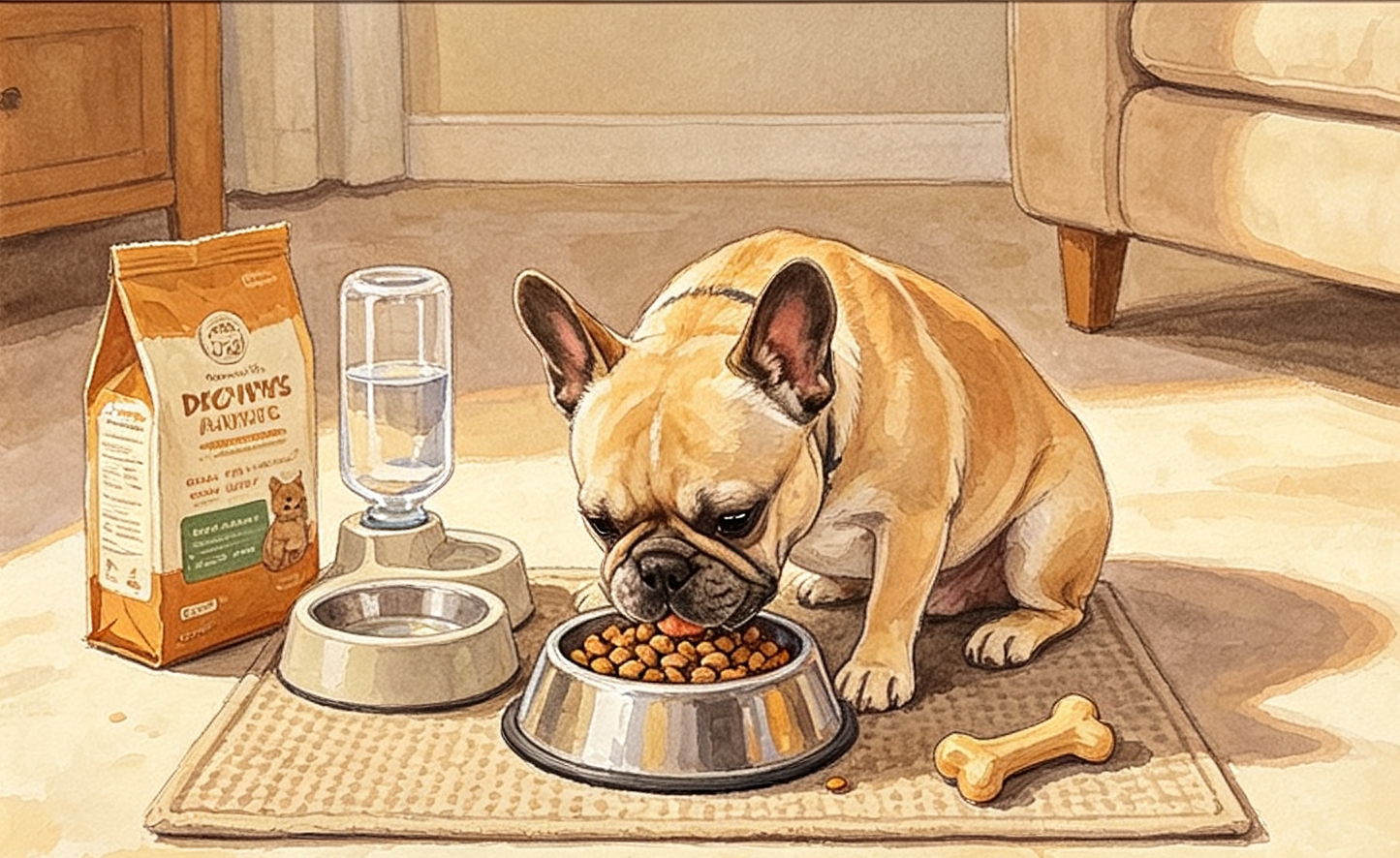
Dear French bulldog owners, hello everyone. With over ten‑years of clinical and rearing experience, I have cared for countless lovely French bulldogs and witnessed many health problems caused by improper feeding. Today I will dive into a seemingly simple yet critical topic: how to set scientifically‑aligned daily meal frequencies according to your French bulldog’s life‑stage.
A Common Feeding Pain Point
Have you run into these scenarios? Your French bulldog puppy acts like a ravenous little glutton, whining for food shortly after finishing its meal; your adult French bulldog loses interest in food and becomes picky; or your senior dog gains weight quietly despite low food intake, accompanied by bloating and poor digestion. Very often these symptoms stem from one core issue: feeding frequency and rhythm no longer match your dog’s current life‑stage.
I recall an owner bringing his 8‑month‑old French bulldog “Potato” for consultation. Potato was underweight yet frequently bloated, with irregular bowel movements. Detailed questioning revealed his owner only fed him twice daily (morning and evening) with overly large portions due to busy work. This binge‑eating pattern conflicted with the puppy’s fast metabolism and delicate gastrointestinal tract, resulting in poor nutrient absorption and digestive disorders.
Why Is Feeding Frequency So Important?
As a distinctive breed, French bulldogs are brachycephalic (flat‑faced), with relatively fragile digestion and an obesity‑prone physique. Poorly‑timed meal routines directly trigger multiple health concerns:
1. Hypoglycemia risk (puppies): Puppies have limited glycogen reserves. Prolonged fasting can lead to life‑threatening hypoglycemia, a medical emergency.
2. Gastrointestinal burden and bloating: Over‑large single meals increase stomach pressure. For French bulldogs prone to swallowing excess air, this raises risks of bloating and gastric dilatation‑volvulus (GDV). GDV carries extremely high mortality and demands extreme vigilance.
3. Energy swings & behavioural troubles: Both hunger and over‑eating disrupt blood‑glucose levels and mood, potentially triggering anxiety, over‑excitement or low energy.
4. Obesity & metabolic disorders: Erratic meals disturb metabolism, especially in adult and senior French bulldogs. Excess fat accumulation contributes to joint disease, heart conditions and diabetes.
Feeding is far more than pouring kibble into a bowl. It is a science requiring fine‑tuning aligned with your dog’s physiological life‑cycle.
Age‑Specific Feeding Solution: Practical Feeding‑Frequency Reference
Drawing on years of hands‑on experience, I have compiled a clear age‑divided feeding guide for French bulldogs. Please treat these as general guidelines. Fine‑tune portions and frequency observing your individual dog’s stool quality, weight trends, appetite and energy level.
1. Puppy Stage (2‑6 months) — Small, Frequent Meals to Build Solid Foundations
This is the golden growth phase, also when digestion is most vulnerable. Core principle: high frequency, small portions, nutrient‑dense food.
Recommended frequency: 4 meals per day.
Sample timetable: 7:00 AM, 12:00 PM, 5:00 PM, 10:00 PM. Aim for evenly‑spaced intervals.
My clinical experience: For cases like “Potato”, I advised switching immediately to four equal daily meals splitting total daily food allowance. Dry kibble was soaked in warm water or pet‑specific goat milk until fully expanded (roughly 15‑20 minutes), cooled before serving to ease gastrointestinal strain. Within two weeks, Potato’s bloating improved noticeably, stools became well‑formed and body weight grew steadily. Soaking kibble is particularly critical for French bulldog puppies under six months old.
2. Juvenile Stage (6‑12 months) — Smooth Transition to Consistent Routine
Growth rate slows and digestive functions mature. The goal is gradually shifting toward adult‑dog feeding habits.
Recommended frequency: Step down from 4 meals to 3 meals daily. At 6‑8 months you may drop the late‑night 10 PM meal and merge its portion into supper.
Sample timetable: 7:00 AM, 1:00 PM, 7:00 PM.
Important notes: Gradually discontinue soaking kibble and feed dry food directly to strengthen teeth and chewing ability. This is an ideal window to build good table manners: fix feeding location and time limit (e.g. 15‑20 minutes). Remove uneaten food to prevent picky‑eating and dawdling habits.
3. Adult Stage (1‑7 years) — Fixed Times & Controlled Portions for Weight Management
Adult metabolism stabilizes; activity levels vary by household environment. Core priority in this period is obesity prevention.
Recommended frequency: Two meals per day works best for most healthy adult French bulldogs.
Sample timetable: 8:00 AM, 6:00 PM. This satisfies daytime energy requirements while avoiding excessive overnight stomach load.
My clinical experience: I have met many French bulldogs that gain weight easily. For such obesity‑prone individuals, I recommend splitting total daily calories across three smaller servings (morning, noon, evening) without raising overall calorie intake. This stabilizes blood‑glucose, boosts satiety and reduces begging behaviour. Use a kitchen scale for precise kibble weighing, follow package feeding suggestions matched to body‑weight and activity, and regularly perform body‑condition scoring: you should easily feel ribs beneath skin without seeing them protruding.
4. Senior Stage (7 years and older) — Gentle Adjustments for Geriatric Wellbeing
Seniors show reduced digestive‑absorption efficiency, potential dental deterioration, lower activity levels and higher risk of chronic illness.
Recommended frequency: Return to three daily meals, or even four smaller meals.
Sample timetable: 7:00 AM, 12:00 PM, 6:00 PM. If nighttime hunger appears, add a light late‑night snack one hour before bedtime (a few spoons of prescription wet food).
Important notes: Switch to senior‑formula or highly‑digestible dog food. When severe tooth loss occurs, fully soak dry kibble or switch to soft wet food. Closely monitor water intake and urination — vital for senior kidney health.
Pitfall‑Avoidance Guide: Feeding Mistakes You Must Avoid
1. 24‑hour free‑feeding buffet: A major trigger for obesity, pickiness and irregular bowel movements. Always remove food bowls after mealtime.
2. Strenuous exercise before or after meals: Prevent running or jumping within one hour pre‑ and post‑feeding to lower GDV risk.
3. Frequent food switches or excessive treats: French bulldogs have sensitive guts; abrupt diet changes commonly trigger diarrhoea. Treat calories should stay under 10 % of total daily energy intake.
4. Feeding guided purely by subjective impression: Do not add extra food simply because your dog gives pleading eyes. Scientific feeding relies on objective data: body‑weight and body‑condition score.
5. Neglecting fresh drinking water: Constant access to clean fresh water is critical for urinary‑tract health and normal metabolism in French bulldogs.
Summary
Caring for a French bulldog resembles caring for a child who cannot speak. It demands patience and close observation. Shifting from four puppy meals, down to two adult meals, then back toward multiple senior meals follows natural physiological requirements. A well‑designed feeding schedule is one of the most fundamental, precious health gifts for your French bulldog. It stabilizes blood‑glucose, protects digestive organs, maintains ideal body condition and lays solid foundations for long‑term wellbeing.
Important Reminder
This article offers general scientific feeding advice. Seek urgent veterinary care if your French bulldog shows any of the following severe warning signs: refusal of food and water lasting 24 hours or longer; repeated vomiting or diarrhoea (especially with blood); abnormally distended, hard painful abdomen; extreme lethargy or weakness. These may signal acute gastroenteritis, pancreatitis, foreign‑body obstruction, GDV or other life‑threatening conditions. Stop home observation immediately and rush to a veterinary clinic — every minute counts. Your careful daily monitoring and timely professional intervention form the strongest safeguard for your dog’s health.