Hello everyone. I see many French Bulldog owners chatting in pet groups, feeling anxious every time they finish bathing their little “gas tanks”. They either worry their pup will sneeze and catch a cold, or notice strange odors and red rashes growing inside those adorable skin wrinkles a couple days later. I completely understand this anxiety. As a pet industry veteran with over ten years of hands-on experience, I’ve treated countless French Bulldogs suffering from skin infections, otitis media and even pneumonia caused by improper bathing methods. Today I’ve organized all my professional experience into a detailed 10-step home bathing routine designed for one clear goal: fully clean, thoroughly dry, and maintain fresh skin folds, so every French Bulldog can enjoy bath time safely and comfortably.
Why Do French Bulldogs Have So Many Post-Bath Issues? Breakdown of Root Causes
Before walking through the bathing steps, we first need to identify the core hazards. French Bulldogs are a uniquely structured breed, and their physical traits make bathing and aftercare far more challenging than other dogs:
1. Short, Narrow Respiratory Tracts: This is the breed’s most defining feature. Brachycephalic flat faces and constricted airways limit breathing efficiency and heat dissipation. Improper water temperature, stuffy bathing spaces or stress during showers can trigger rapid panting and oxygen shortage. If exposed to cold air post-bath, they face a far higher risk of colds and bronchitis than other canine breeds.
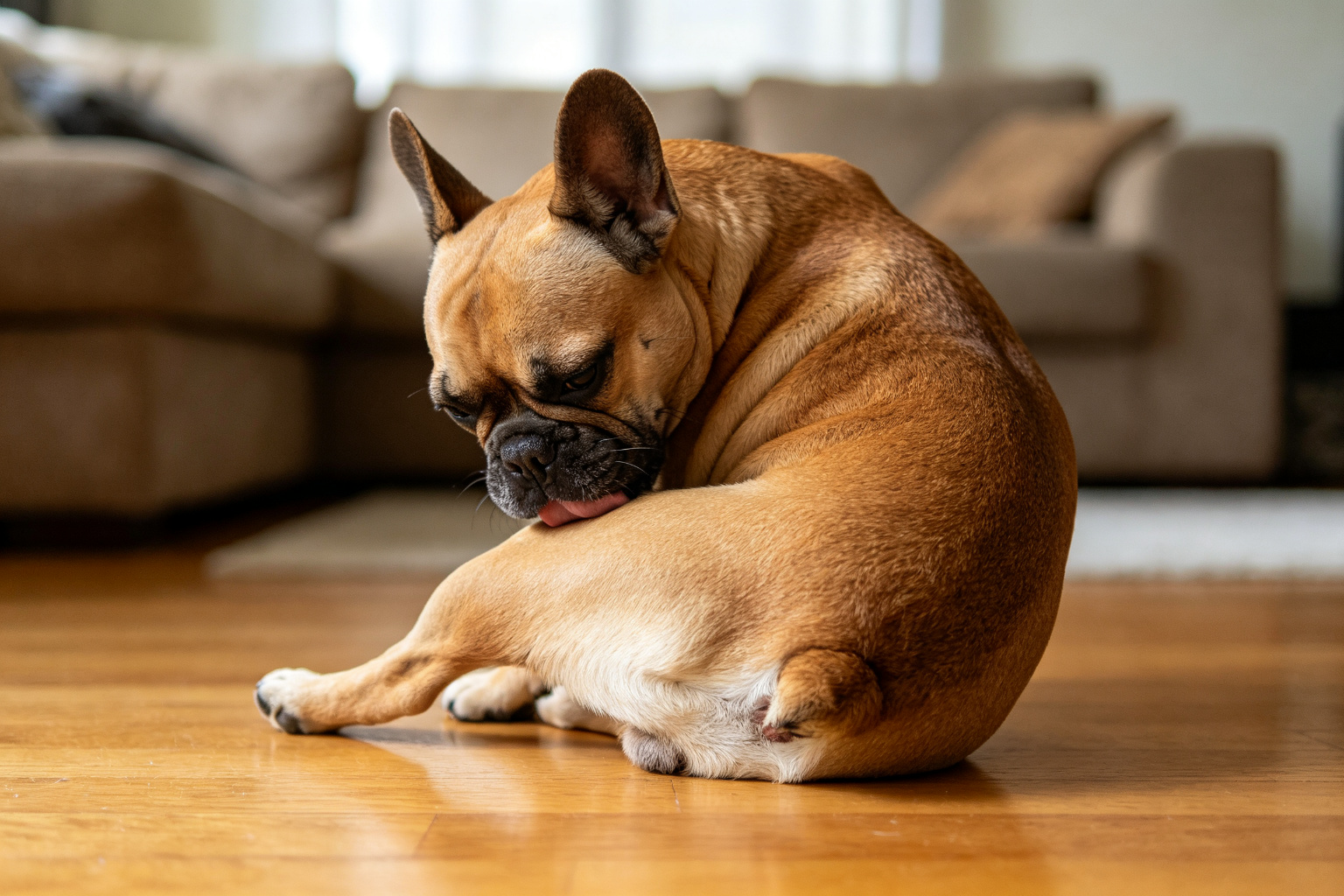
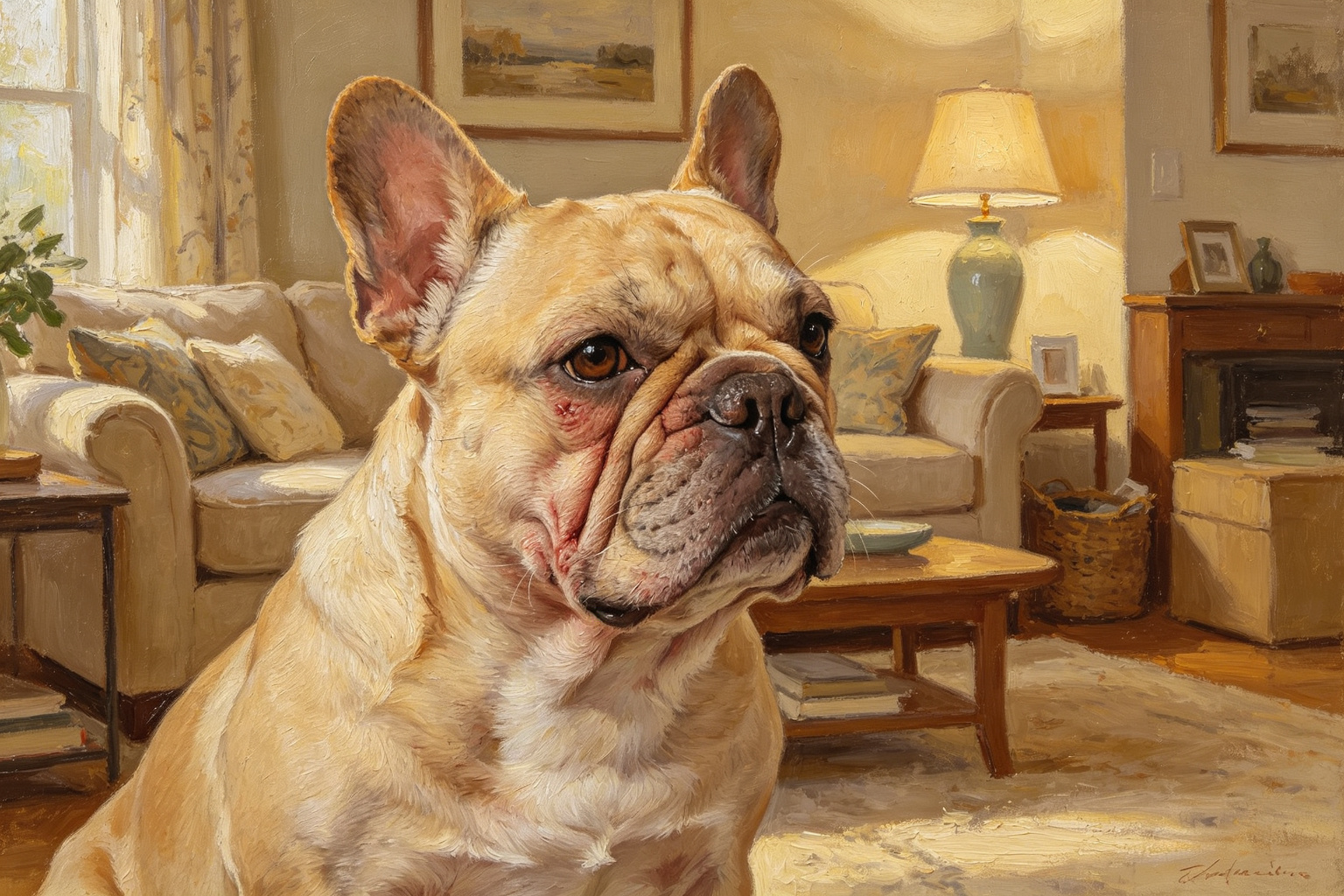
2. Abundant Skin Folds: Especially around the facial nasal wrinkle, neck and tail base. These cute wrinkles form warm, damp pockets that act as perfect breeding grounds for bacteria and Malassezia yeast. Failure to deep-clean folds during bathing or fully dry them afterward leaves trapped water and shampoo residue, accelerating microbial overgrowth and triggering fold dermatitis—characterized by red, darkened skin, foul odor and persistent itching, commonly referred to as “mildewed folds” by owners.
3. Sensitive Skin: Most French Bulldogs have delicate, reactive skin. Harsh, highly alkaline shampoos or formulas loaded with artificial fragrances easily strip the skin’s natural protective lipid barrier, leading to dryness, itching, dandruff and allergic flare-ups.
4. Unique Ear Structure: French Bulldogs have semi-erect ears with poor internal ventilation. Trapped bathwater left uncleaned inside the ear canals quickly creates damp conditions that trigger ear mites or bacterial otitis externa.
With these risk factors clear, we can carry out targeted care. The following 10-step routine is specially crafted to resolve all these pain points.
Full 10-Step Home Bath Workflow & 5 Core Targeted Solutions
Treat bathing as a complete care session rather than a quick rinse and lather. Lay out all supplies before you start—never run mid-bath to grab missing items.
Pre-Bath Preparation Stage
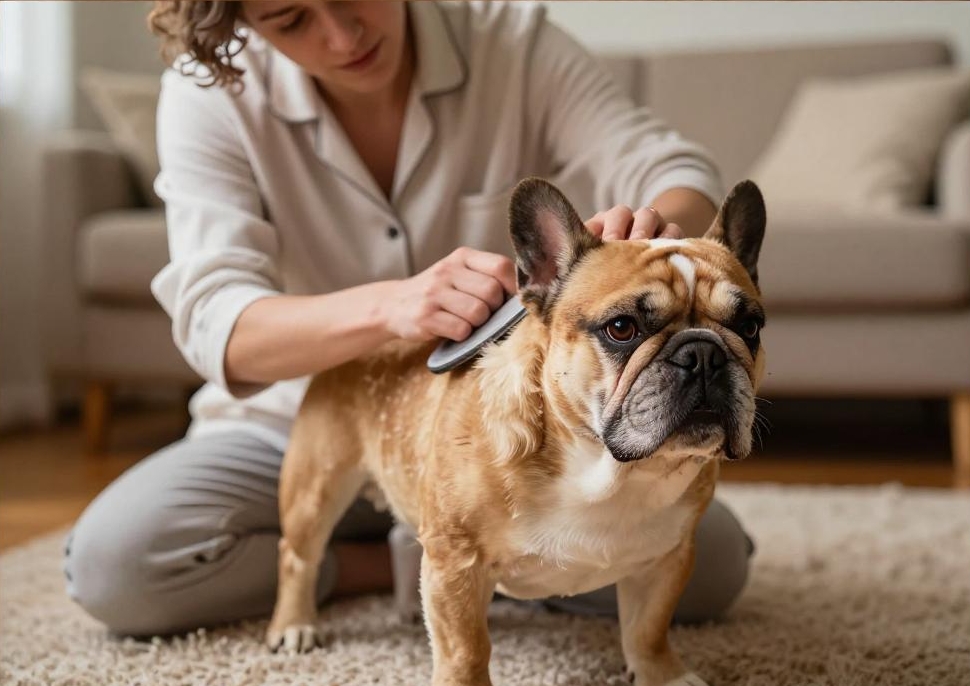
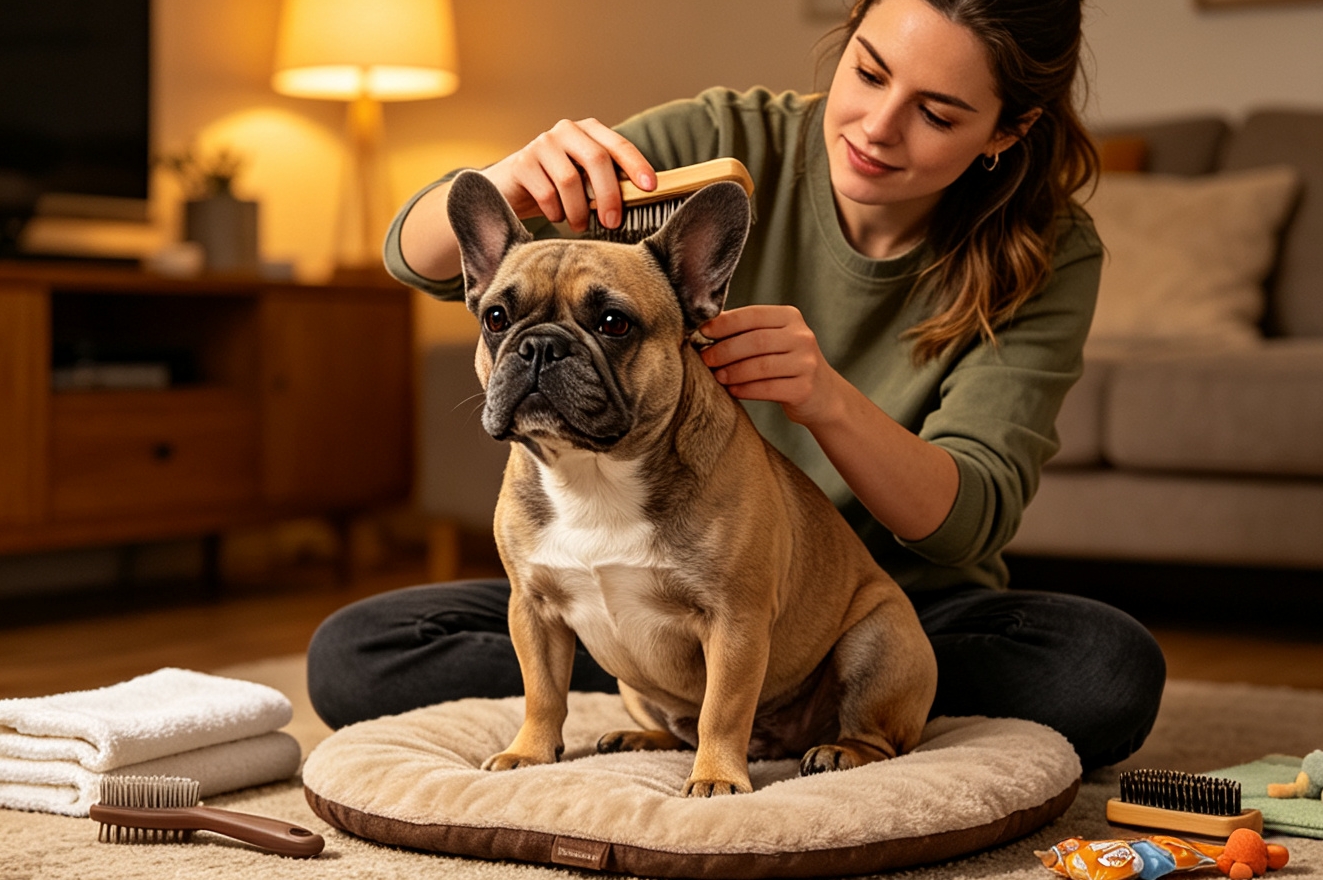
Step 1: Thoroughly Brush Coat & Inspect Skin. Use a pin brush or slicker brush to comb against and with the grain of the fur, removing loose dead hair and surface dust. While brushing, closely examine the entire body, focusing deep inside skin folds, armpits and groin for red spots, dandruff, scabs or abnormal lesions. This is the best chance to assess your dog’s skin health. One client once spotted a small abscess under their Frenchie’s armpit during pre-bath brushing; timely treatment prevented the infection from spreading when rubbing soap over the area during bathing.
Step 2: Block Ear Canals & Protect Eyes. Gently place a small ball of medical absorbent cotton into each ear opening (do not push deep—ensure easy removal afterward) to block bathwater from seeping in. You may also drop a small amount of pet-specific eye wash or artificial tear solution into each corner of the eyes to form a protective film against shampoo irritation.
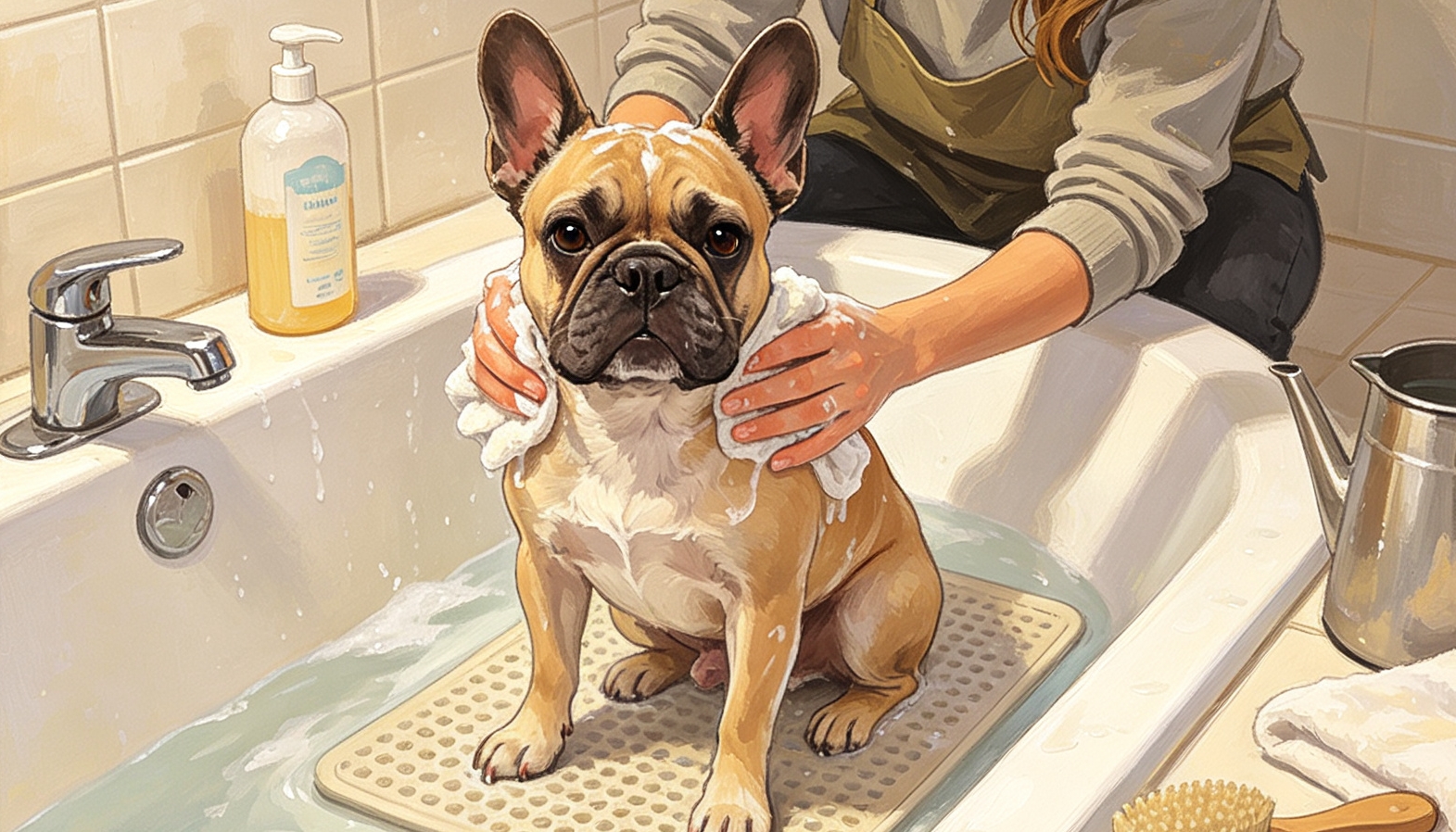
Step 3: Adjust Water Temperature & Prep Bathing Area. Water temperature is critical! Test with the inside of your wrist; it should feel warm but not scalding (roughly 38–40°C). Cold water raises cold risk, while overly hot water damages skin. Lay a non-slip mat inside the shower or bathroom tub in advance to stop your nervous dog from slipping. Close doors and windows to block cold cross-drafts, but keep the exhaust fan running to maintain gentle airflow and avoid stuffiness.
Official Bathing Stage
Step 4: Fully Saturate Fur, Starting From the Paws. Hold the showerhead close to the skin and set the water flow to soft and mild. Never spray water directly onto the head first—this frightens dogs and forces water into their ears and eyes. Instead, slowly wet the body in order: paws → legs → torso → neck and back, letting the dog gradually adapt. Ensure the undercoat is completely saturated all the way to the skin.
Solution 1: Skin Fold Deep Cleaning – Use Proper Tools & Targeted Scrubbing
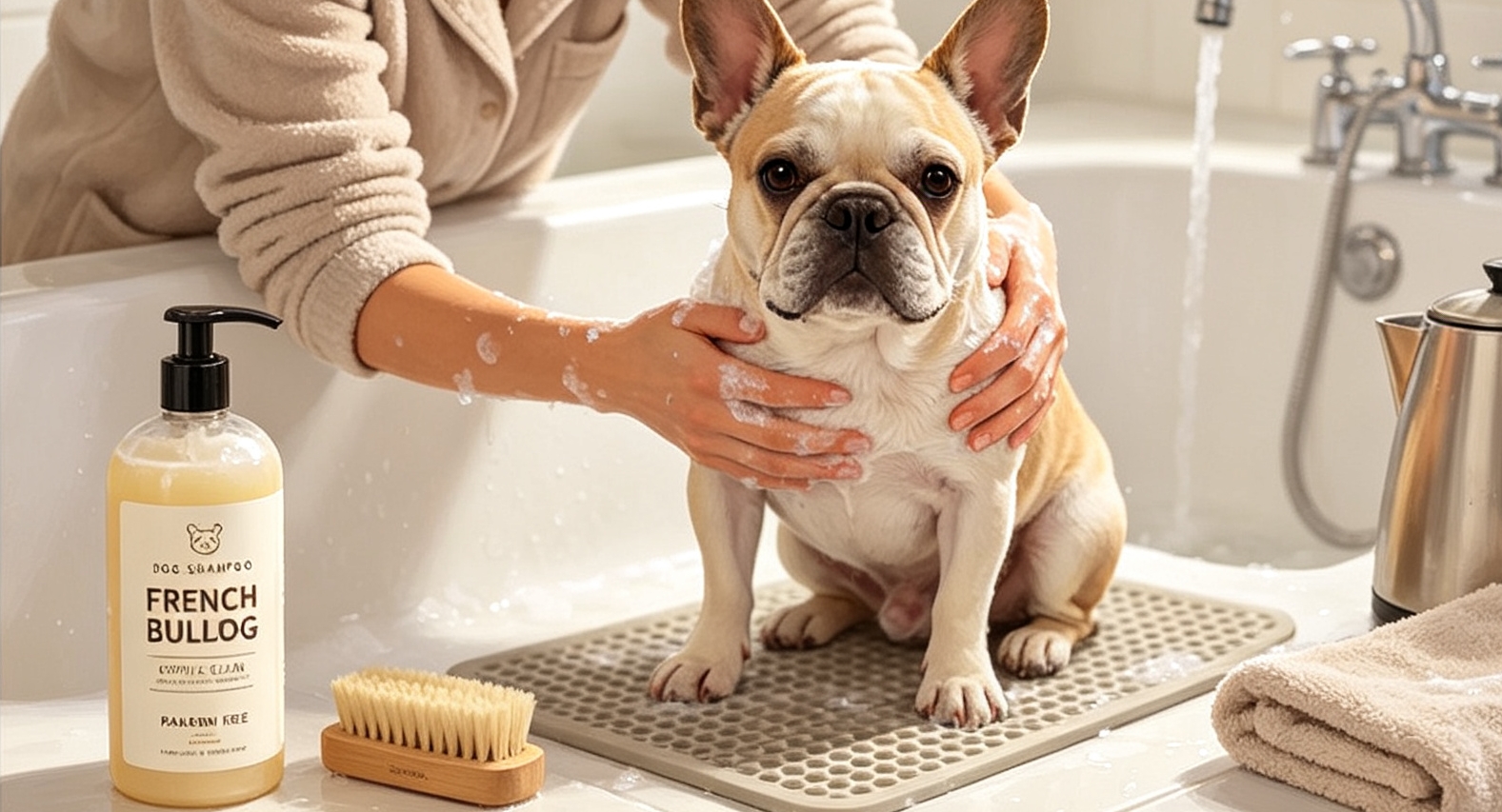
Step 5: Apply Specialized Shampoo & Focus Scrubbing on All Wrinkles. Always use hypoallergenic, pH-balanced pet shampoo. I learned a hard lesson early in my career: I once recommended a heavily scented shampoo, and a client’s French Bulldog developed full-body itchy rashes after bathing. Since then I only advocate simple, mild low-irritation formulas. Dilute the shampoo evenly before spreading it across the dog’s body.
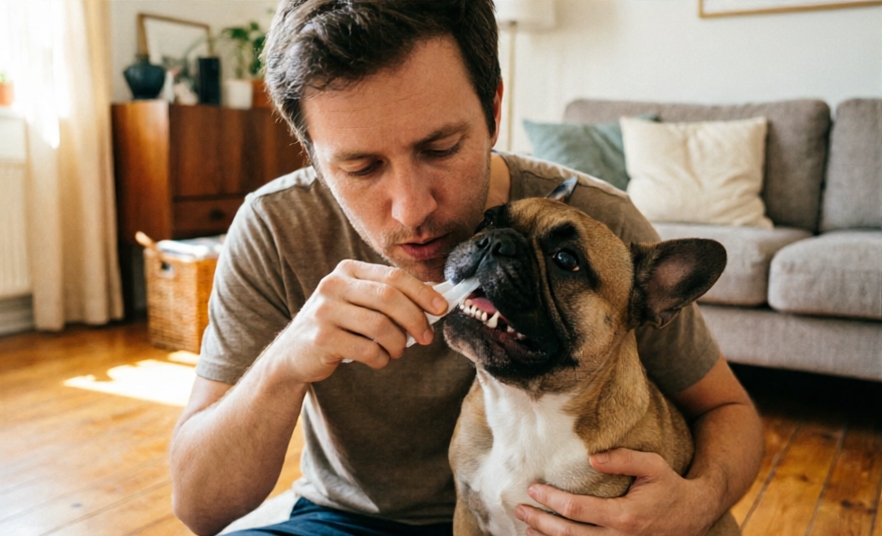
Key Technique: For facial, neck and body wrinkles, use a soft baby toothbrush or dedicated pet eye/wrinkle cleaning brush. Dip the brush in diluted shampoo, gently pull each fold open, and lightly scrub along the crease to clear trapped sebum, dirt and bacteria. Keep movements extremely gentle—fold skin on French Bulldogs is very thin and fragile. Do not overlook tail-base wrinkles if present.
Step 6: Complete Rinsing, Eliminate All Residue. This step is vital for preventing long-term skin disorders! Total rinsing time should be at least double the lathering duration. Again start rinsing from the paws, use your fingers to lift fur layers and let water reach the skin surface. Pay extra attention to every skin fold; rinse repeatedly until all runoff water runs perfectly clear with no slippery soapy film. Any leftover shampoo residue will trigger persistent skin irritation.
Solution 2: Efficient Full Drying – Zone-by-Zone Treatment to Eliminate Dampness
Step 7: Blot Dry With Towels & Wrap to Retain Warmth Post-Bath. Immediately wrap your dog in an ultra-absorbent chamois cloth or quick-dry pet towel after lifting them out of the tub. Blot firmly (do not rub harshly) to soak up massive surface moisture, focusing heavily on all folded skin areas. Swap for a second dry towel for an extra wrap, then move the dog to a warm, draft-free room (turn on bathroom heat lamps or home air conditioning heating mode ahead of time).
Step 8: Start Blow Drying, Begin With the Belly. Use a low-noise professional pet hair dryer set to medium-low heat and low airflow speed. Start drying less sensitive areas first, such as the belly and inner legs. My standard method: hold the dryer 15–20 centimeters away from the skin with one hand, and continuously ruffle fur with the other to push hot air through to the hair roots and skin. Never blast a single spot for long stretches, as this causes thermal burns.
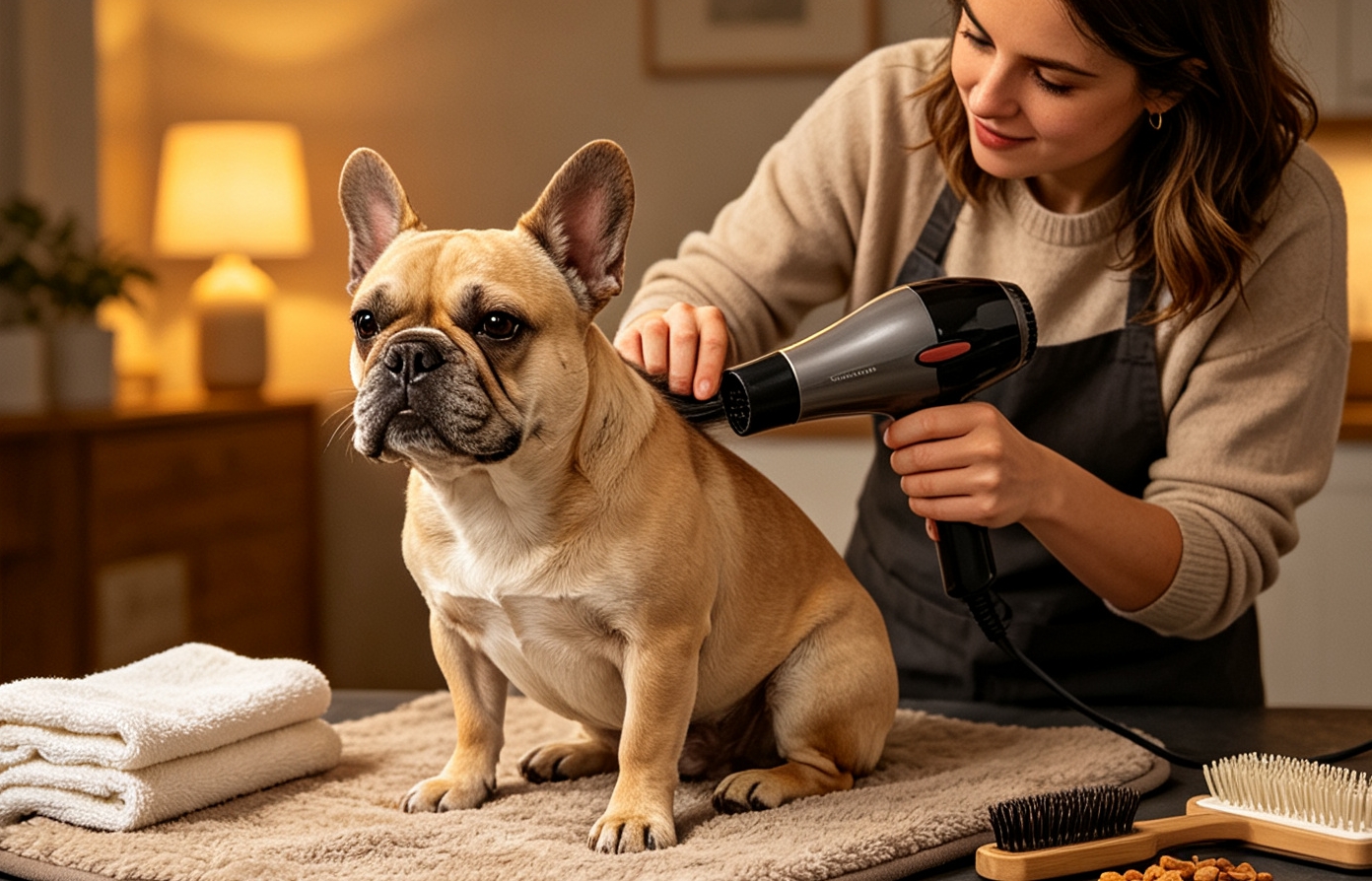
Solution 3: Deep Fold Drying – Partial Dry Is Passable, Fully Dry Is Perfect
This stage demands the most patience and precision, and it is the decisive step to stop moldy, infected folds.
Core Operation: Once the outer coat reaches roughly 70–80% dryness, re-target all skin folds for intensive drying. Use your hands or a small comb to pull every wrinkle wide open, then switch the dryer to cool air mode (constant hot air irritates delicate fold skin) and slowly blow deep inside each crease. Hold your cheek near the fold to test; stop only when zero damp coolness remains inside the gap. For extra thick, deep nasal wrinkles, I sometimes use sterile medical cotton swabs to gently wipe deep inside after blow-drying to double-check for leftover moisture. Remember: any dampness creates a breeding ground for bacteria and yeast.
Step 9: Full-Body Final Inspection to Confirm Complete Dryness. Once you believe the coat is fully dry, run your hands against the fur grain all the way down to the skin. If you feel any cool, damp patches, resume drying immediately. Do not skip hidden zones including armpits, groin and paw toe crevices. A properly dried French Bulldog will feel consistently warm and crisp all over.
Post-Bath Maintenance Stage
Solution 4: Ear & Skin Aftercare – Prevent Problems Before They Develop
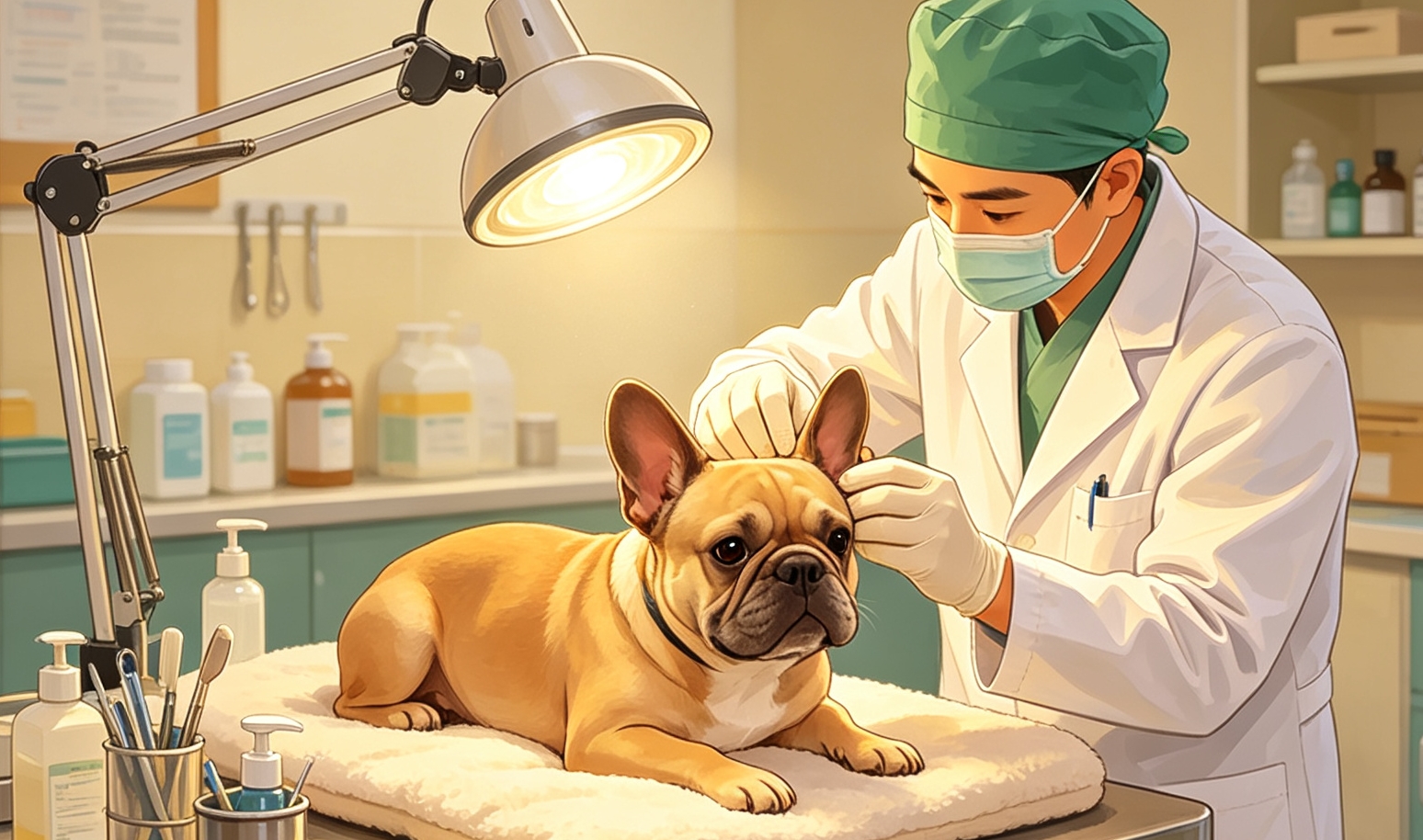
Step 10: Clean Ear Canals & Reward Your Dog for Cooperation. Carefully remove all cotton balls from the ear openings. Drip veterinarian-formulated pet ear cleaner into each ear canal, gently massage the base of the ear for 20–30 seconds, then let the dog shake its head naturally. Wipe visible dirt from the outer ear flap with cotton pads (never push cotton swabs deep into the inner ear canal). Finish the session with your dog’s favorite treats and gentle cuddles to link bath time with happy, positive experiences.
Extra Aftercare Tip: Once all skin folds are 100% dry, you may apply a thin layer of pet-specific fold care powder or soothing gel (select formulas with moisture-absorbing, antibacterial ingredients) to maintain dryness long-term. This step only works if folds are completely dry beforehand—applying powder to damp creases traps moisture and worsens irritation.
Mistake Avoidance Checklist: Never Make These Critical Bathing Errors!
1. Using human shampoo or bar soap: Human skin has an acidic pH level (around 5.5), while canine skin is nearly neutral (roughly 7.5). Human cleansing products disrupt the dog’s natural skin acid-base balance, triggering dryness, heavy dandruff and permanent damage to the skin protective barrier.
2. Over-Frequent Bathing: French Bulldogs only require a full bath every 2–4 weeks on average. Excessive washing strips vital protective skin oils, worsening skin sensitivity over time. For daily quick touch-ups, use pet wet wipes to clean paws and body surfaces instead of full showers.
3. Air-Drying Naturally or Stopping Drying Mid-Way: This is the top cause of skin diseases and post-bath colds! A professional pet dryer is mandatory to achieve full deep drying all the way to the skin.
4. Ignoring Ambient Temperature Control: Bathing in cold bathrooms with no heating in winter, or moving the dog straight into cold air-conditioned rooms post-bath creates extreme temperature swings that easily trigger upper respiratory illnesses.
5. Bathing sick, recently vaccinated, postpartum or lethargic dogs: Immunity is severely suppressed in these states, and bathing creates massive physical stress with major health risks.
Summary
Bathing a French Bulldog is an exercise focused entirely on small details and consistent patience. The core logic behind this routine is simple: acknowledge their physiological vulnerabilities (fragile respiratory tracts, thin folded skin) and offset those weaknesses through meticulous deep cleaning, absolute full drying and gentle targeted maintenance. This 10-step process may look lengthy at first, but it will become second nature with regular practice, forming a safe, effective wellness ritual shared between you and your Frenchie. Beyond keeping your dog clean and neat, this routine is essential for preventing common breed-specific ailments and boosting their overall quality of life.
Important Reminder
This guide covers standard at-home bathing care for fully healthy French Bulldogs. If you spot widespread red rashes, open sores, abnormal hair loss on your dog’s skin before bathing, or notice persistent coughing, thick nasal discharge, lethargy, non-stop scratching in one localized area after showering, these are warning signs of dermatitis, respiratory infections or other underlying illnesses. Cease all home care immediately and bring your dog to a licensed professional animal hospital for official veterinary diagnosis and treatment.