Beware: Big Trouble Inside Small Nostrils
Hello to all French Bulldog owners. Over years of clinical practice and consultations, I have met countless owners bringing their French Bulldogs for check‑ups due to “loud breathing and snoring while sleeping”. At first, many regard these symptoms as “cute” breed traits. It is only when their dog gets out of breath quickly during play, or when they are woken at night by near‑choking breathing noises, that they realise how serious the issue can be. I still remember Niu Niu, a three‑year‑old brindle French Bulldog. Its owner consulted me because of long‑term nasal congestion and reduced appetite. Examination revealed nearly half of its tiny nostrils were blocked by hard crusts formed from dried discharge mixed with dust. Every breath was a struggle through an extremely narrow straw‑like passage. This is far from an isolated case; it is a hidden health threat many owners of brachycephalic breeds, especially French Bulldogs, are facing or will face.
Why Are French Bulldog Noses So “Fragile”?
To resolve the problem, we must first understand its root causes. Nostril blockages in French Bulldogs result from a combination of physical structure and discharge properties.
1. Innate physical anatomy: French Bulldogs are brachycephalic (short‑nosed) dogs. Their skulls are greatly shortened, yet internal nasal tissues including cartilage and soft tissue are not reduced proportionally. This creates abnormally narrow, twisted nasal passages with limited airflow. Even minor extra obstructions further worsen the already restricted air flow.
2. Prone discharge build‑up: French Bulldogs typically have large, slightly protruding eyes. Their tear ducts may function less efficiently than those of other breeds. Some tears drain through the nasolacrimal duct into the nasal cavity and mix with native nasal secretions. Without timely cleaning, this mixed fluid dries and crusts at the narrow nostril openings, forming the dark‑brown or yellow‑green nasal debris we observe.
3. Environmental and activity‑related factors: French Bulldogs explore the world with their noses. Dust, pollen and grass particles are easily inhaled and stick to moist nasal mucosa. They are energetic and playful; excitement or vigorous exercise accelerates breathing and increases discharge production. Poor regular cleaning speeds up blockage formation.
Practically‑Tested: Three‑Step Cleaning Method for Easier Breathing
Given these contributing factors, proactive daily cleaning and care are far more important than treating severe blockages after they develop. Below is my proven “gentle three‑step cleaning routine”, tested on my own French Bulldog and many clients’ dogs.
Step 1: Softening is critical — never pick at dry crusts forcibly
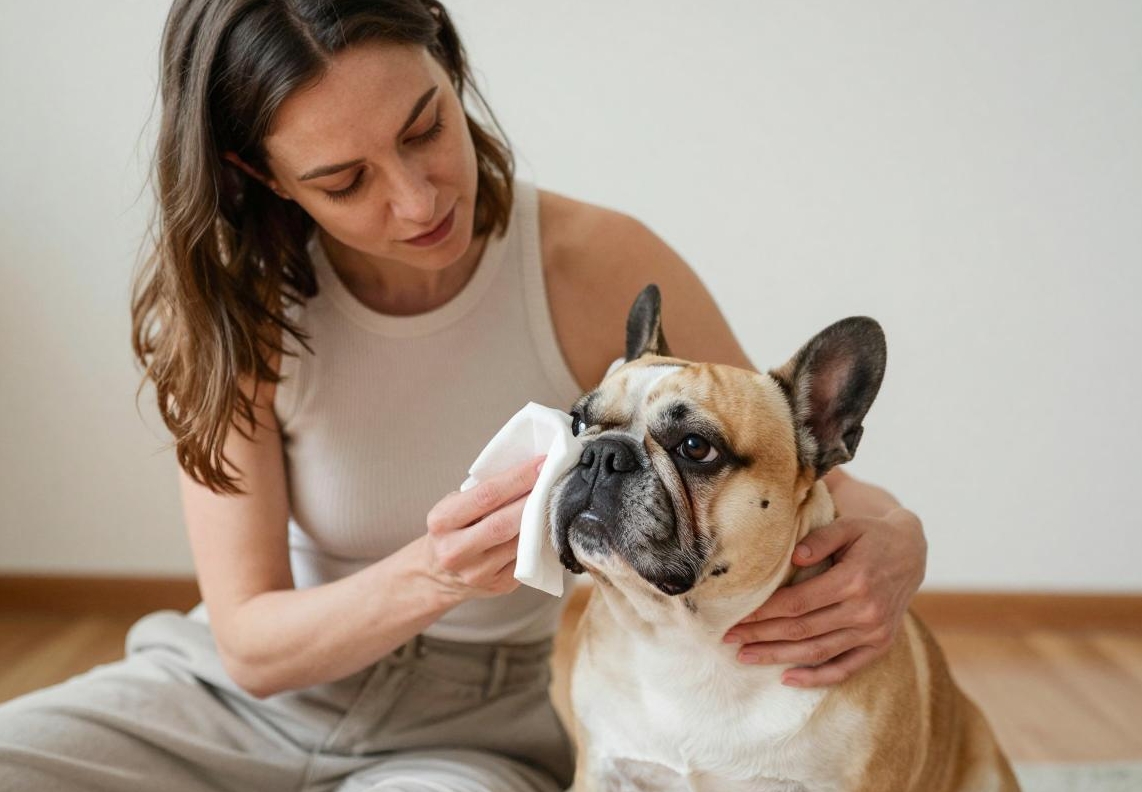
I once made this mistake. In earlier years, when seeing dry crusts on a dog’s nose, I would scrape them off with fingernails or dry cotton swabs. This caused pain and resistance, and could injure delicate nasal mucosa, even triggering bleeding and infection. The correct approach is softening. My go‑to supplies are pet‑specific alcohol‑free saline wipes or medical absorbent cotton balls plus saline solution. Hold a warm damp wipe or saline‑soaked cotton ball gently against crusts around the nose and nostril rims for roughly 30 seconds to one minute. Hard crusts will soon soften. Warm boiled water works as a substitute if saline is unavailable, though slightly less effective.
Step 2: Wipe gently from outside in
Once discharge softens, use the same wipe or a fresh damp cotton ball to wipe softly from the bridge of the nose toward outer nostril edges, following hair‑growth direction. For softened debris right at nostril openings, use a corner of the wipe in a rolling motion to lift debris out — do not poke instruments inside the nostril. For stubborn deeper crusts visible near openings, use pointed cotton swabs (preferably ultra‑fine infant‑grade swabs) saturated with saline. Work under good lighting and only clean the outermost visible rim of nostrils, using light, quick movements. One golden rule: never insert swabs deep into unseen inner nostril sections.
Step 3: Moisturise and reassure to build positive associations
After cleaning, gently pat dry damp fur around the nose using soft dry tissues or cotton towels. Apply a tiny amount of pet‑safe nose balm (natural, food‑grade ingredients), massaging lightly over the nose and surrounding skin to prevent dryness and cracking caused by frequent cleaning. Most importantly, offer plenty of verbal praise and high‑value treats both throughout and after the procedure. Help your dog link “nose cleaning” with wonderful rewards for far better cooperation next time. My own dog now tilts its head upward voluntarily the moment it sees me take wipes and treats, knowing tasty rewards are coming.
Daily Prevention: Stop Blockages Before They Start
Beyond regular cleaning, preventive daily measures fundamentally reduce problems.
1. Humidify your environment: During dry seasons or indoors with long‑term air‑conditioning or heating, run a humidifier to maintain relative humidity around 50‑60 %. This prevents nasal discharge from drying and crusting too rapidly.
2. Monitor diet and water intake: Ensure constant, adequate drinking‑water supply. Watch for obvious increases in nasal discharge after switching foods, which may signal food intolerance, and adjust rations accordingly.
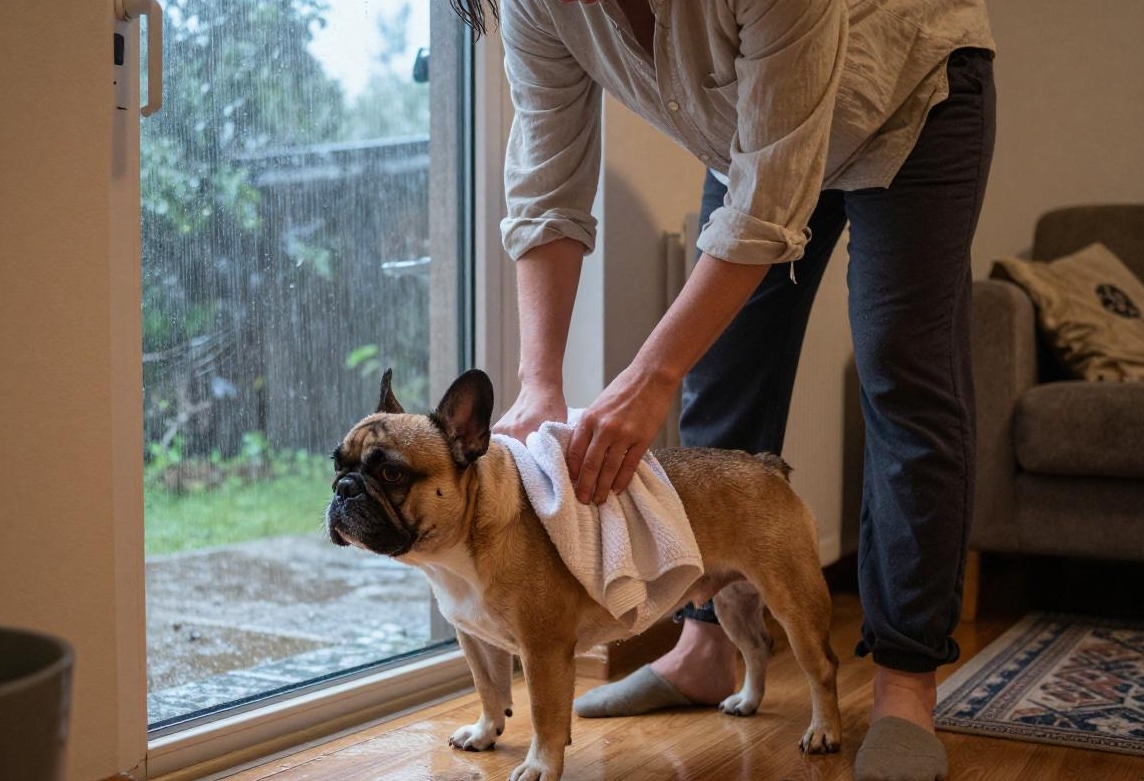
3. Quick post‑outdoor cleaning: After walks in dusty surroundings, gently wipe muzzle and nose with a soft damp towel to remove surface dust.
4. Routine checks: Build a daily habit of touching and inspecting your dog’s nose. Observe visually for crusts, feel whether the nose tip is cool and moist, and listen for smooth breathing without abnormal noises.
Pitfall‑Avoidance Guide: Avoid These Critical Mistakes
1. Using human‑grade products: Never clean your dog with human eye washes, nasal drops, or wipes containing medicine, alcohol or fragrances. Dogs have different skin pH and tolerance levels; these products may trigger irritation or poisoning.
2. Over‑zealous deep cleaning: To repeat: do not attempt to dig deep inside nostrils with any tool. This easily damages nasal mucosa, causing swelling and infection that worsen blockage and may lead to serious injury.
3. Ignoring abnormal symptoms: If discharge suddenly turns yellow‑green and pus‑like, contains blood streaks, or is paired with frequent sneezing, nose‑pawing, high‑pitch whistling or gagging during breathing, this is no longer simple routine blockage. It may indicate rhinitis, foreign bodies or severe respiratory infection, requiring immediate veterinary attention.
4. Relying on online home remedies: Do not follow internet hacks and self‑administer essential oils, ointments or similar substances; many are toxic for dogs.
Conclusion: Loving Your Dog Starts With Protecting Every Breath
For French Bulldogs, unobstructed breathing forms the foundation of happy, healthy life. Routine peri‑nasal cleaning, though seemingly minor, plays a vital role in preventing respiratory issues. Through proper softening, gentle cleaning and positive reinforcement, we can turn care sessions into warm bonding time. Remember: prevention beats cure. Small daily attentiveness keeps your French Bulldog free from nostril blockages so it can breathe, run and snore freely.
Important Reminder
The guidance above covers home care for routine and mild cases. Seek immediate veterinary care at a formal pet hospital if your French Bulldog shows any of the following: 1. No improvement or worsening respiratory distress after home cleaning; 2. Open‑mouth breathing, bluish gums or tongue (signs of oxygen deprivation); 3. Lethargy and complete loss of appetite; 4. Abnormal discharge (heavy pus‑filled or bloody nasal discharge); 5. Accompanying symptoms such as coughing or fever. Stop all home interventions. A professional vet will perform thorough examinations, potentially including rhinoscopy and X‑rays, to rule out foreign objects, serious infection, elongated soft palate, stenotic nares and other organic conditions. Do not delay treatment. To love your dog is to give it timely, expert protection.