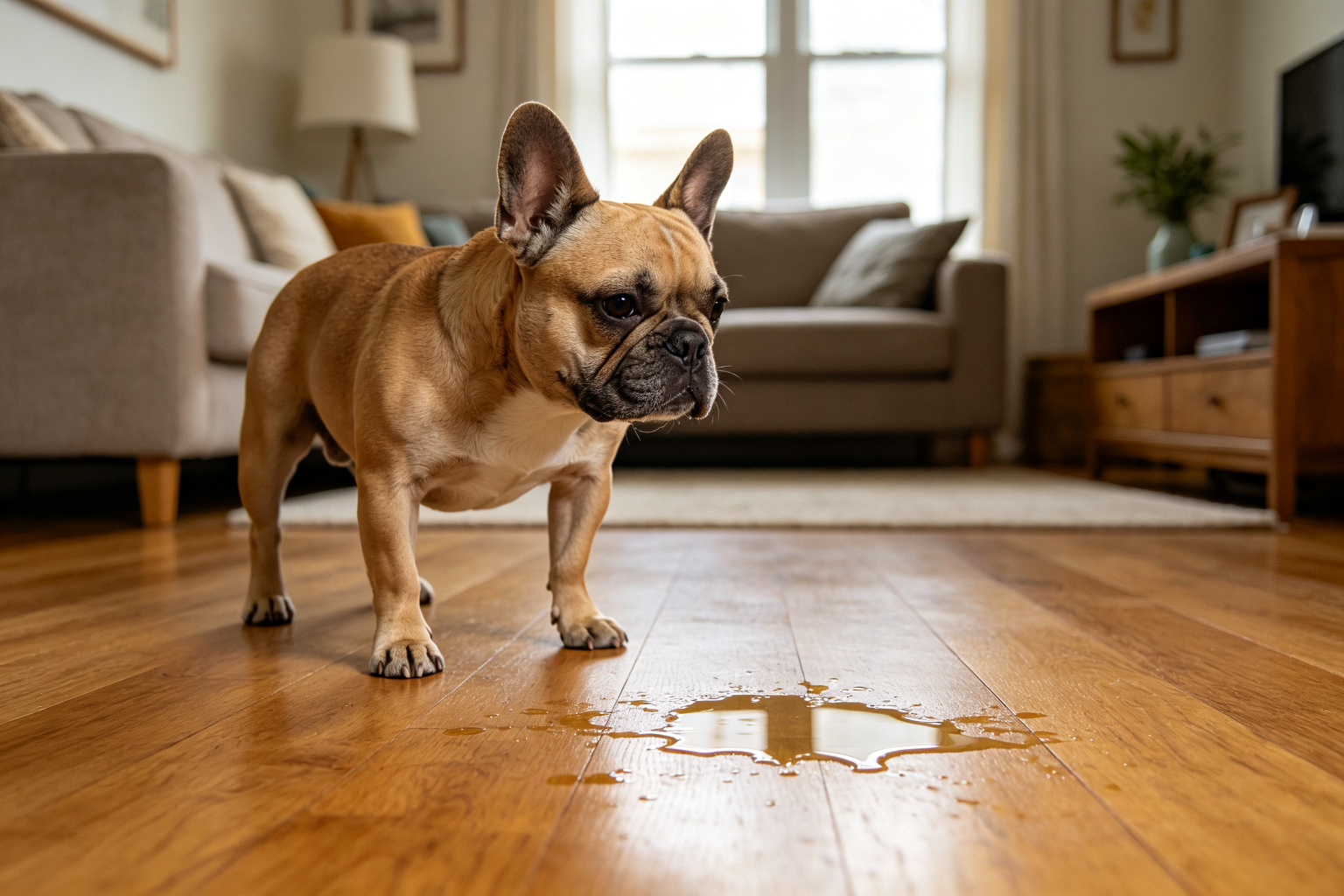
Hello all French Bulldog parents, I’m Jay. I’ve specialized in canine behavior modification for over ten years. Over this decade, I’ve worked with hundreds of dogs struggling with outdoor walking troubles and their stressed owners. French Bulldogs stand out for leash lunging due to their stubborn streak, abundant energy and endless curiosity. I fully understand your mixed feelings before heading out: you look forward to letting your furry buddy explore the world, yet dread the intense pulling that strains your arms and shoulders for the next half hour. Worse still, you fear sudden dashes toward roads or strangers that create major safety risks. Today we’ll break down this frustrating issue completely and share a clear, actionable 7-day improvement routine.
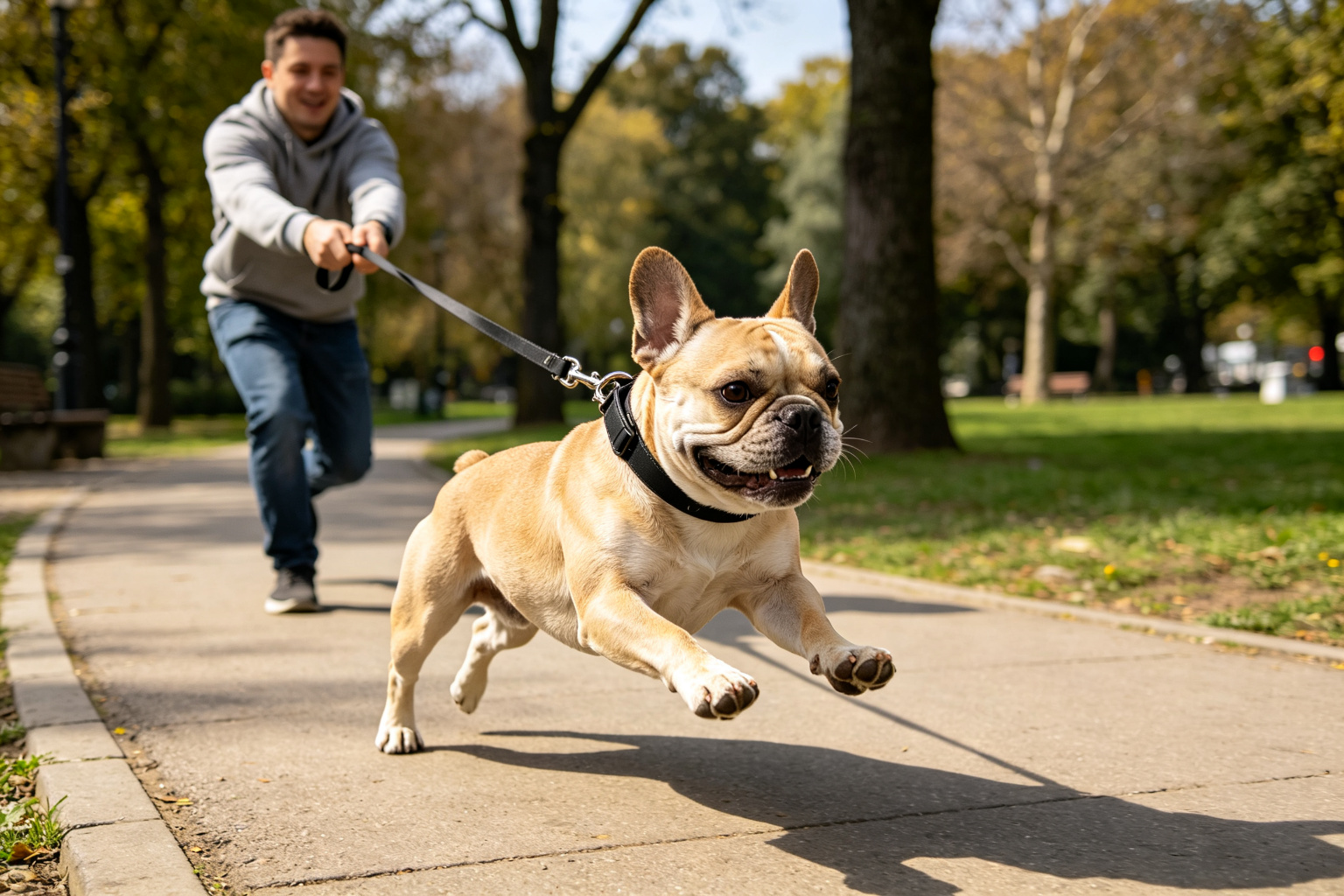
Why Does Your French Bulldog Turn Into a Tiny Tank the Second You Step Outside?
Before fixing the issue, we first need to understand its origins. Leash lunging in French Bulldogs is far more complex than simple disobedience or overexcitement. Based on hundreds of training cases, three intertwined root causes are usually to blame:
1. Innate Instinct & Mismatched Energy Levels: French Bulldogs descend from terriers and small mastiffs, carrying a stubborn, driven drive in their genetics. Originally bred to chase small animals, their strong visual fixation and prey drive activate instantly when moving objects (cars, passersby, other dogs) appear outdoors, fueling forceful lunging. Additionally, most French Bulldogs lack sufficient indoor exercise; pent-up physical energy surges out the moment they step outside like floodwater breaking a dam.
2. Misunderstanding the Purpose of Walks: This is the most critical factor. From a dog’s perspective, whoever leads the way holds full control over the adventure. If your dog consistently drags you toward every spot they want to investigate, they solidify one fixed mindset: “Walks mean I pull the human to wherever I please.” To them, the leash is not a restraint, but a rein to steer you around. I once trained a French Bulldog named Niu Niu, whose owner said, “He seems to know the way, so I just follow him.” As a result, Niu Niu firmly believed he set the pace and route on every outing.
3. Accidental Reinforcement From Gear & Poor Handling: Retractable long leashes, thin narrow collars, or owners engaging in tug-of-war matches whenever the dog lunges all quietly worsen pulling behavior. Retractable leashes reward forward pulling with extra slack; thin collars dig painfully into the neck and trigger defiance; tug-of-war is interpreted by dogs as a fun interactive game.
7-Day Loose Leash Training Plan: Shift From Your Dog Walking You to You Walking Your Dog
This training system combines positive reinforcement and behavior management and requires consistent patience from you. Gather your supplies ahead: a fixed-length leash (1.2–1.5 meters is ideal), a comfortable harness (front-clip Y-harness recommended to distribute pulling force across the chest), and high-value reward treats (small dried chicken jerky or cheese cubes).
Days 1 & 2: Establish New Walking Rules (Indoors / Quiet Hallways)
Goal: Teach your dog good things happen when they walk beside you, and build a new positive association with leash tension.
My Hands-On Training Experience: I trained a 2-year-old French Bulldog named Dudu, perfectly calm indoors yet wildly unruly the second a leash was clipped on. I didn’t even take him outside on Day 1. Inside the living room, I attached the leash, kept it fully loose, and held treats to grab his focus. The moment he looked at me, I praised “Good boy!” and handed a treat reward. Next, I stepped sideways; if he followed closely, he earned an instant treat. If he wandered off, I lured him back with snacks before rewarding. The core focus at this stage: mark and reward every single moment he pays attention to you. I repeated cycles of “walk-stop-turn” repeatedly to help Dudu learn loose leash walking feels most comfortable, and focusing on his human brings rewards. You may only see tiny progress on Day 1, so stay patient.
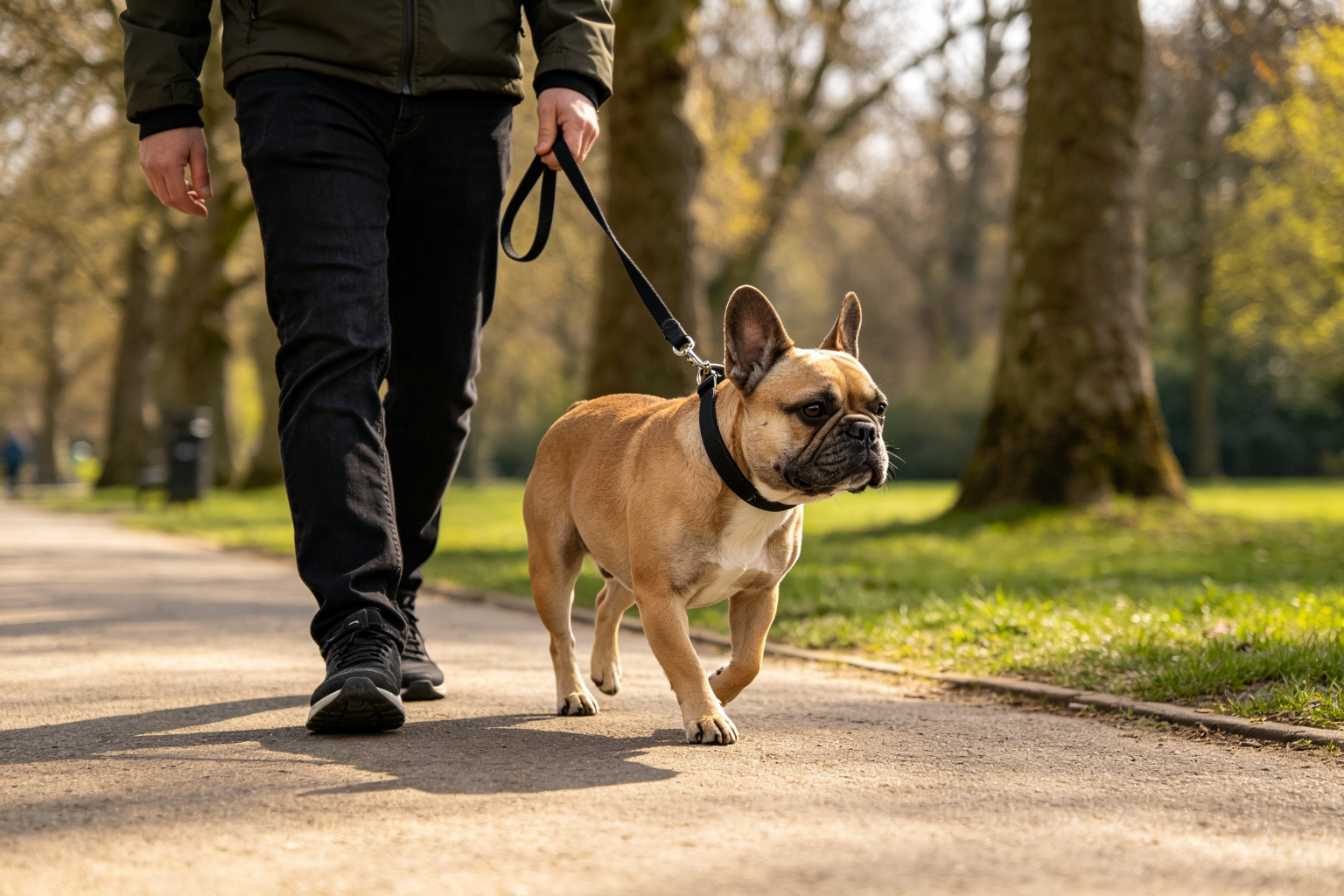
Days 3 & 4: Reinforce Rules With Mild Outdoor Distractions (Quiet Residential Corners)
Goal: Transfer the loose leash habits learned indoors to low-stimulation outdoor environments.
My Hands-On Training Experience: I took Dudu down to the building entrance. At first, surrounding scents and noises erased all indoor training progress, and he began lunging forward again. I immediately applied the “tree method”: the second the leash tightened, I froze completely, no pulling back and no verbal scolding, simply waiting silently. The split second he glanced back at me or the leash went slack again, I cheered “Great!” in a bright tone and gave treats right away. This stage often involves taking three steps then pausing for ten seconds, which heavily tests an owner’s self-control. Always remember: every time you keep walking while your dog pulls, you reward their lunging behavior. By the evening of Day 4, my training logs showed Dudu could walk 20 meters along quiet streets without tugging at all.
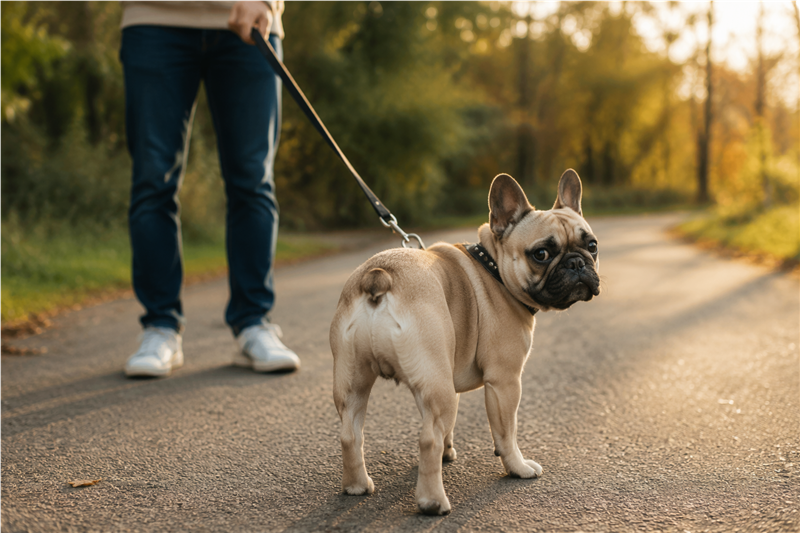
Days 5 & 6: Tackle Real-World Distractions (Regular Daily Walking Route)
Goal: Maintain steady loose leash walking along your normal neighborhood route filled with distractions.
My Hands-On Training Experience: We headed onto our usual walking path with far more temptations around. When Dudu spotted another dog far down the street and prepared to lunge, I predicted his reaction early. Before he tensed up to pull, I called his name with a cheerful voice or waved treats to redirect his gaze back to me, rewarding instantly afterward. I also introduced a consistent verbal cue for loose leash walking, such as “Heel” or “Walk with me,” offering constant verbal praise whenever he stayed neatly beside my leg. If he lunged again, I stuck firmly to the freeze “tree method”. At this stage, I started releasing him to explore freely with a cue like “Go sniff” once we reached a safe grassy patch, so he learns to distinguish two clear modes: structured heel walking and relaxed exploration. Dudu’s biggest breakthrough: he began hesitating and glancing up at me before tightening the leash.
Day 7 & Beyond: Solidify & Generalize Good Walking Habits
Goal: Build consistent long-term habits that hold up amid all types of environments and distractions.
My Hands-On Training Experience: On Day 7, I brought Dudu to a slightly busier neighborhood block for continuous practice. I gradually cut down treat reward frequency, replacing snacks with extra gentle pets and enthusiastic verbal praise instead. Training does not fully end after seven days; these seven days of focused, consistent intervention rewire your dog’s brain to form new neural pathways: lunging brings zero positive outcomes, while walking calmly beside you is easy and fun. Occasional refresh training sessions are all you need to maintain progress afterward. Dudu’s owner later shared feedback that after two weeks, they could take leisurely relaxed walks together without any pulling struggles.
Mistake Avoidance Guide: These Common Errors Undo All Training Progress
1. Losing your temper, yelling or physically punishing your dog: Leash lunging is a behavioral issue, not a moral failure. Scolding and punishment only link walks and leashes to fear in your dog, potentially triggering defensive aggression or even more anxious pulling.
2. Lack of consistent rules: Strict training one day, then letting them tug freely when you’re in a rush the next. This confuses your dog completely, leaving them unsure which rules to follow.
3. Reliance on punitive training gear: Prong collars, shock collars and similar tools may create instant short-term results but fail to fix the root problem. They severely damage your dog’s mental well-being and break trust in you. For stubborn breeds like French Bulldogs, these tools can even spark heightened defiance.
4. Neglecting physical & mental enrichment: Alongside training, ensure your French Bulldog gets daily adequate exercise (short brisk walks, interactive play) and mental stimulation (snuffle mats, puzzle feeders). Training sessions run far more smoothly with a physically and mentally tired dog.
Summary
Fixing leash lunging in French Bulldogs is a gentle shift built around clear leadership and two-way communication. It tests the owner far more than the dog, demanding patience, sharp observation and persistent follow-through. By understanding the underlying causes of pulling and resetting walk routines with science-backed positive training methods, you will see dramatic improvements in a short time frame. Remember, our goal is not to train a robot-like dog, but to build a trusting partnership guided by clear cues, so every outdoor walk becomes an enjoyable shared experience for both of you.
Friendly Reminder
Please note: The training methods covered in this article work for most leash pulling cases stemming from poor habits and insufficient foundational training. If your French Bulldog shows extreme panic, whimpering, or aggressive displays (snarling, growling, snapping) while lunging, or if training for multiple weeks yields zero improvement or even worse pulling behavior, this may signal deeper-seated anxiety, phobias or neurological discomfort. It is strongly recommended to consult a certified professional canine behaviorist or veterinarian for a full assessment and customized intervention plan. If you love your dog, guide them using gentle, scientific and safe training practices.