Hello everyone. Over years working with small‑breed dogs, especially lovely flat‑faced companions such as French bulldogs, I have seen countless distressing, urgent cases. Many owners rush into clinics with their French bulldogs gasping for breath or showing brief choking‑like symptoms. The root cause is often strikingly similar: over‑excitement heading outdoors, over‑stimulation meeting other dogs, over‑arousal while playing with toys… An ordinary‑looking episode of excessive excitement can place massive strain on their fragile respiratory tracts. Today we dive deep into this health‑critical topic for French bulldogs: how science‑backed excitement‑control training can act as a safety shield for them.
Why Does Your French Bulldog Struggle To Breathe When Excited?
To solve the problem we must first understand its source. The cute flat face of French bulldogs is medically termed brachycephalic obstructive airway syndrome. This is far more than appearance‑‑it means they are born with a respiratory system operating in “hard mode”.
Their soft palate (soft tissue at the rear of the mouth) is frequently over‑long and partially blocks airflow; nostrils may be overly narrow, as if breathing through permanently pinched nasal openings; tracheas can also be narrower than dogs of equal body size. When calm they may only produce louder breathing noises. Once emotions spike, during strenuous exercise or in hot surroundings, oxygen demand surges and they are forced to breathe faster and harder. Already‑narrow airways constrict further as soft tissues swell with blood, creating a vicious cycle. Dogs exhibit forceful open‑mouth breathing, loud wheezing noises, bluish‑purple gums and tongues (signs of oxygen deprivation). In severe cases fainting or shock from hypoxia can occur‑‑this is acute respiratory distress and is extremely dangerous.
For French bulldogs, managing excitement is not merely “making them behave better”. It is a necessary medical practice directly linked to airway safety and life‑threatening health.
Five Practical Solutions: Build Calm Daily Habits
Based on the principles above, excitement‑control focuses on preventing over‑excitement before it starts and calming arousal effectively in its early stages. Below are five field‑tested strategies proven effective for French bulldog households from my years of practice.
Solution 1: Act As Environment Manager Instead Of Reactive Responder
Much excitement is triggered by outside stimuli. One client owned a French bulldog named “Doubao” who would dash and bark wildly every time the doorbell rang until he struggled to breathe. Instead of only training the dog, we modified the environment first.
My practical approach: I advised swapping the audible doorbell for a flashing visual doorbell (light cues replacing loud sound). Before expected visitors arrived, place Doubao on a leash and settle him in a bedroom or crate far from the entrance with a durable stuffed enrichment toy (e.g. a Kong filled with frozen yoghurt). Meanwhile, train household members to ignore the dog fully for the first 5 minutes after returning home: no eye contact, no touching, no talking. Greet him calmly only once he is fully settled. Within two weeks, doorbell‑triggered “asthma‑like crises” largely disappeared. Remember: managing trigger points solves 80 % of the problem.
Solution 2: Install The “Calm” Cue — “Settle” or “Rest” Command
This core skill requires patience yet delivers enormous long‑term benefits. The goal is for your dog to strongly associate a verbal cue with stopping movement and settling down.
Training notes: Do not begin teaching this when your dog is already hyped‑up. Pick moments when he is slightly sleepy or already calm. I favour the short, firm cue “settle”. When your dog lies or sits naturally, calmly say “settle” and place a high‑value treat (e.g. small cheese piece) on the ground between his front paws. If he stays still and eats it, praise quietly “good settle”. If he jumps up, remove the treat immediately without scolding; simply wait until he relaxes again and retry. Practice 5‑10 times daily in low‑distraction settings, gradually progressing to scenarios with mild excitement (e.g. when he sees you pick up a toy). This cue can be life‑saving outdoors when he attempts to lunge toward other dogs.
Solution 3: Redesign Play Sessions To Avoid Uncontrolled Over‑Arousal
French bulldogs have plenty of energy and need playtime, yet traditional fetch and tug‑of‑war games easily send heart rate and breathing soaring. We need calmer forms of play.
My experience: I highly recommend scent‑work games and strategic food‑hunting activities. Scent‑work taps into canine instinct, burns mental energy without rapid heart‑rate spikes. Scatter kibble across grass for him to search or use a scent mat. One of my clients’ French bulldog “Tank” used to get severely winded every time he played with toys. I recommended treasure‑hunting games instead: ask Tank to sit on the “settle” cue, hide his favourite toy in another room (e.g. sofa corner), then release him to hunt. The process involves thinking and sniffing. When he finds the toy he chews contentedly rather than sprinting wildly. After such sessions he often lies down peacefully instead of panting and begging for another round.
Solution 4: Enforce The Rule — Calm Behaviour Earns All Rewards
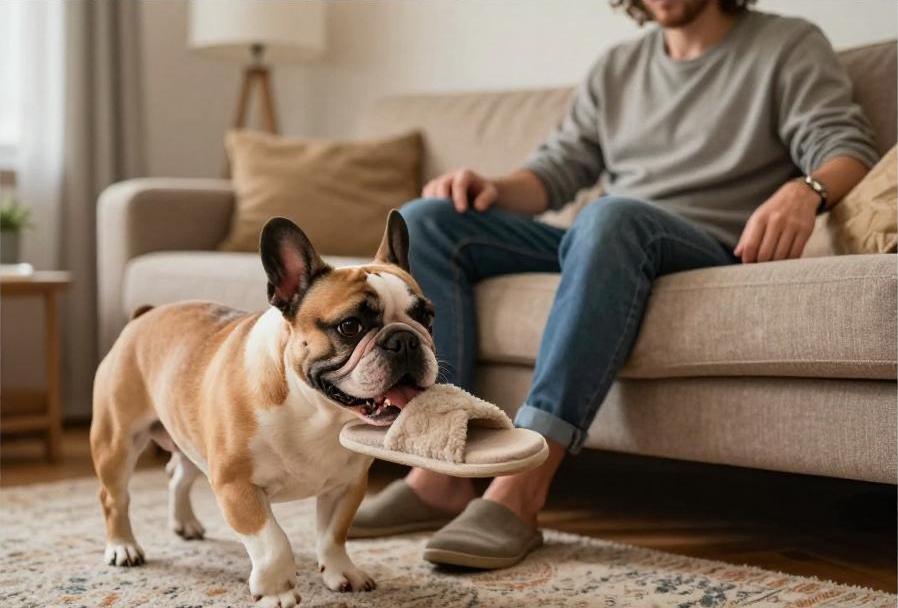
Dog behaviour is shaped by consequences. If you pet him when he jumps, give attention when he barks, or throw toys when he lunges, you are rewarding excitement. We must reverse this logic: only calm behaviour grants access to everything he desires.
Practical execution: Full cooperation from every household member is essential. Set household ground rules: he must sit quietly before meals; sit calmly waiting for his leash before walks; if he nudges you for affection ignore him, only pet gently once he steps back and sits or lies down. One client’s French bulldog constantly jumped on people. I instructed her to keep kibble in‑pocket. The instant the dog jumped, turn rigid like a tree with zero reaction. Reward immediately the moment all four paws touch the floor. After one week jumping behaviour dropped by roughly 90 %. Remember: your attention (even scolding) plus resources including food, toys and outdoor access act as powerful reinforcers.
Solution 5: Use Supporting Tools To Create Calm Zones
Tools can offer great assistance when your dog is already over‑excited or you want to prevent arousal from building.
My toolkit:
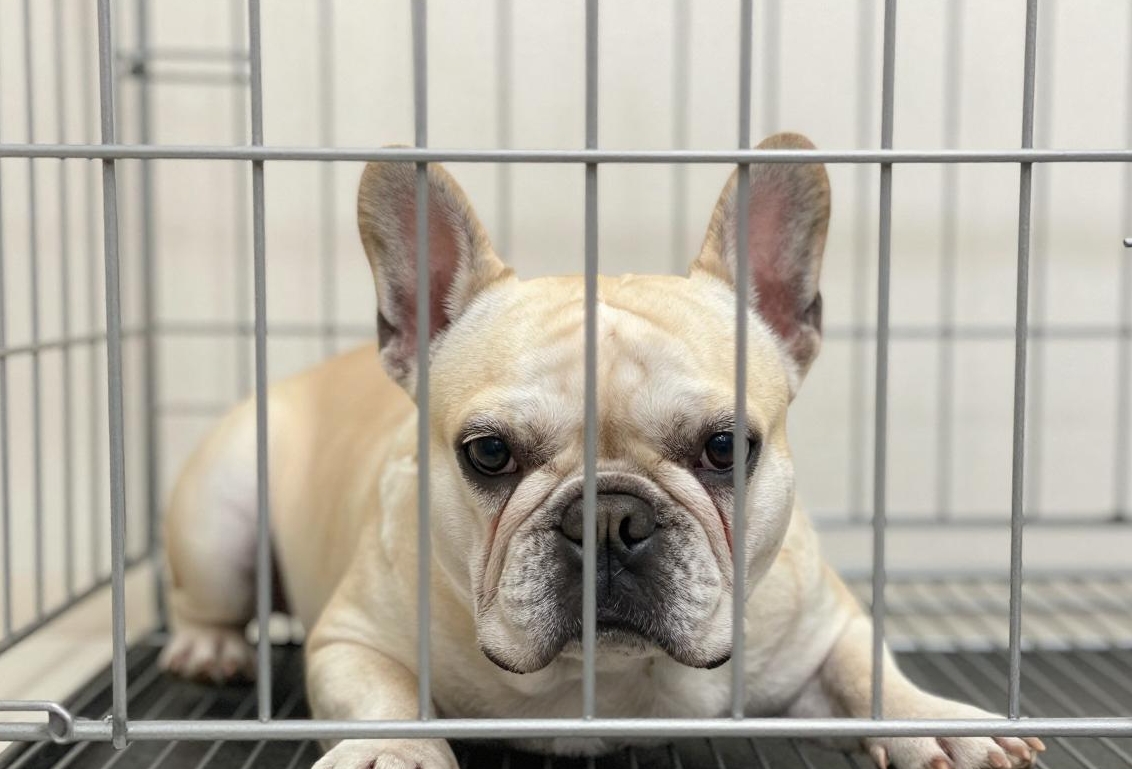
1. Crate / calm rest den: Never treat it as punishment confinement. Furnish it softly and dimly lit to become the dog’s safe haven. Guide him inside after play or during rest periods and give him a food‑stuffed Kong. Help him get comfortable fully unwinding here.
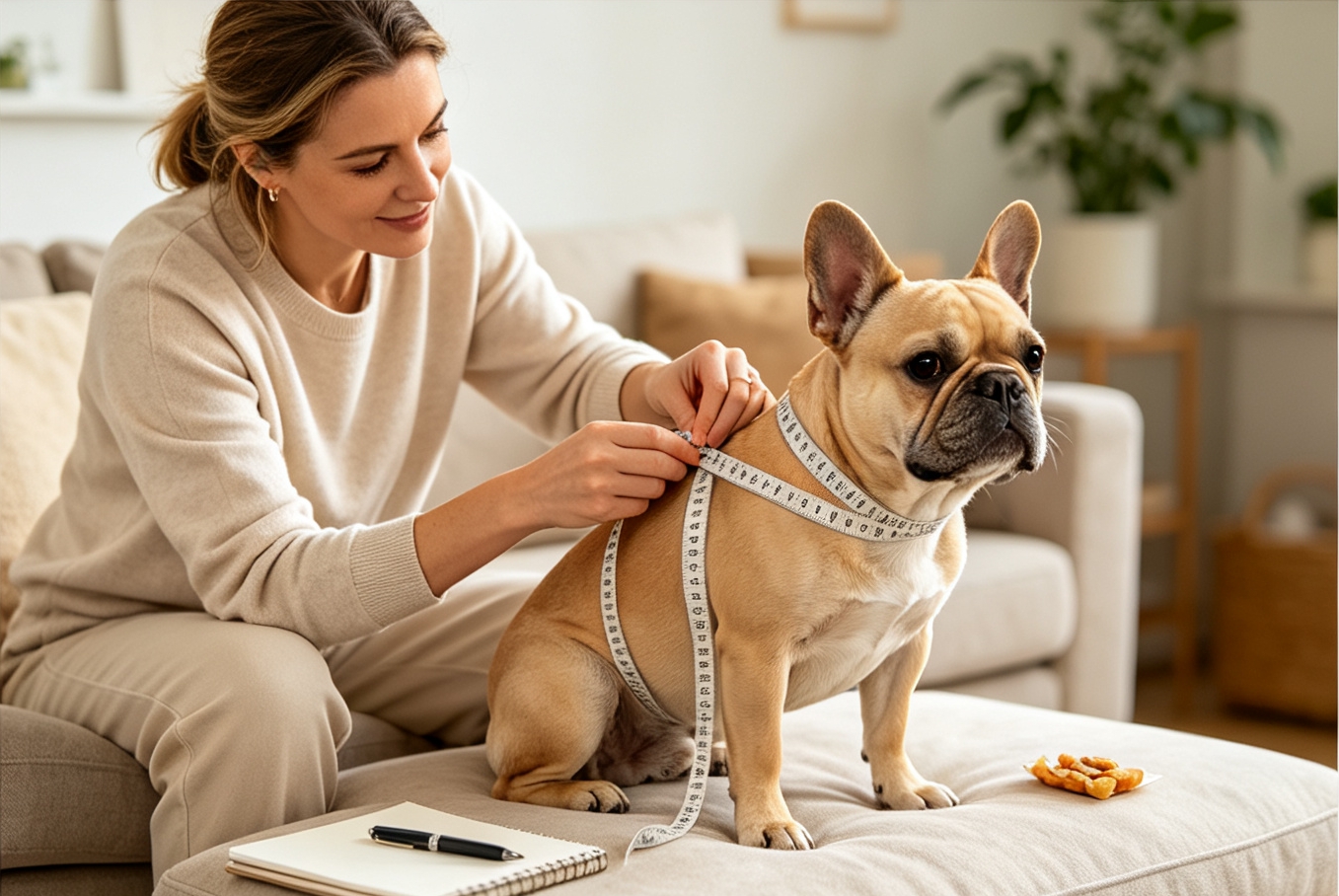
2. Harness & double‑ended leash: For French bulldogs prone to lunging, front‑clip harnesses (H‑shape or Y‑shape) distribute pressure safely and protect the trachea. Pair with a double‑ended leash: one clip attaches to the chest, the second to the back. This grants improved control. When he is about to surge forward apply gentle sideways tension to redirect him, avoiding neck constriction that triggers coughing.
3. Calming compression wear / appeasing pheromones: For highly‑strung, easily‑aroused dogs in stressful scenarios such as thunderstorms or guest visits, try compression garments (e.g. ThunderShirt which delivers soothing gentle pressure) or dog appeasing pheromone diffusers.
Pitfall‑Avoidance Guide: Common Mistakes You May Be Making
Bear these pitfalls firmly in‑mind during training:
1. Attempting training while the dog is extremely over‑excited: He cannot process cues at this stage. Forced training frustrates both owner and pet. First restore calm via environmental adjustments such as removing him from the stimulating area.
2. Punishing heavy breathing or panting: Panting is the primary cooling and self‑calming mechanism for French bulldogs. Scolding panting suppresses natural instincts, raising anxiety or overheating risks. Target the excited behaviours that cause panting, not panting itself.
3. Ignoring temperature and humidity: French bulldogs have an extremely low excitement threshold in hot, humid weather with serious safety risks. Schedule exercise and training for cool early‑morning or evening hours in summer and always supply fresh drinking water.
4. Expecting instant results: Behaviour change happens gradually. Progress may be good one day and regress the next. Stay consistent and patient, celebrate every small improvement.
Summary: Love Your French Bulldog — Protect His Breathing
Excitement‑control training for French bulldogs is a labour‑of‑love responsibility. Owners must shift from “firefighters” (reacting once excitement erupts) to “planners” (preventing and managing triggers in advance). With thoughtful environment management, firm household rules, clever play redesign and consistent calm‑cue practice, you can drastically lower risks of respiratory distress triggered by emotional arousal. All effort pays off watching them enjoy running, playing and companionship comfortably long‑term instead of suffering painful gasps after every excited episode.
Important Reminder
All advice offered covers general behavioural adjustment and health management. Please note French bulldog breathing troubles can stem from serious physical abnormalities including elongated soft palate, stenotic nostrils, everted laryngeal saccules and underdeveloped trachea. If your French bulldog shows abnormally loud breathing even at rest, frequent coughing, very poor exercise tolerance, sleep apnoea or loud nocturnal breathing noises, or hypoxia signs such as bluish‑purple gums, collapse, confusion in any scenario: stop all activity at once, move your dog to a cool well‑ventilated spot and contact your vet or emergency animal hospital immediately. Qualified veterinarians assess airway anatomy via physical exams and imaging to decide whether medication or surgical intervention is required. Combine behavioural training with professional veterinary care for complete protection for your French bulldog companion.